Personally Experienced · Last verified 2026-09-19
Explore Europe
Quick Take
One port day, two very different experiences
- Our visit
- June 2026, on a Mediterranean cruise excursion from Naples
- The route
- Naples → Palazzo del Corallo → Salerno → Amalfi → Salerno → Pompeii → Naples
- The coast
- About 45 minutes on our outbound ferry; beautiful views followed by busy Amalfi streets
- The walking
- Crowds and passing cars in Amalfi; uneven stone paths and summer heat at Pompeii
Our June 2026 Mediterranean cruise brought us to Naples, where we joined a bus tour that combined the Amalfi Coast with Pompeii. It was a full day: a cameo factory, a ferry along the coast, time in Amalfi, and then a guided walk through an ancient city with Mount Vesuvius rising nearby.
What stays with me is how different the two main stops felt. Amalfi was colorful, beautiful, and crowded, with lemons larger than we had imagined. Pompeii gave us room to spread out and a reason to look closely at ordinary things, right down to how people crossed a street nearly 2,000 years ago.
Interactive map
Our Naples, Amalfi, and Pompeii cruise day
Our route was Naples → Palazzo del Corallo → Salerno → Amalfi by ferry → Salerno → Pompeii → Naples. Markers show general orientation, not exact berths or a navigable bus or ferry route. Vesuvius is a landscape reference, not a stop we visited.
Loading interactive map…
Location 1 of 6
Naples waterfront
The starting point for our organized cruise excursion; marker does not identify our ship’s berth.
Map markers are approximate. Map data © OpenStreetMap contributors; tiles by OpenFreeMap.
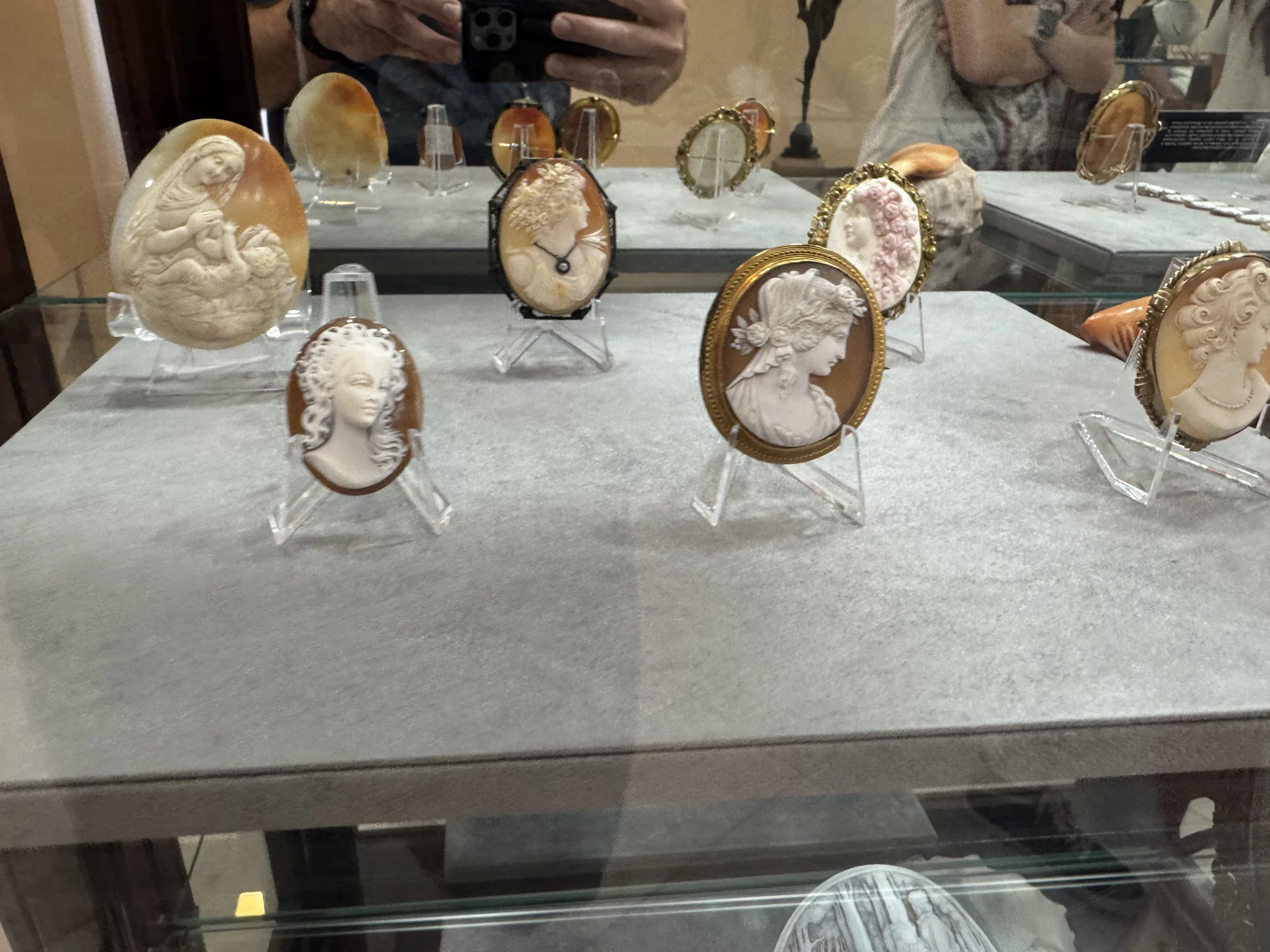
Palazzo del Corallo: a cameo stop on the way to Salerno
Our first stop on the bus journey toward Salerno was Palazzo del Corallo in Portici. Cameos have a real regional connection here: nearby Torre del Greco is known for coral and cameo craftsmanship. Shell cameos are carved in relief, using the shell’s contrasting layers to bring a portrait or other design forward against its background.
That context makes the stop more than an isolated souvenir shop. It is a glimpse of a craft associated with this part of Campania.
Seeing the Amalfi Coast from the water
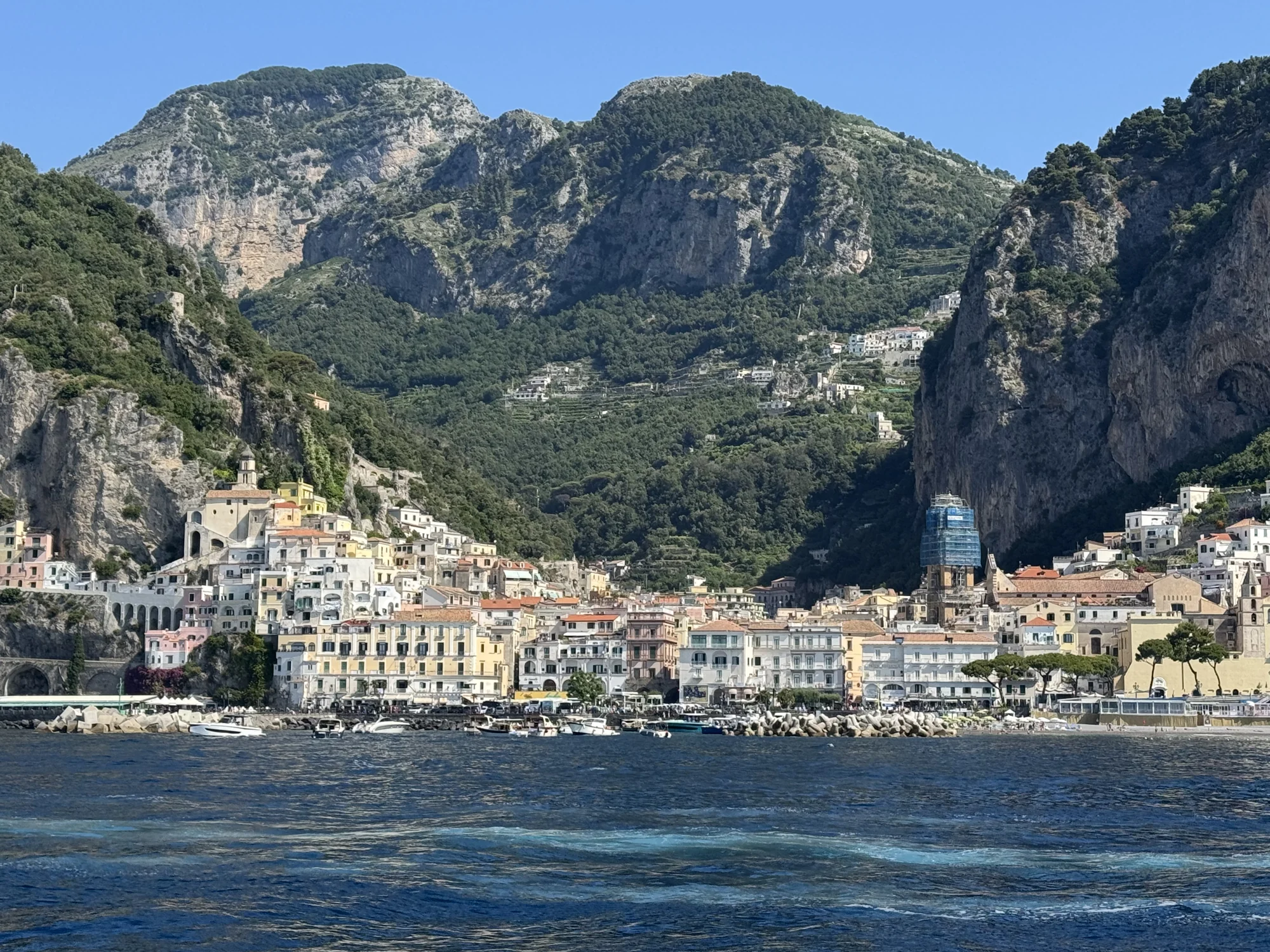
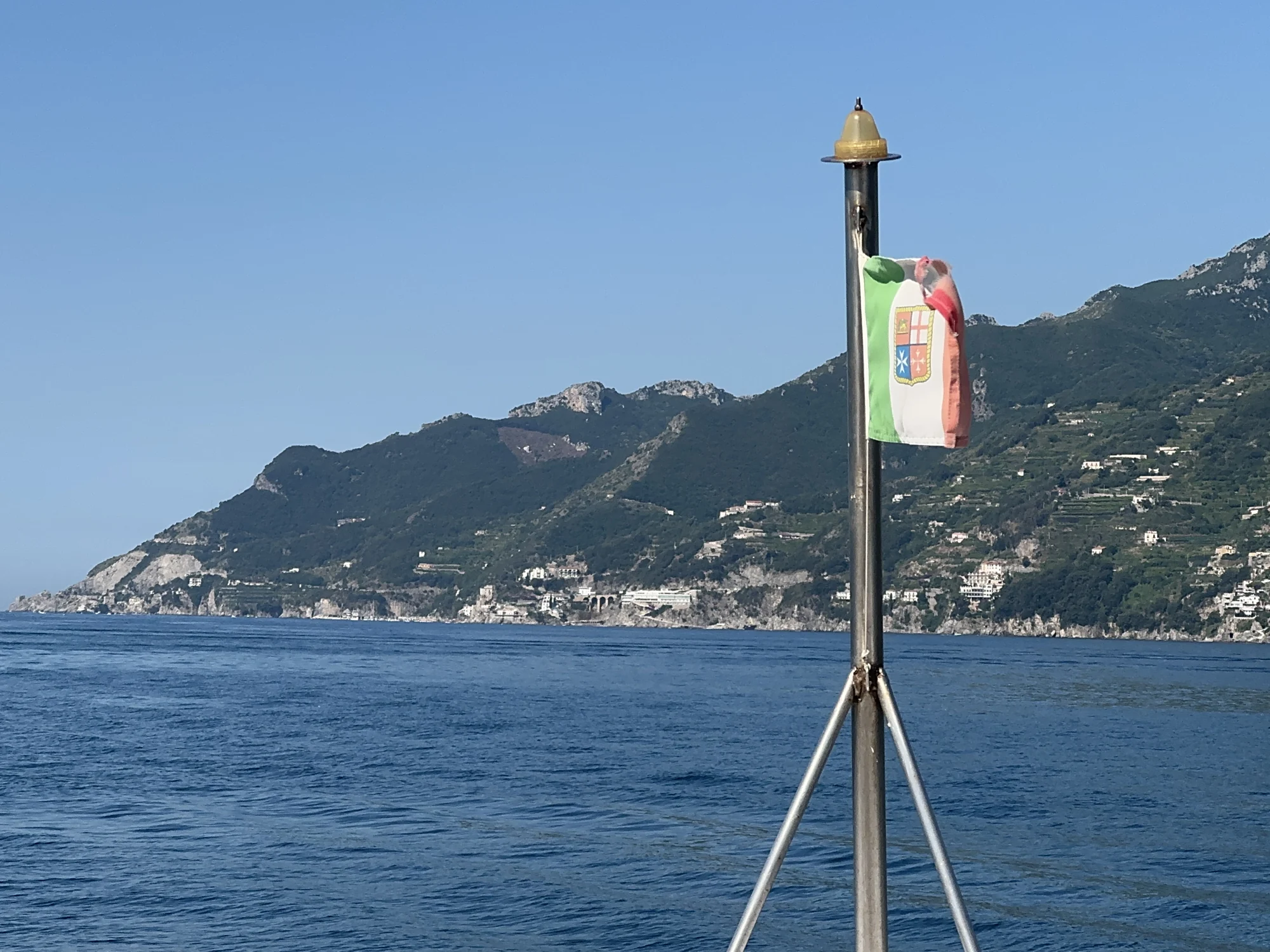
In Salerno, we boarded a passenger ferry for the ride to Amalfi. Ferries seemed plentiful that day, and our outward journey took about 45 minutes.
Along the way, we passed one coastal town after another. There was so much to look at: stonework, colorful buildings, and towns fitted into the hills above the water. The boat ride gave us a chance to appreciate the coastline as a whole before we were right in the middle of one of its busiest towns.
Amalfi: enormous lemons and very little elbow room
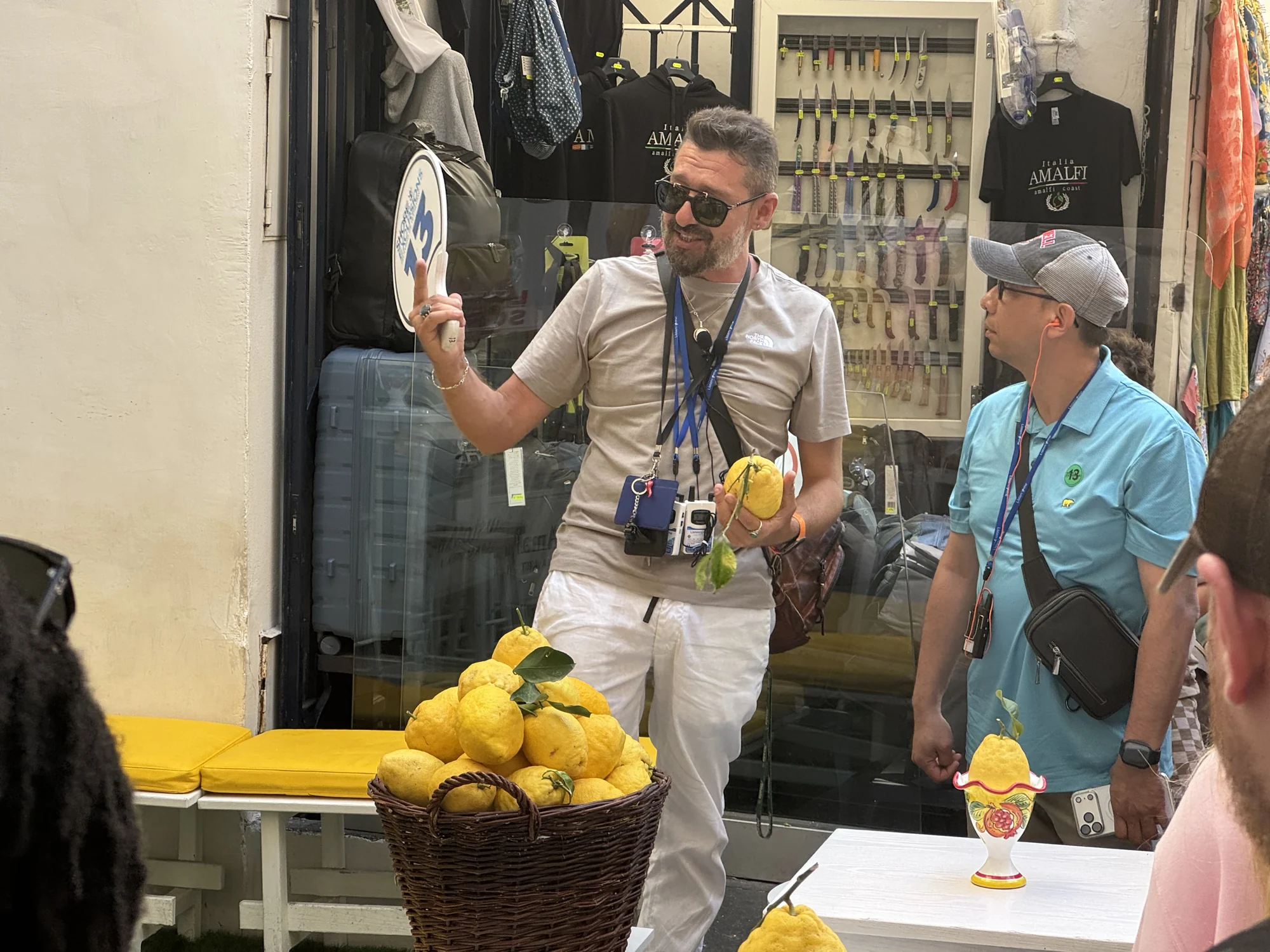
Our tour operator had told us about the region’s large lemons, but hearing about them did not prepare us for seeing them in person. In Amalfi, lemons seemed to be everywhere: in shop displays, limoncello stores, frozen desserts, and all sorts of lemon-themed goods.
The coast’s signature lemon is the sfusato amalfitano, known for its elongated shape and fragrant peel. On dessert signs, gelato al limone means lemon gelato; sorbetto al limone is lemon sorbet, and granita al limone is an icy lemon treat.
There were chocolate shops, leather goods, and plenty of tempting food choices as well. For regional dishes to look for, scialatielli ai frutti di mare is fresh pasta served with seafood, while a cuoppo di mare is a paper cone of fried seafood. For another lemon option, delizia al limone is a soft sponge-cake dessert with lemon cream. These are ideas for what to try, rather than a list of dishes we ordered.
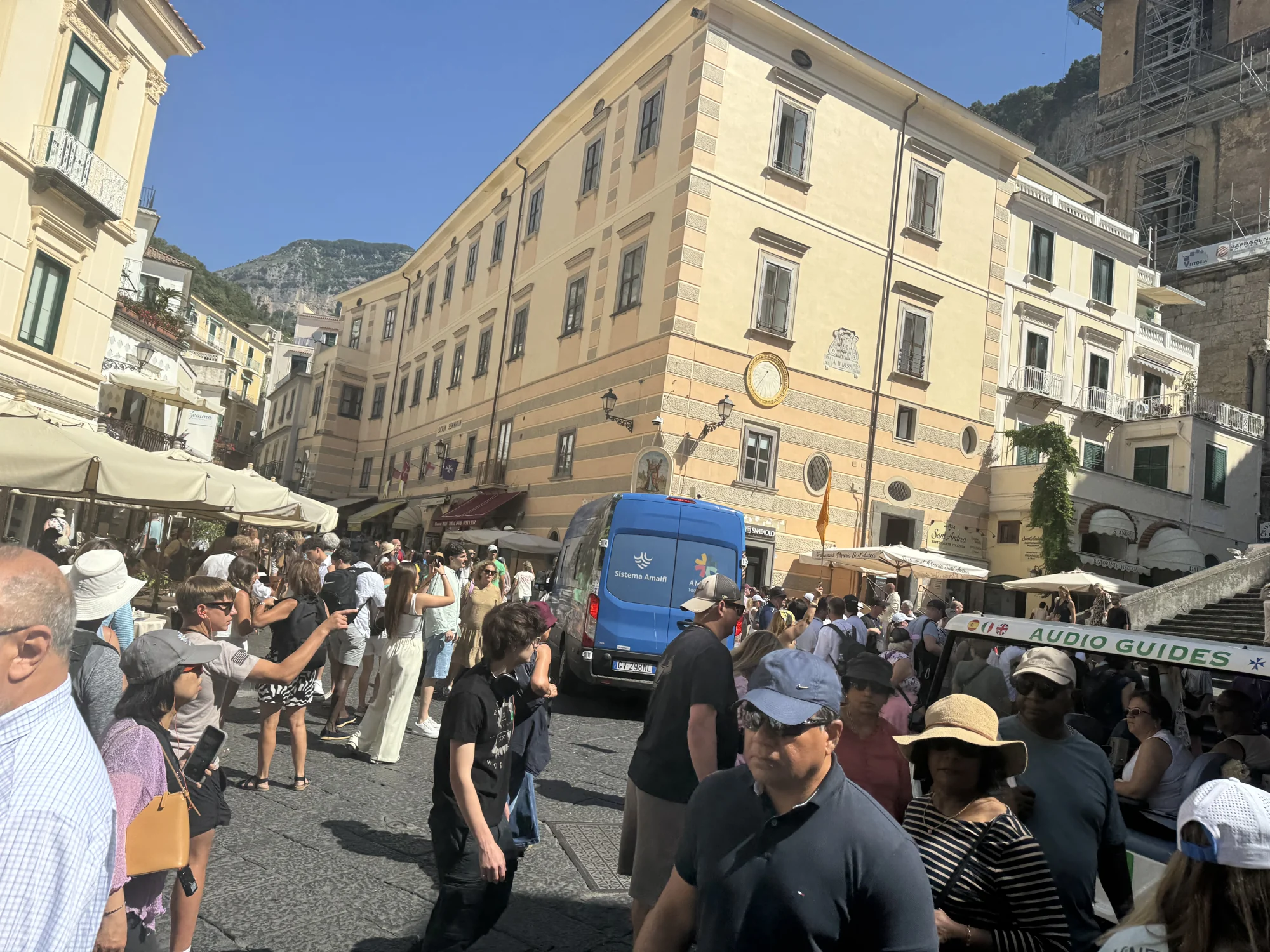
But the people were everywhere, too. The main street we walked up through town was also the main stream of visitors, and cars were trying to travel up and down the hill through that same space. Each time a vehicle came through, the crowd had to make room. Amalfi was lovely to see, but our visit did not feel like a quiet stroll through a coastal village.
Back through the hills, with Vesuvius ahead
Eventually, we boarded the ferry back to Salerno and rejoined the tour bus. The drive through the beautiful hills took us back toward Naples, with a stop at Pompeii. We had a nice lunch nearby before beginning our guided tour.
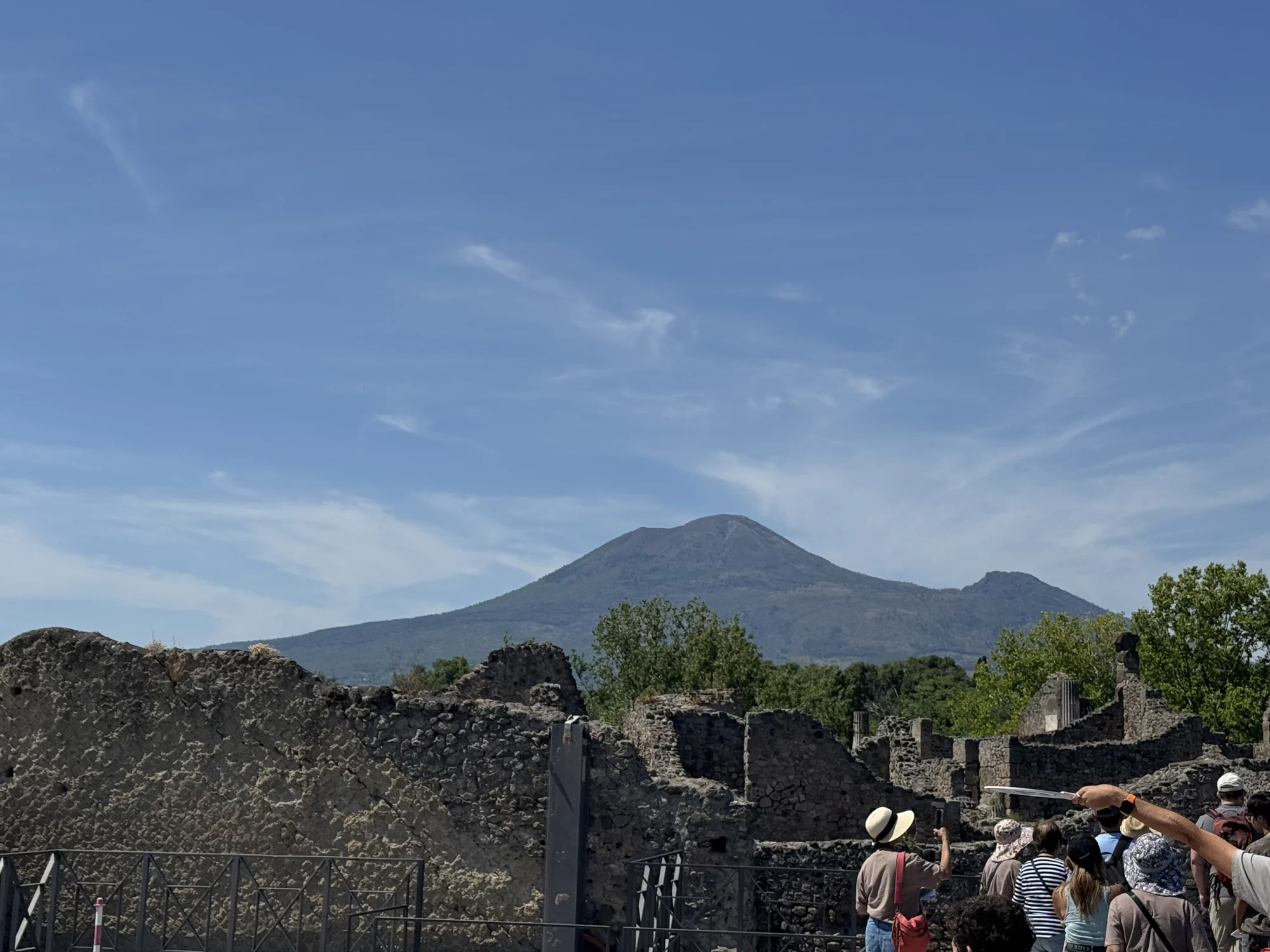
Like so many people, I first learned about Pompeii in school. In AD 79, Mount Vesuvius erupted and buried the Roman city beneath volcanic material, including ash and pumice. Standing there makes that familiar history feel much closer. Vesuvius looks ominous above the surrounding area, but it is also part of what gives the landscape its identity.
Our guide had grown up nearby, and he told us that his mother had spent her life giving tours of Pompeii. His knowledge of the excavations and discoveries, especially the changes over recent decades, gave the visit a personal connection to the area as well as a historical one.
A city still being uncovered and understood
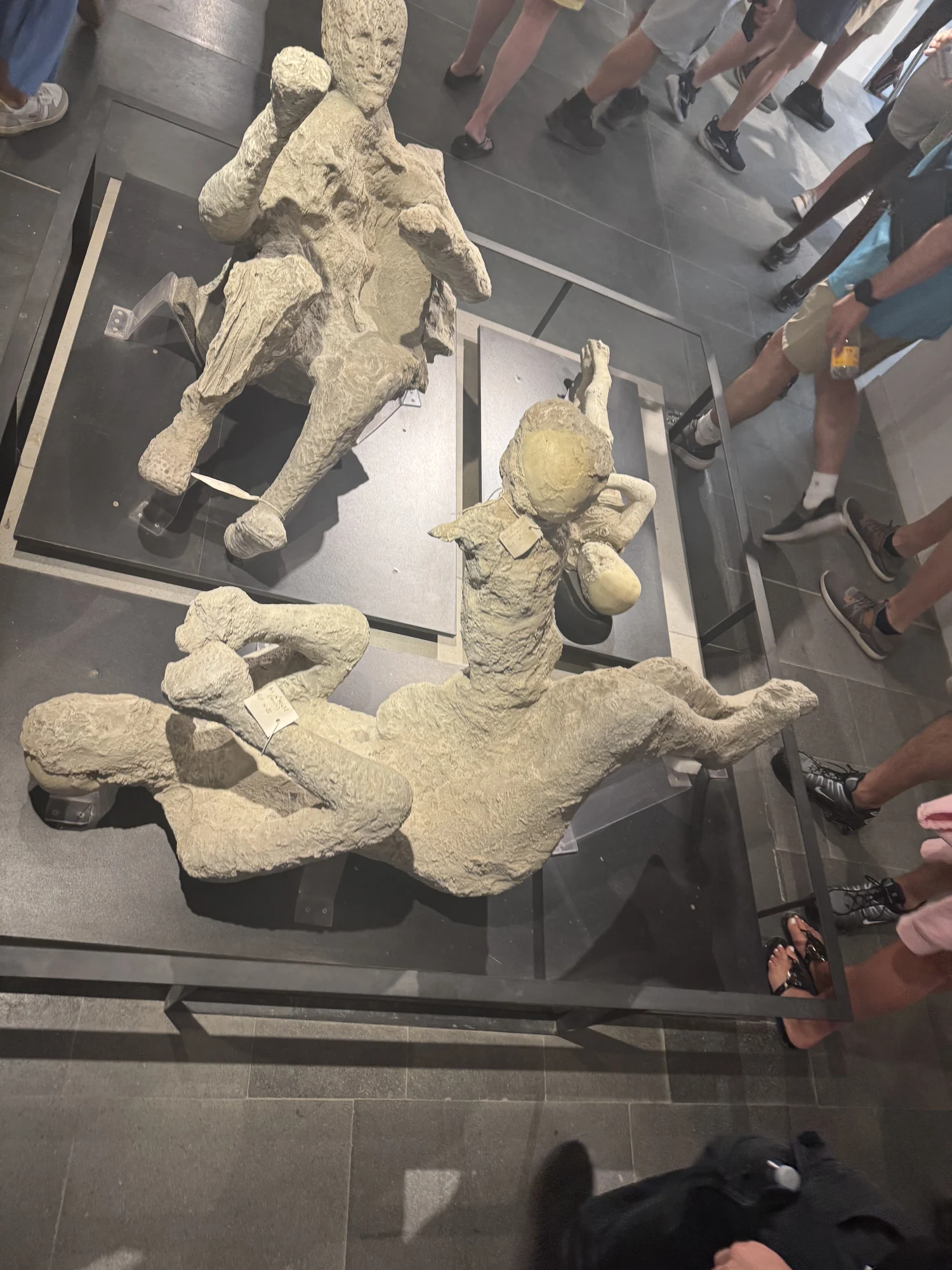
Excavation at Pompeii began in 1748 under the Bourbon monarchy. Early work focused heavily on finding objects; later archaeology increasingly examined buildings, streets, and the lives they revealed. In the 1860s, Giuseppe Fiorelli introduced the plaster-cast technique used to capture forms left in the volcanic deposits, including those of people who died in the eruption.
Pompeii remains a place of excavation, research, and conservation. What visitors see is the result of both ancient survival and generations of careful work. Our guide helped connect that ongoing work with the remains around us, and I found the displays and explanations very educational.
Street crossings, bath rooms, and everyday Roman life
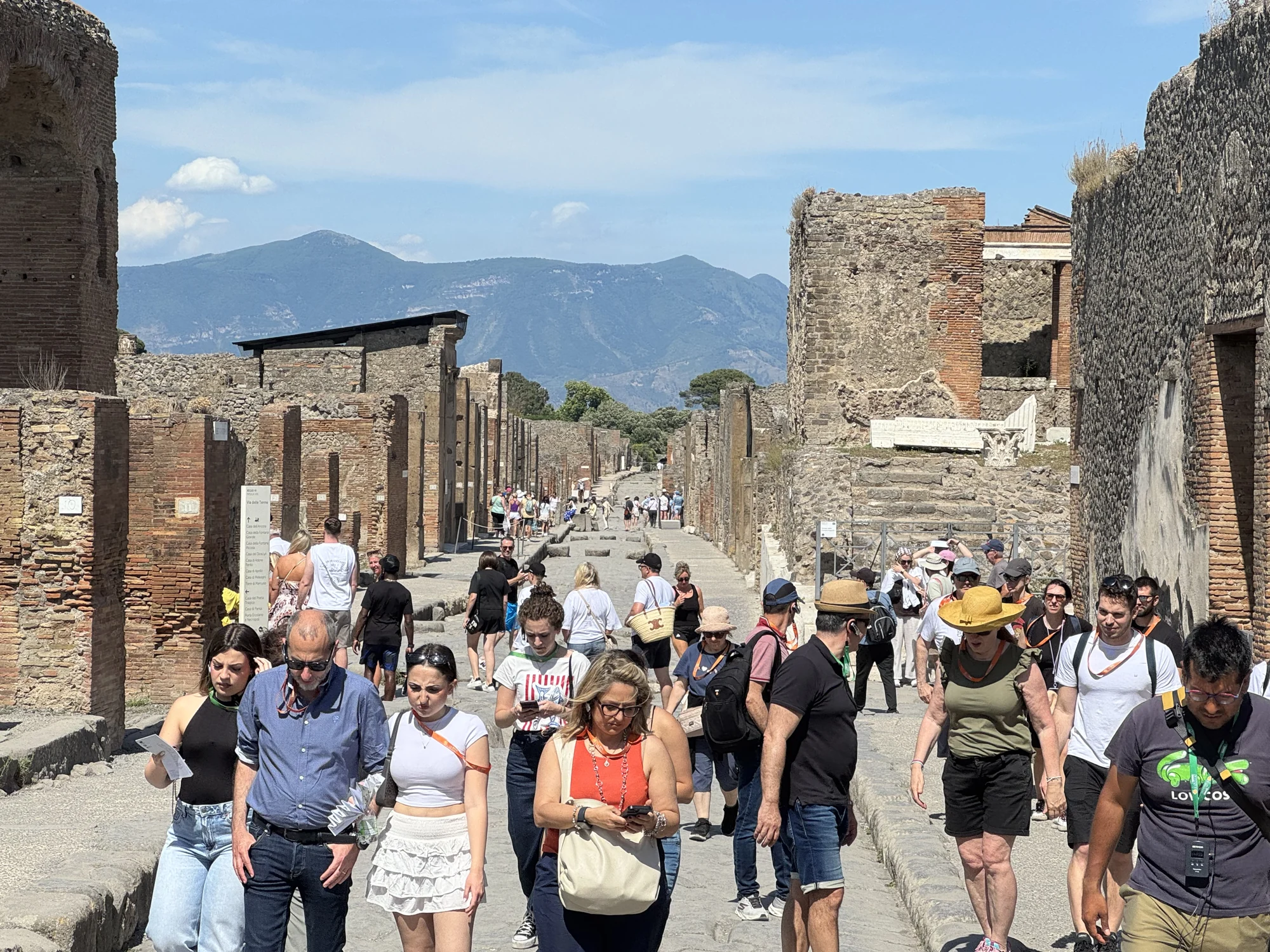
One of the details that stayed with us was the arrangement of raised stones across the roads. Our guide explained how pedestrians could step across above the water and street muck while carts passed through the gaps. It was such a practical solution, and an easy way to imagine the street in use. Staying above that dirty runoff would certainly have made walking more pleasant.
We also saw bath rooms that brought to mind saunas. Roman bath complexes were more varied than that comparison suggests, with changing areas and cold, warm, and hot rooms. Heated spaces could use hot air circulating beneath raised floors and through wall cavities. Preserved features and restoration help visitors understand how the spaces worked; they are not simply untouched rooms left exactly as they were.
Beyond the baths, Pompeii preserves houses, shops, public squares, temples, and entertainment spaces. Those everyday settings make the place meaningful. You begin to think about people shopping, meeting friends, bathing, and going home, rather than seeing only the disaster that ended their city.
Choose a few Pompeii priorities, then give your legs a break
After Amalfi, Pompeii felt much less crowded to us. Its spreading network of roads, ruins, and open spaces gave people room to disperse. That was how our tour felt, not a promise that the entrances or popular buildings will be quiet on another day.
I could easily imagine spending three to five hours here and still feeling that I had barely scratched the surface. For a longer visit, I would choose a few priorities rather than try to see everything. The Forum gives a sense of public life; the Stabian Baths show bathing culture; the House of the Vettii offers painted domestic interiors; and the Amphitheatre adds another side of Roman life. These are possible highlights for planning, not a reconstruction of every stop on our tour. Check the park’s current openings before deciding on a route.
A guide can make that selection for you and give the stones some meaning. Ours certainly did. But even a fascinating explanation cannot change the fact that your legs are walking on uneven stone paths. Add summer heat, and there comes a point when another ruin matters less than a rest break. Wear supportive shoes, bring water and sun protection, and allow time to sit down.
For a cruise day combining the coast and Pompeii, the transfers are part of the outing. Our organized excursion linked them together, but I would not treat our experience as proof that any independent combination of buses and ferries will fit a ship’s port call. Plan around the actual all-aboard time and leave room for delays.
What I brought back from this day
When I think back on this stop, I remember the coast unfolding from the ferry, the surprise of those enormous lemons, and the small details in Pompeii that made an ancient city feel familiar. The crowds in Amalfi and the walking at Pompeii were part of the day, too.
We left with more to see than we had time for, and I am comfortable with that. The ferry gave us a beautiful introduction to the coast, and our guide gave us a way into Pompeii’s story. Sometimes a cruise stop is enough to make a place real to you—and leave you knowing what you would give more time to on a return.