Personally Experienced · Last verified 2026-08-26
Explore Europe
Quick Take
Rome can be a worthwhile pre-cruise stop, even when one day is not enough
- Our time in Rome
- Roughly 24 hours in May 2026
- Our two priorities
- The Colosseum and Trevi Fountain
- Airport connection
- Leonardo Express to Roma Termini, then Metro
- How we got around
- Walking, Metro, and a hop-on hop-off bus
- Cruise-port reality
- Ships depart from Civitavecchia, not central Rome
- My biggest advice
- Reserve priorities and build in transportation buffers
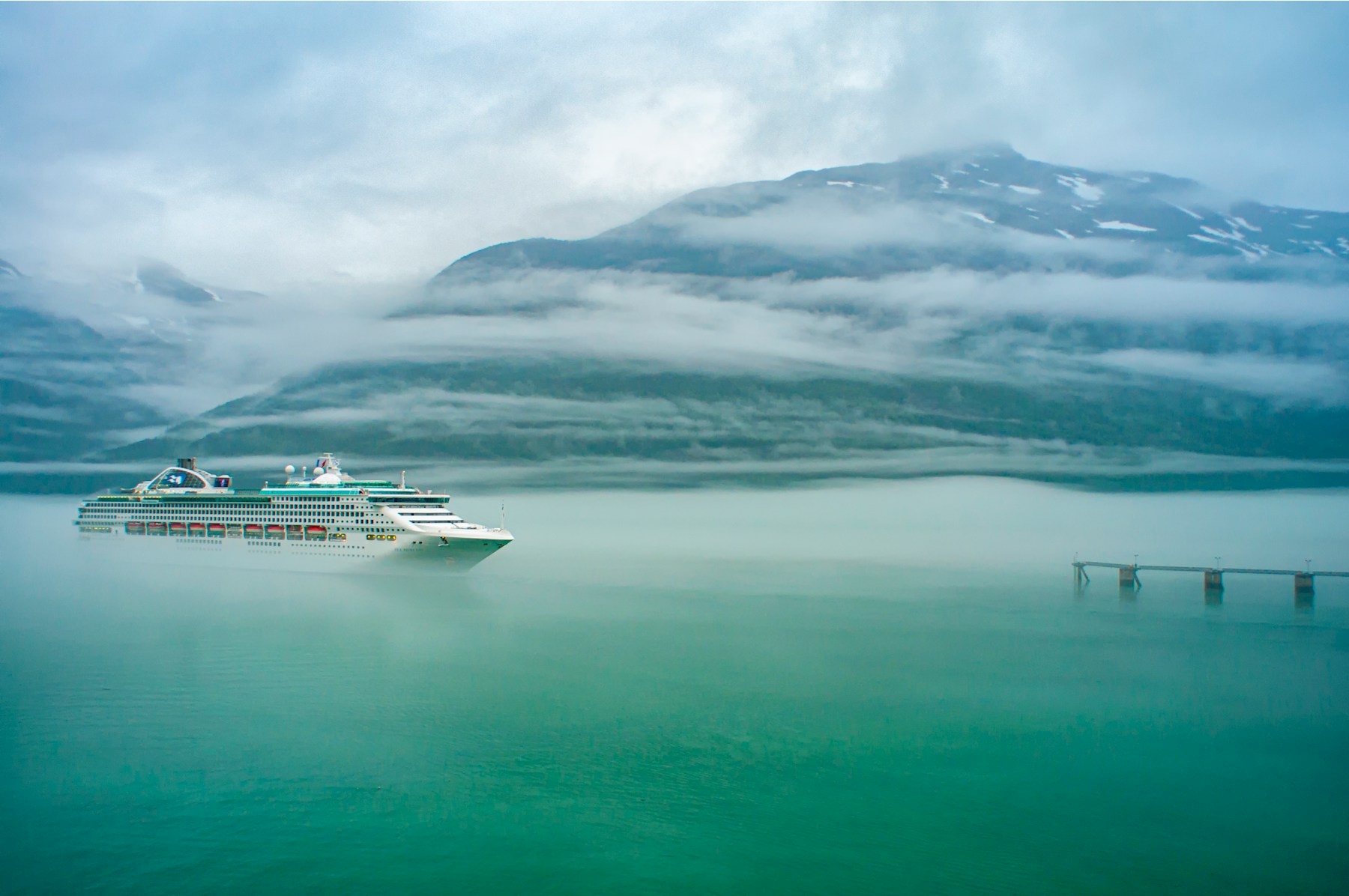
The first thing I would explain to anyone booking a cruise from “Rome” is that Rome is not actually on the coast. The cruise port is in Civitavecchia, a separate city roughly 70 kilometers northwest of central Rome. Getting from Rome to the ship is not a quick ride across town. It is another transportation leg that needs its own train or car plan, time allowance, luggage strategy, and final connection into the port.
We spent roughly 24 hours in Rome before our Mediterranean cruise in May 2026. That is nowhere near enough time to claim we saw Rome, but it was enough to have a real first visit. We rode the train and Metro, stayed within walking distance of the Colosseum, toured the arena floor, crossed the city on an open-top bus, visited Trevi Fountain, ate extremely well, and learned exactly where advance planning helped us and where even a good plan could still go sideways.
This guide is deliberately half firsthand experience and half planning recommendation. I will tell you what we actually did and what it felt like, but I also want to show how I would build a longer first visit around the places we did not reach. You should not have to copy our 24-hour sprint to benefit from what it taught us.
Interactive map
Places from our Rome stop and a longer first stay
Explore the airport, rail, firsthand sightseeing, Civitavecchia cruise connections, and researched longer-stay choices discussed in this guide. The map distinguishes places we experienced from recommendations we would consider with more time; transportation and district markers are approximate.
Loading interactive map…
Location 1 of 17
Rome Fiumicino Airport
Our firsthand arrival airport and the starting point for the Leonardo Express ride into central Rome.
Map markers are approximate. Map data © OpenStreetMap contributors; tiles by OpenFreeMap.
This was only the first leg of a much bigger Europe trip
Rome was the opening chapter of a 16-day, multi-country Europe trip. We flew to Rome, stayed one night, boarded an eight-night Mediterranean cruise, flew to Germany, took a road trip into Austria, finished in France, and flew home. Several other articles go deeper into those parts of the itinerary, but the scale matters here because every choice in Rome had consequences later.
We spent almost a year fitting the trip together. The itinerary was somewhat tight, the trip was the most expensive we had ever taken, and it was also the most enjoyable. That balance did not happen because we automatically chose the fastest flight or the fanciest hotel. It came from comparing cost, convenience, energy, transportation, and the schedule of the whole trip rather than optimizing one reservation at a time.
Our flight was a price-versus-convenience decision
We flew Raleigh to Philadelphia to Rome. Charlotte offered more convenient choices, but those flights were thousands of dollars more when we compared them. Raleigh gave us a much better deal and still fit the cruise schedule, so the connection was a tradeoff we were willing to make.
This is one of the places where I think a travel advisor earns her value. The best flight is not always the shortest flight, and the cheapest flight is not always the one worth taking. I look at the price difference, connection risk, arrival time, transfer plan, traveler comfort, and what absolutely cannot be missed at the other end. For us, the Raleigh itinerary was the right combination rather than the theoretically most convenient one.
Fiumicino Airport to central Rome was straightforward because we researched it first
After landing at Rome Fiumicino Airport, passport control took us at least an hour. It involved a long walk and a maze of roped queues that felt like lines leading into more lines. When we finally reached the officer and presented our passports, that part took less than a minute. Baggage claim, by contrast, was easy.
We had already researched the airport railway station, ticket kiosks, schedules, and the station we needed in Rome. The Leonardo Express is the nonstop airport train to Roma Termini. The official airport and Trenitalia information currently describe a 32-minute trip with departures generally every 15 minutes. Other regional trains serve different Rome stations, so “take the train from the airport” is not quite enough instruction; the useful question is which train puts you closest to the next part of your plan.
We knew Termini connected with Rome’s Metro and that we could change there for the line serving our hotel. That advance knowledge made a large, unfamiliar arrival feel manageable. We did not have to stand in the terminal with our luggage trying to decide whether the signs, ticket machines, and train names meant what we hoped they meant.
We chose the hotel around the transportation plan
Rome had hundreds of hotels that looked appealing, which did not make choosing one easier. We compared price, location, amenities, familiarity, and how we would reach both the sights and the next morning’s train with luggage. Because it was our first visit, we eventually settled on a U.S.-name hotel chain we already trusted.
The hotel sat directly along Rome Metro Line A, commonly shown in red on maps. It was about a 15-minute walk from the Colosseum and within easy walking distance of several bakeries. That location gave us a familiar room, a simple transit connection, food nearby, and a realistic route to our most important attraction.
What we had not fully appreciated was how many station stairs we might face with luggage and how often an elevator would not be part of the route we wanted. We knew it was possible; knowing exactly where it would happen would have been even better. A hotel can be “near the Metro” and still require a surprisingly physical transfer when everyone is carrying a suitcase.
Early check-in was luck, not something we could promise
We reached the hotel in the late morning, and one of our two rooms was already available. We were lucky. The hotel let us check into that room, freshen up, and rest for a little while. As we were heading toward the Colosseum, the second room became available too.
We have considered reserving a room for the night before an early arrival so the room is guaranteed when we reach the hotel. That can be a smart strategy when sleep, privacy, or medical needs matter enough to justify the extra cost, but it also means paying for another night and making sure the hotel knows you will not physically arrive until the next morning. This time we rolled the dice and won. I would never build an important first day around assuming the same luck.
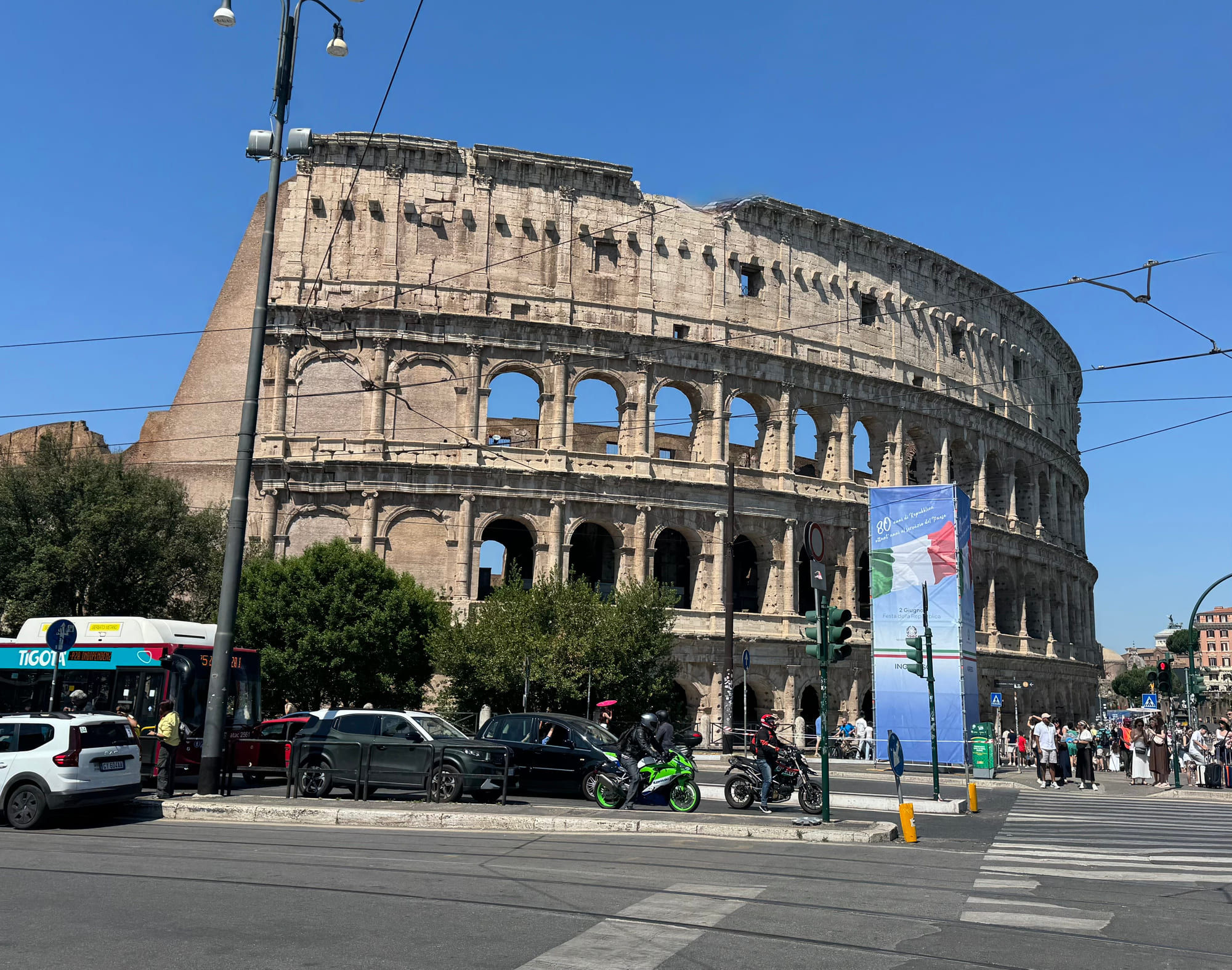
The Colosseum was the right anchor for our one day
We walked toward the Colosseum and stopped for brunch at a small local shop, where we had some of the best pepperoni sandwiches we can remember. It was exactly the kind of simple, satisfying meal we needed after the flight.
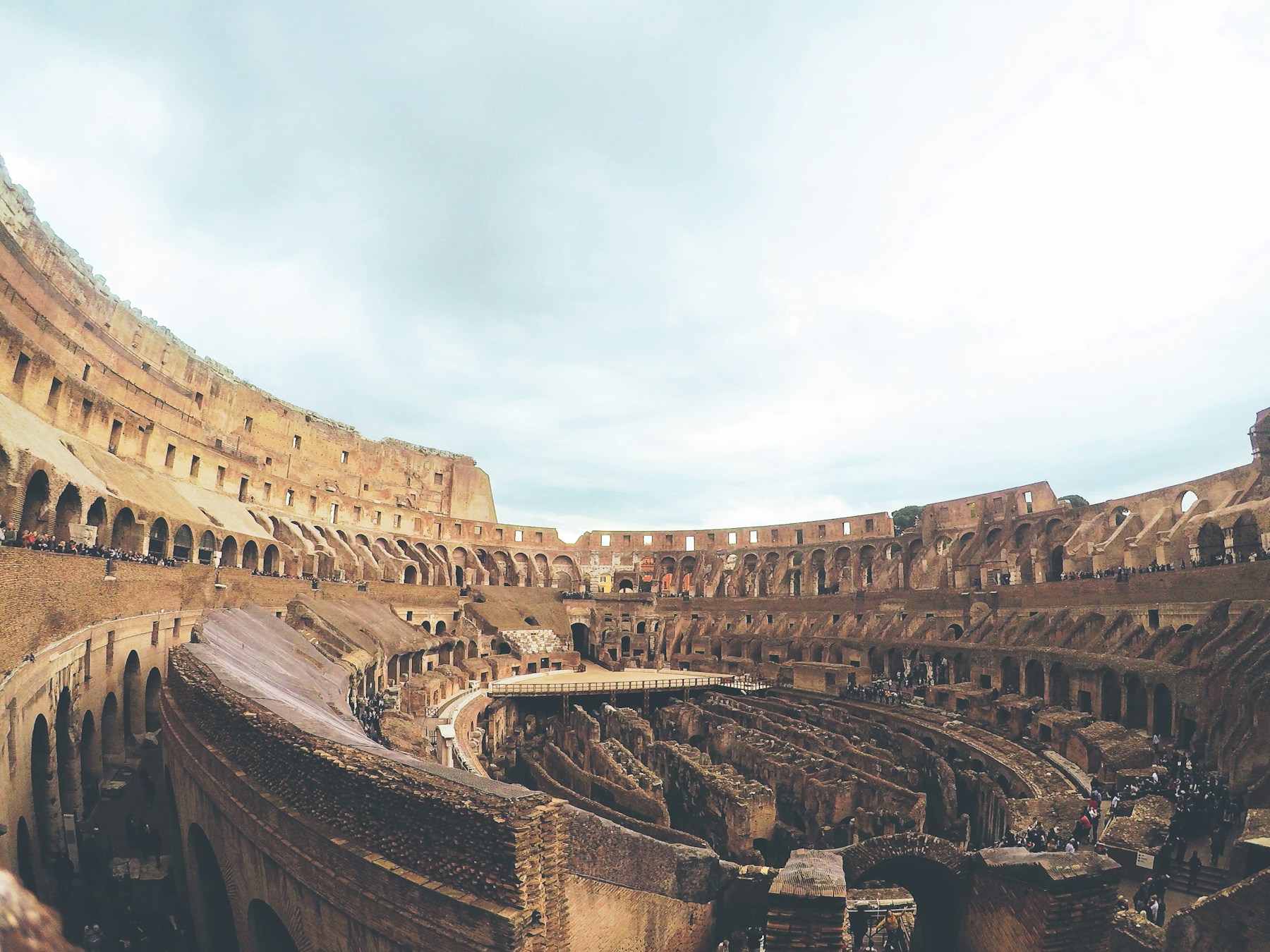
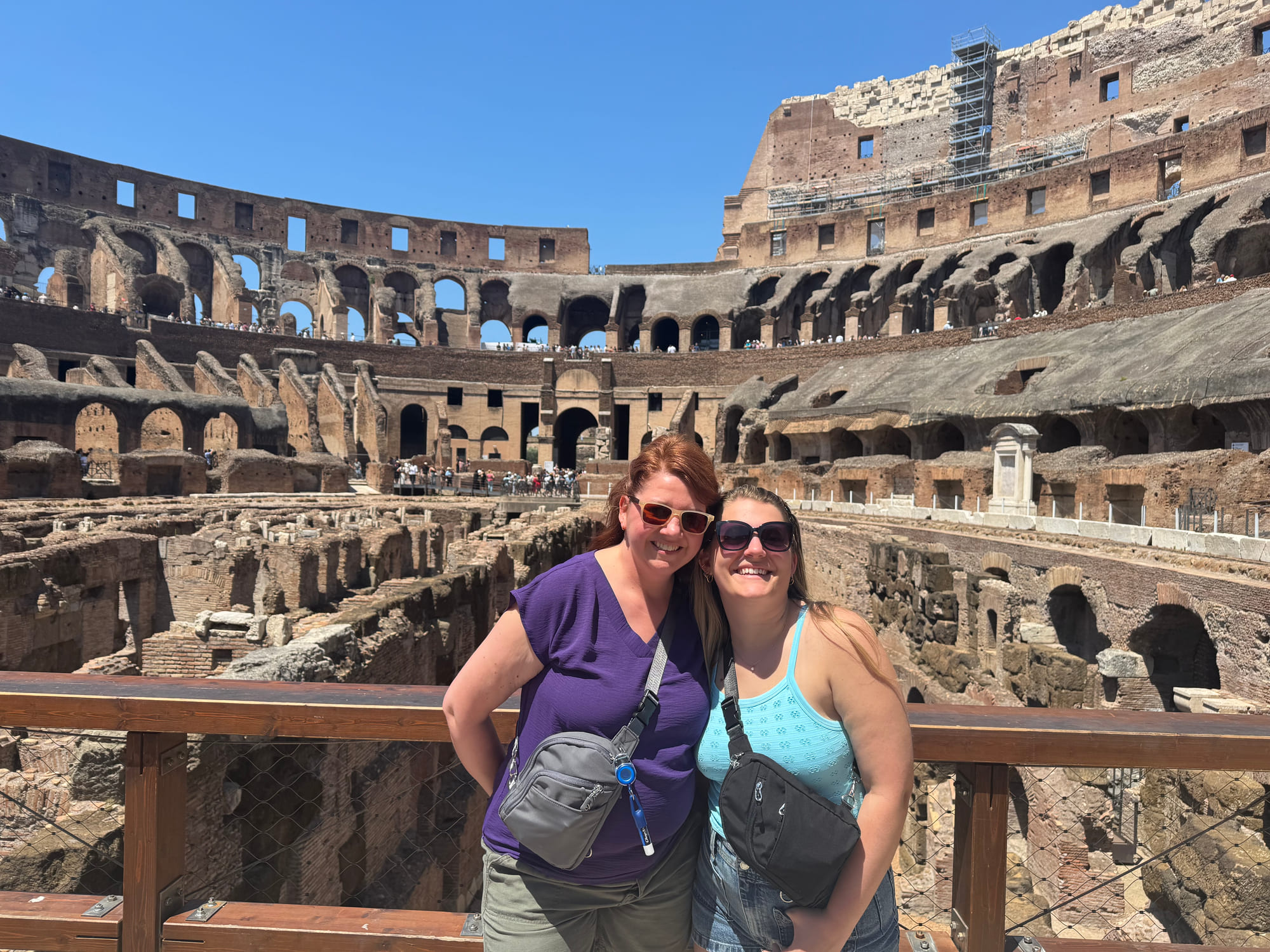
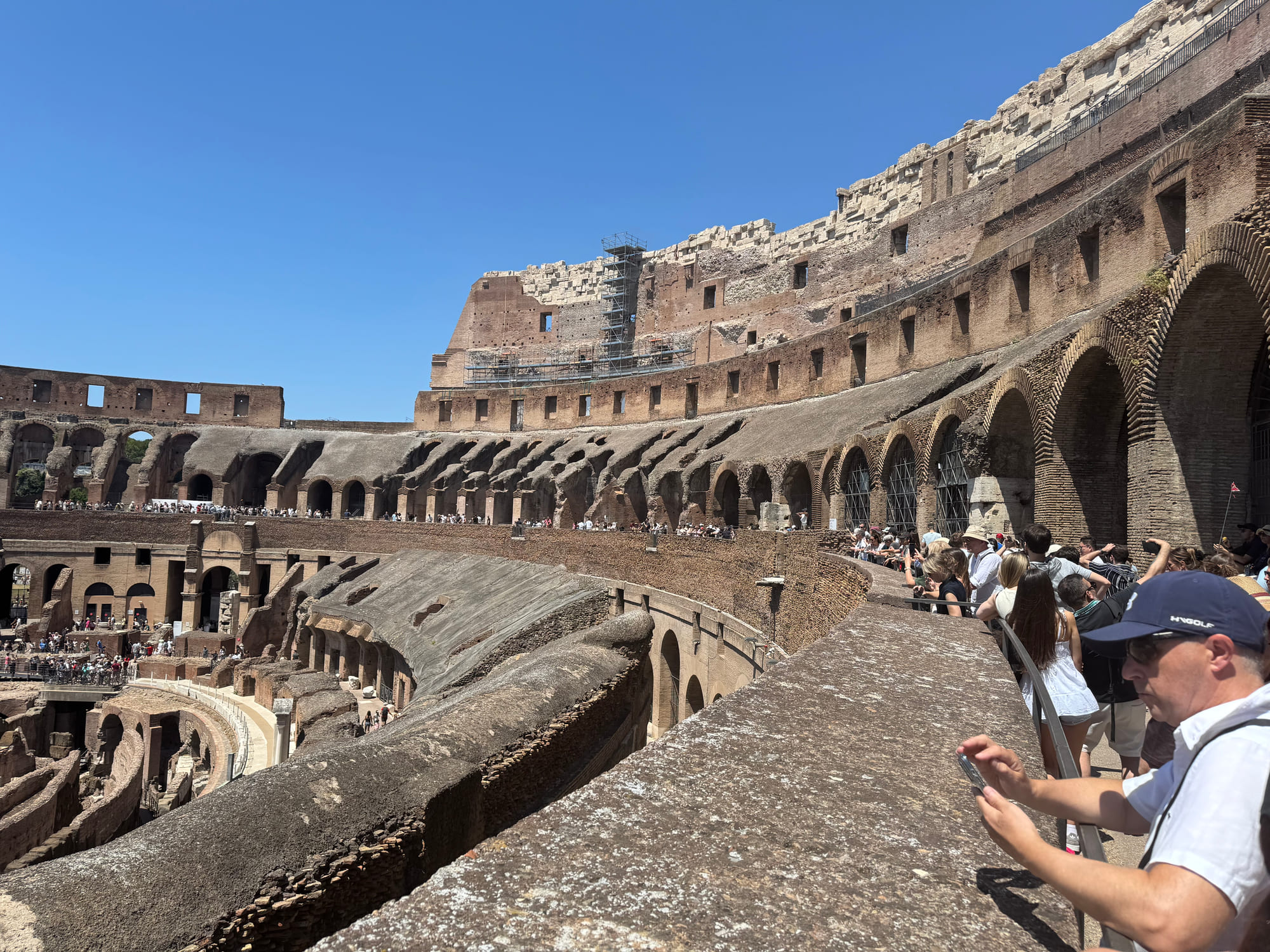
Our Colosseum tickets had a timed entry, and reserving in advance was essential for our itinerary. The line was intense. We tried to enter about 15 minutes before our time and were turned away, so we waited in the heat until the correct entry window. Security was tight, restrooms felt limited, and the site was crowded almost everywhere we went.
We still had to stop and recognize where we were. Being hot, tired, and surrounded by people did not change the fact that we were standing beside one of the most recognizable historic structures in the world. We used the waiting time to take pictures around the exterior and remind ourselves that this was not an ordinary inconvenience in an ordinary place.
Our tickets included the arena floor as well as access to the upper levels. Brian especially wanted the arena so he could act out a scene from Gladiator, but the historic perspective and photographs were worth it too. The official Colosseum ticket menu includes multiple experiences—standard levels, arena, underground, attic, Forum and Palatine access, and combinations that can differ in duration and availability. The correct ticket depends on what someone actually wants to see and how much walking, standing, heat, and time the group can comfortably handle.
A moved bus stop turned into an unplanned walk beside the Circus Maximus
By the time we had taken dozens of Colosseum pictures, our feet were telling us it was time to sit down. We had bought open-top hop-on hop-off bus tickets in advance. The digital tickets meant we could board without first finding a kiosk or a street seller, and we knew we could also have bought tickets locally if the day had developed differently.
The problem was that the stop nearest the Colosseum had moved about a mile in the opposite direction from where the app showed it. We did not want to backtrack, so we continued toward the next stop on the route. Unfortunately for us, that was more than another mile away.
The unexpected benefit was walking along the Circus Maximus, the ancient chariot-racing site. We saw it from ground level in a way we probably would not have appreciated from the bus. We found drinks near the route, waited a few minutes, and were very happy to sit on the next bus for 20 or 30 minutes without caring quite so much where it took us.
Hard Rock Cafe was familiar on purpose
We had planned to eat at Hard Rock Cafe Rome. It was not a search for the most local Roman meal, and we were fine with that. Brian had enjoyed Hard Rock locations in European cities since he was young, and the familiar American-style choices, music memorabilia, and fun setting gave everyone an easy meal in the middle of a very long day.
Our twins had turned 18 the previous year, and one of them was very aware that 18-year-olds could legally order an alcoholic drink in Italy. That became one of those small family travel moments that marked how much our children—and our trips with them—had changed. It did not need to become the focus of the meal to be memorable.
After lunch, we found another bus stop a few blocks away and rode long enough to see more of the city. Jet lag eventually won. We returned to the hotel and took a nap, which was a much better decision than pretending our bodies were still capable of appreciating every landmark we passed.
Rome’s Metro was easier than it looked
After resting, we went back out by Metro. We saw plenty of visitors studying the ticket machines and trying to work out the system at the station, but our advance research made it simple. Rome’s standard BIT ticket currently costs €1.50 and remains valid for 100 minutes from the first validation. On the Metro, it covers one continuous journey even when changing lines without leaving the paid area. ATAC also supports contactless Tap & Go, which was the easiest approach for our short visit.
At that fare, several rides for the family were still far less expensive than using a rideshare every time. The important detail is consistency: ATAC says its best-fare calculation depends on using the same contactless card or device for each person’s taps. Families should also remember that one payment card cannot simply be passed back through the gate for everyone as though it were one shared transit pass.
Trevi Fountain rewarded another small piece of advance planning
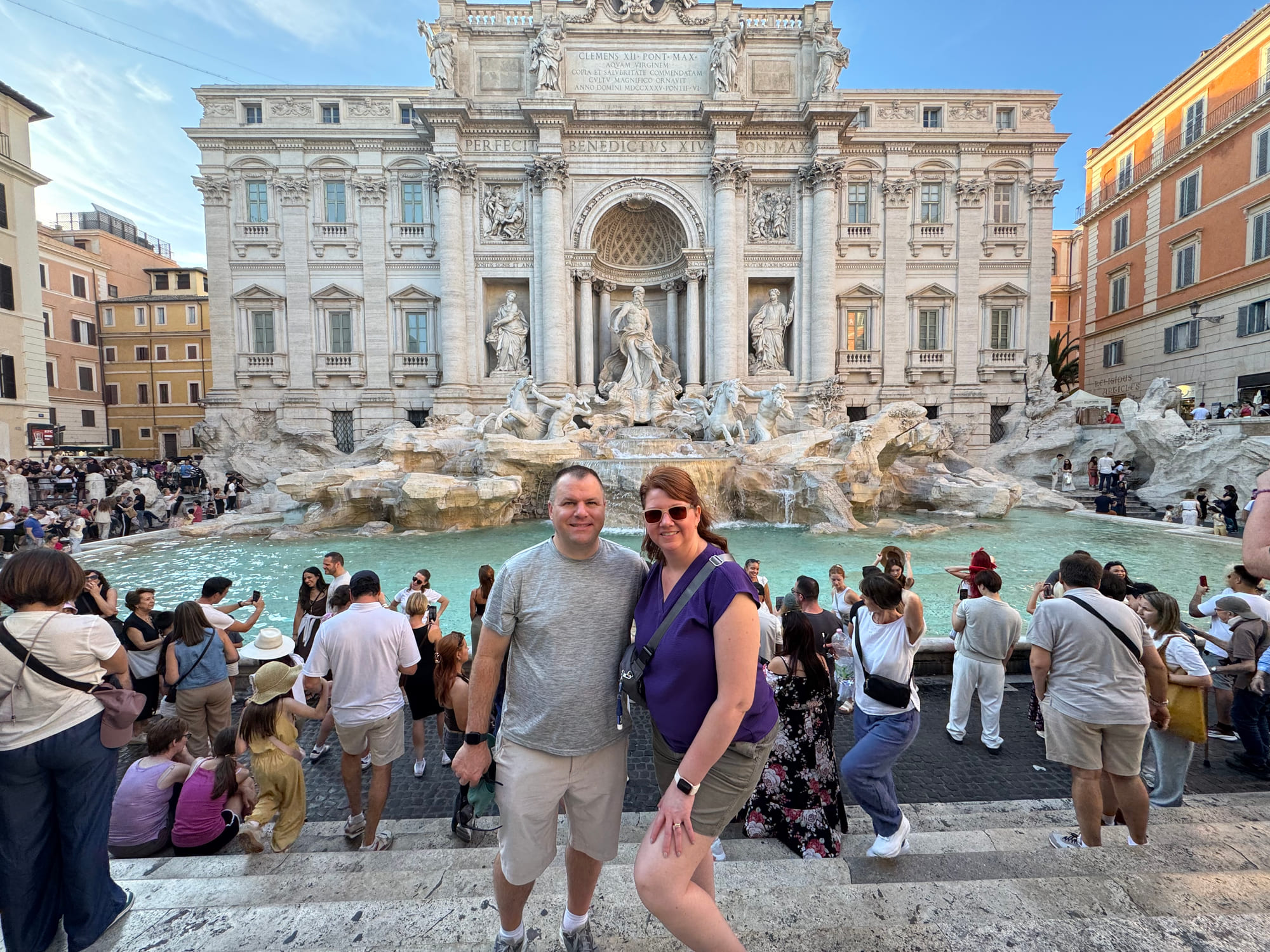
We took the Metro toward Trevi Fountain and had already purchased the required visitor ticket online. Calling it a tax is understandable, but the official description is a €2 access ticket for tourists and non-residents entering the basin area closest to the fountain. The surrounding piazza can still be experienced outside that controlled inner area.
Because we understood the new process and had purchased in advance, we moved through the queue easily and took the quintessential photographs in front of the fountain. It was one more example of a very small planning detail protecting a very short visit. Two euros was not the meaningful part; knowing the current rule before we arrived was.
We had dinner nearby at a tiny restaurant a friend recommended. It required reservations, and we were glad we had one. On the walk toward the closest Metro station, it felt as though we passed at least five gelato or dessert shops. Rome did not make the return to the hotel feel like a chore.
We chose sleep instead of the Spanish Steps
We had hoped to see the Spanish Steps, but we did not want to add the walking. We knew the next two weeks would bring dozens of famous places, and forcing one more landmark into the night would not improve the trip. We went to bed.
That decision belongs in the article because a good itinerary is not measured only by how many attractions survived the day. We had crossed an ocean, navigated a new city, toured the Colosseum, ridden through Rome, eaten well, visited Trevi Fountain, and still needed to reach a cruise ship the next morning. The Spanish Steps would still exist on another visit. Our energy for the next part of the trip was not unlimited.
The next morning proved why cruise-day buffers matter
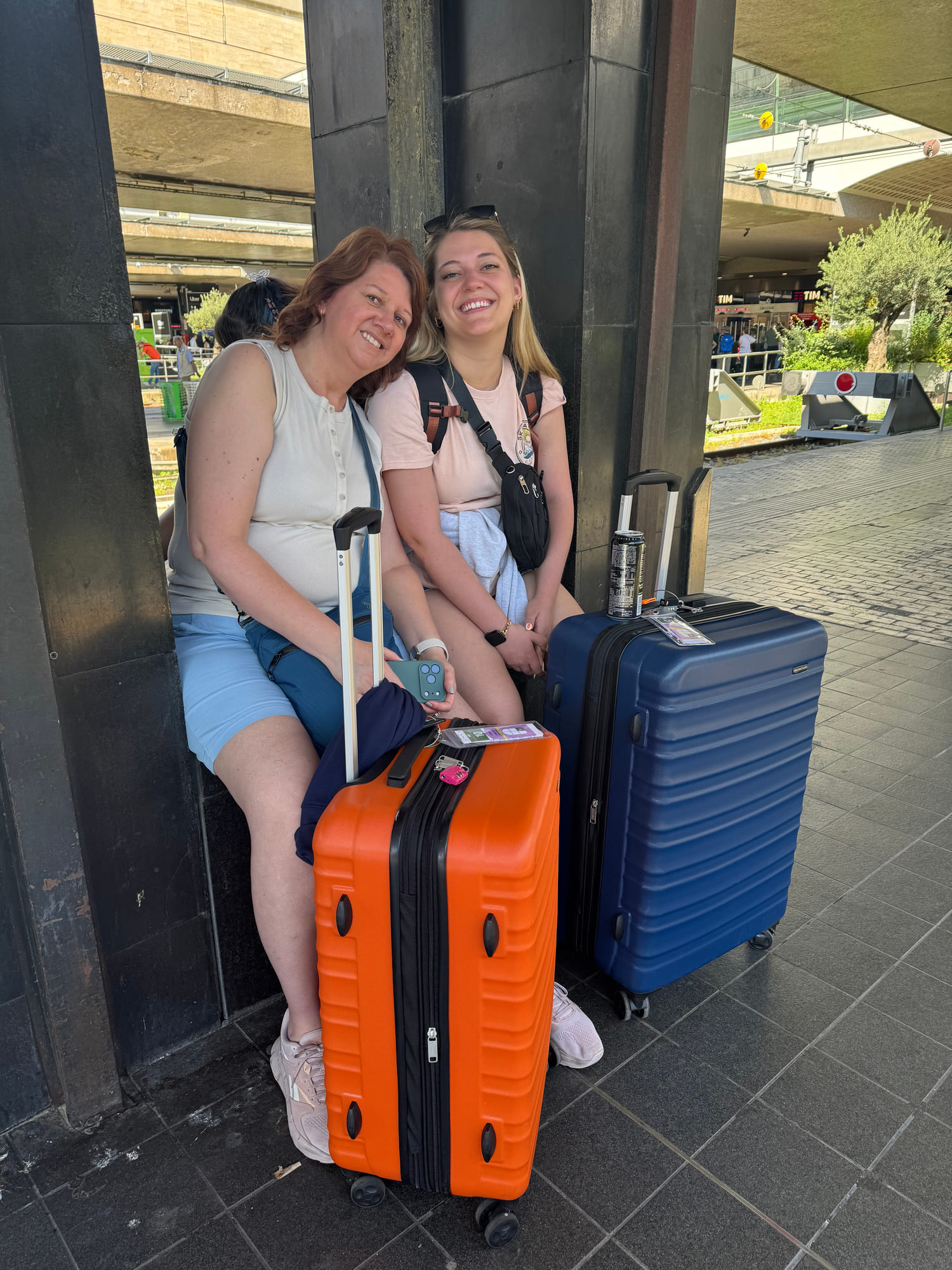
We took the Metro back to the train station for our trip to Civitavecchia. Our train was delayed about 45 minutes. Fortunately, we had built a buffer before our scheduled ship-boarding time, so the delay was frustrating rather than disastrous. Brian mentioned more than once that 30 years in risk-management careers were finally paying off.
Civitavecchia is the rail destination, but the train station is not the final cruise berth. We took a van taxi from the station into the port area and paid cash. Having enough euros for that last connection mattered. Current port arrangements can include taxis, local station-to-port services, and port shuttles whose routing depends on the ship and terminal, so I would confirm the cruise line’s instructions and the port’s current mobility plan instead of assuming one saved transfer description will always apply.
What I would add with two or three more days in Rome
With more time, I would not try to add 15 unrelated pins to the same day. I would divide Rome into a few strong themes and let each one have enough room. Our first additional day would stay with ancient Rome: the Roman Forum and Palatine Hill deserve time beyond a Colosseum entry, and the official ticket combinations should be read carefully so the pieces you care about are actually included.
A second day could center on Vatican City. The Vatican Museums and Sistine Chapel are a major timed experience with their own official ticket portal, while St. Peter’s Basilica has separate access, security, tours, and dome choices. They may look like one cluster on a map, but they should not be treated as one quick attraction. I would reserve the museums through the official Vatican site and protect enough time that the day does not become another endurance test.
For a third block, I would connect the historic center on foot: the Pantheon, Piazza Navona, Campo de’ Fiori, Spanish Steps, and the streets between them. The Pantheon now requires official admission tickets for ordinary tourist visits, while Piazza Navona and the Spanish Steps are outdoor public spaces. Depending on the group’s interests and energy, I would finish in Trastevere for a neighborhood evening rather than add another major museum.
The catacombs can be fascinating, but I would treat them as a deliberate excursion rather than a casual add-on. Their locations, tour rules, and travel time can pull the itinerary away from the historic center. Villa Borghese and the Borghese Gallery can also reward travelers who prefer art and green space to another day of ancient ruins. The right longer stay is not every famous sight; it is the best combination for the people taking the trip.
Why 24 hours in Rome was still worth doing
I would never describe our day as a complete Rome itinerary. It was a carefully chosen first encounter before a cruise, and that distinction makes the advice more honest. We saw the two landmarks that mattered most to us, learned the transportation system well enough to move with confidence, enjoyed meals that fit our family, rested when we needed to, and reached the ship despite a delayed train.
If you have only one day, choose the one or two experiences you would be genuinely disappointed to miss. Put the hotel and transportation around those priorities, reserve what requires a reservation, and leave enough margin for an airport line, a moved bus stop, jet lag, summer heat, or a late train. If you have three or four days, let Rome expand—but do it by giving the city more time, not by forcing more famous names into every hour.
That is the difference thoughtful planning made for us. It did not make Rome empty, cool, perfectly on time, or easy on our feet. It made the important parts possible, kept the predictable problems from becoming emergencies, and gave us a first visit we still talk about inside the best trip we have ever taken.