Personally Experienced · Last verified 2026-08-08
Explore United States
Quick Take
A seven-night family cruise with a flexible Alaska rhythm
- When we went
- July 2025
- Our sailing
- Seven nights from Seattle on Anthem of the Seas
- Who traveled
- Seven family members, with different interests and energy levels
- Our biggest splurge
- A balcony and two self-guided Jeeps in Juneau
In July 2025, Brian and I took a seven-night Alaska cruise from Seattle aboard Royal Caribbean’s Anthem of the Seas. We were traveling with all three of our daughters, Brian’s sister, and our oldest daughter’s now-fiancé, so planning for seven people was a little more adventurous than what we were used to. It also gave me early practice in the kind of moving pieces I would later learn to love as a Fora Travel Advisor: different interests, different energy levels, and the need to make room for everyone to have a trip that felt like their own.
This was only one version of an Alaska cruise: a relatively short, round-trip sailing from Seattle that showed us the beautiful southeastern part of the state. It was a wonderful introduction, but it barely scratched the surface. Longer cruise-and-land packages can begin or end farther north and add time in places a ship cannot reach, often combining Seward and Kenai Fjords National Park with Anchorage, Talkeetna, Denali National Park, and Fairbanks. Many of those itineraries use the Alaska Railroad, and some go farther still into places such as Wrangell–St. Elias. If you have the time and want a deeper look at Alaska’s interior, those are the kinds of extensions I would encourage you to consider.
This is not my future Seattle guide, and it is not meant to be a general cruise-recommendations article. It is the story of the Alaska sights, the excursions that made sense for our group, and the moments that convinced me Alaska needs your attention even when you are technically having a day at sea.
Why We Arrived in Seattle a Day Early
We flew nonstop from Charlotte to Seattle and landed a little after 5:00 p.m. Our boarding time was not until the following day on purpose. I wanted us to see a little of the place we had flown to, but I also wanted the buffer that comes from not betting an entire cruise on a same-day flight. Seattle-Tacoma International Airport is well south of downtown, and with seven people and plenty of luggage, the Link light rail made more sense to us than trying to coordinate a larger ride. Getting our bags from the terminal to the station was our first challenge of the trip, but the train itself was manageable.
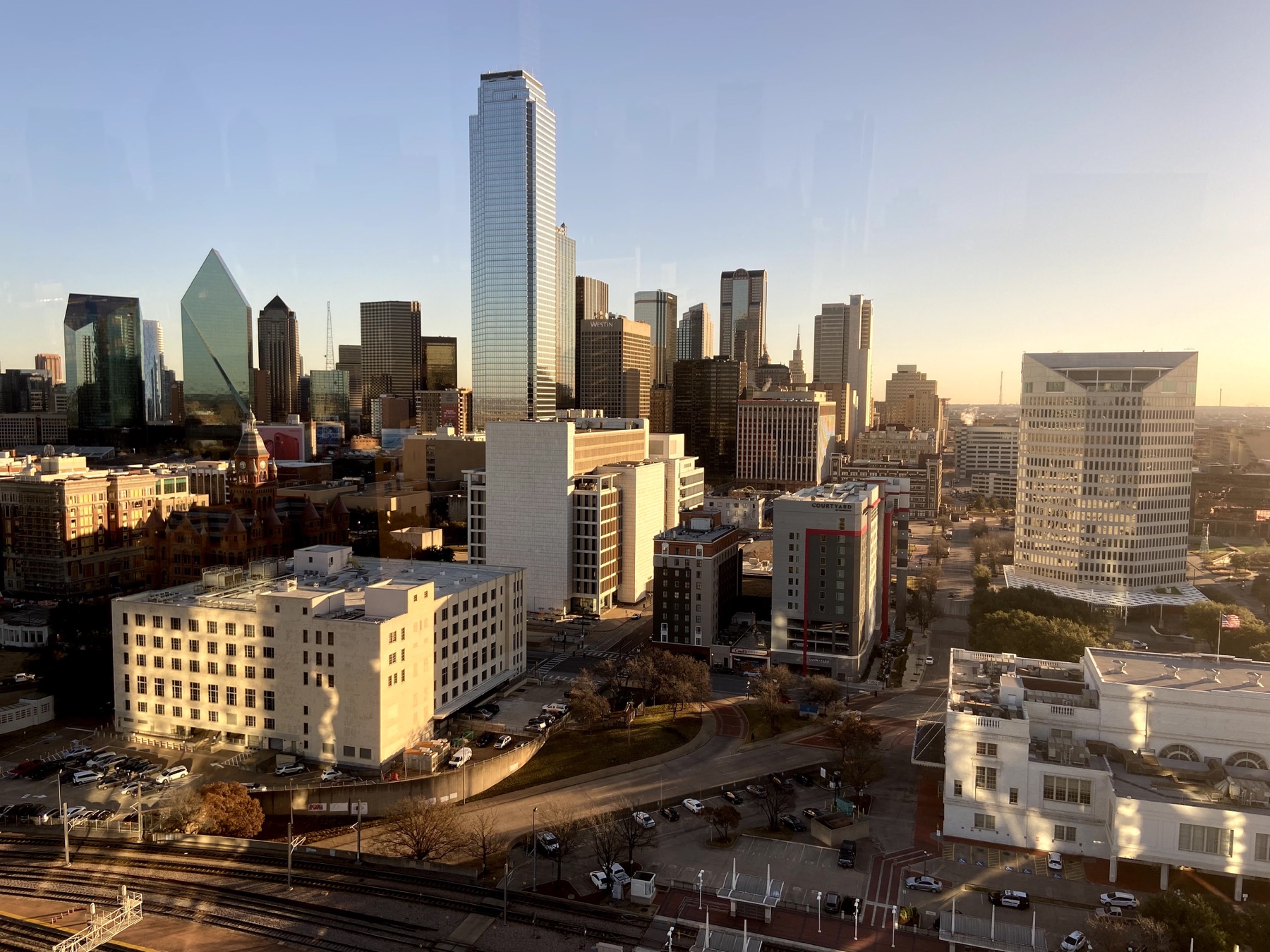
Once downtown, we walked the last ten or fifteen minutes to our hotel because everyone needed to move after six hours on a cross-country flight. We made the kids happy with food delivery, got some sleep, and were ready for the port the next morning. I have plenty of hotel opinions for this area, but I am saving the fuller Seattle conversation for its own article.
We reached the port before 11:00 a.m. and were onboard in less than fifteen minutes. Royal Caribbean’s app-based pre-boarding process made this part exceptionally easy: bags dropped, passports scanned, and suddenly the planning phase was over. At 4:00 p.m., Seattle began to fade behind us, and the scenery started almost immediately as we headed north.
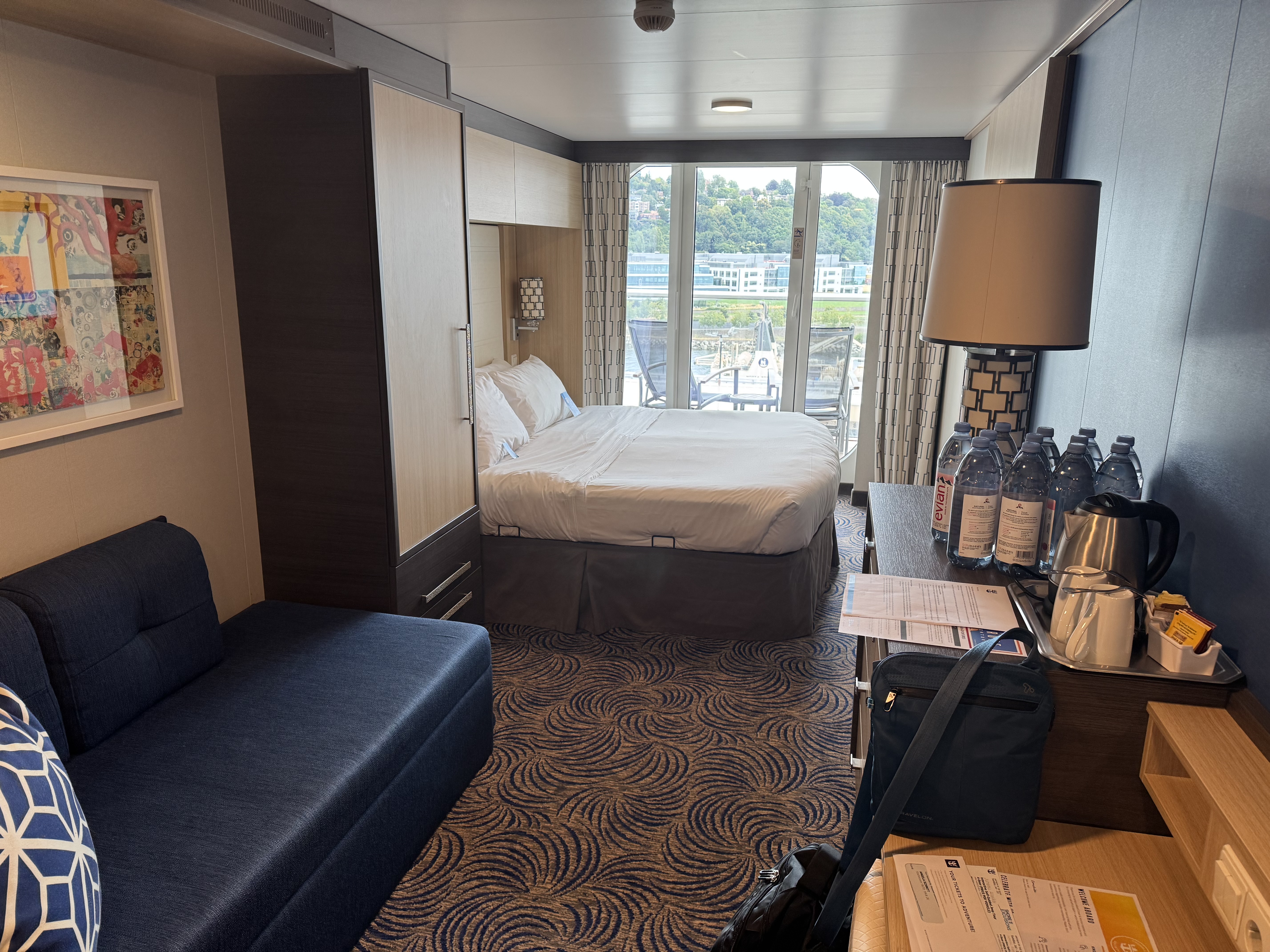
The Balcony Was Not Optional for Us
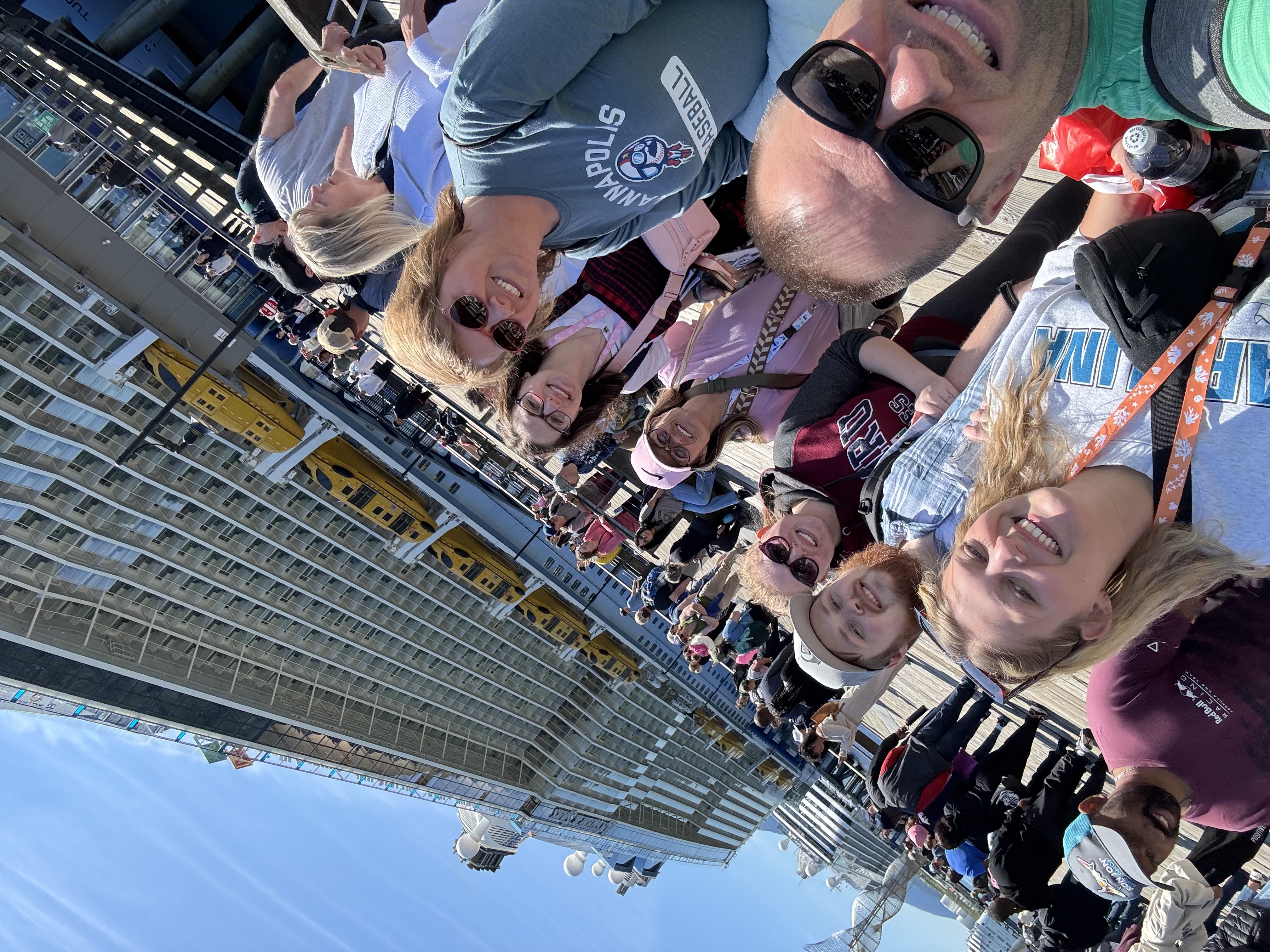
Day two was at sea, but that did not mean there was nothing to see. We could still catch occasional mountains and land from the starboard side. My strongest Alaska-cruise opinion is simple: if you can make the balcony upgrade work, make it work. The scenery is why you are going. You cannot move your room from port to starboard once you are there, of course, so choose the side that works best for your itinerary and expect to spend a lot of quiet balcony time watching what passes by.
Juneau: A Jeep Day Built for Our Group
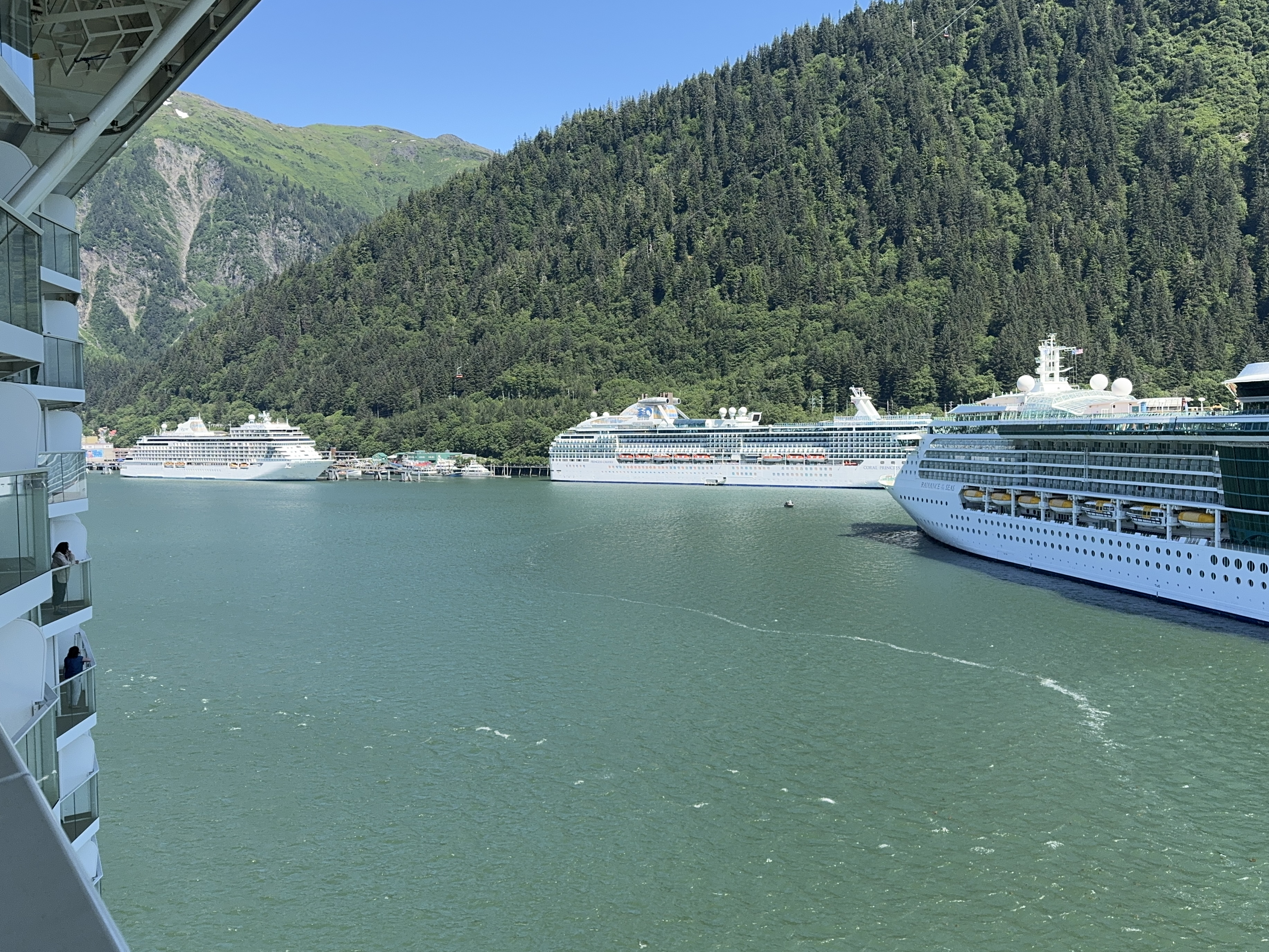
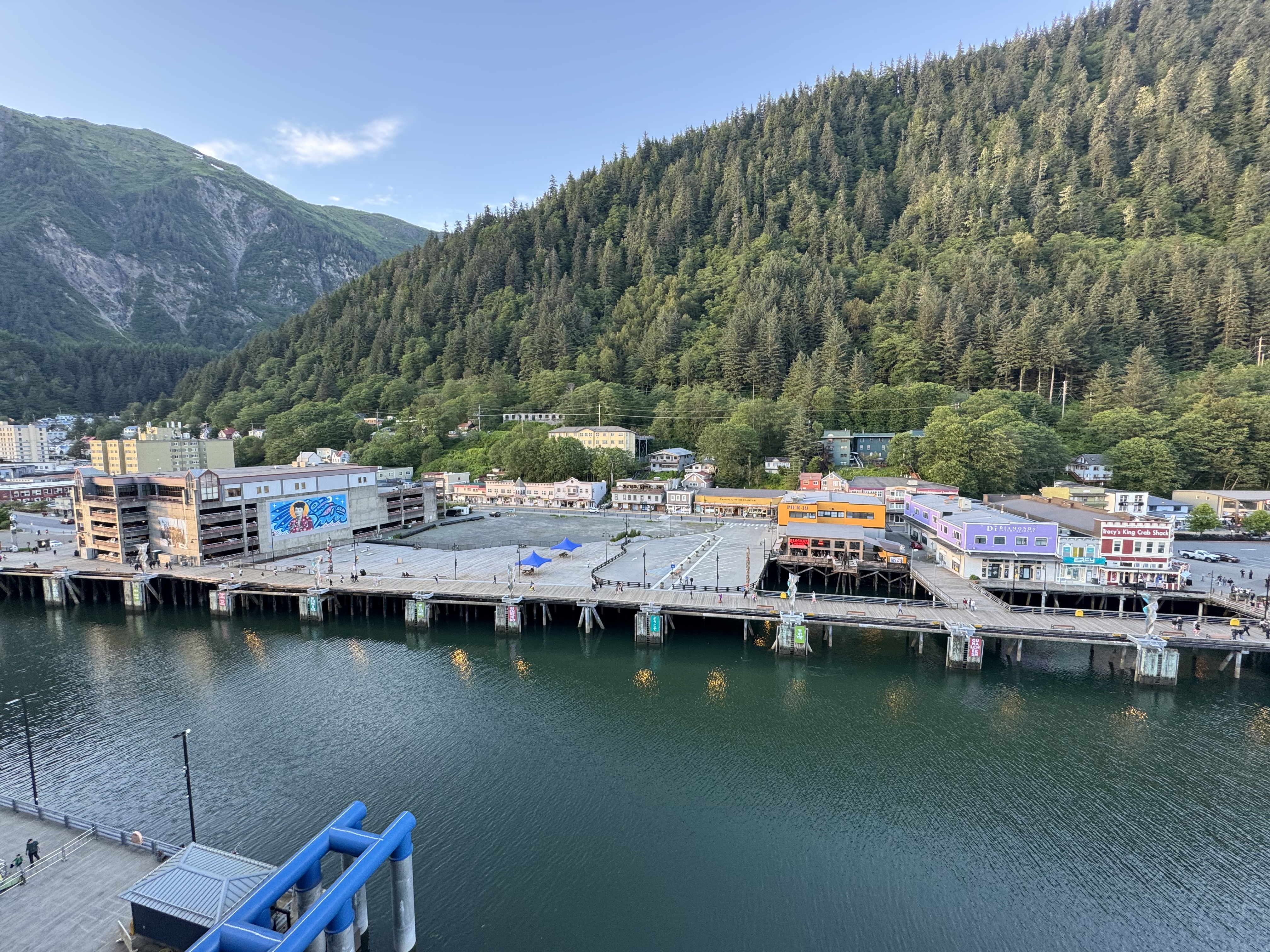
We arrived in Juneau just before lunch on day three, already sharing the harbor with three other very large ships and seaplanes coming and going. It has the energy of a cruise-port town, but the setting is spectacular: Juneau sits on the Gastineau Channel with mountains rising around it. It is also a place you do not simply drive to from the rest of North America; the capital is not connected to the outside road system, which made the surrounding water and mountain geography feel even more real to me.
Our five-hour self-guided Jeep tour began at 3:00 p.m., so we had a few hours to look through the shops and find food. There were plenty of souvenir storefronts, and some specialty shops were much pricier than I expected. We reserved two Jeeps for the seven of us. Splitting into smaller groups gave us a little breathing room, let us rotate who rode with whom, and meant we could stop for food or a bathroom when we wanted instead of being tied to a large bus schedule. The $700-plus per Jeep felt like a serious splurge at the time, but looking back, it was worth it for our group.
The route came with an iPad for directions and recorded commentary that we could pause or replay. That combination gave us enough structure to learn as we went but enough freedom to linger when a view—or a family conversation—deserved more time.
Mendenhall Glacier, Eagle Beach, and a Quiet Shrine
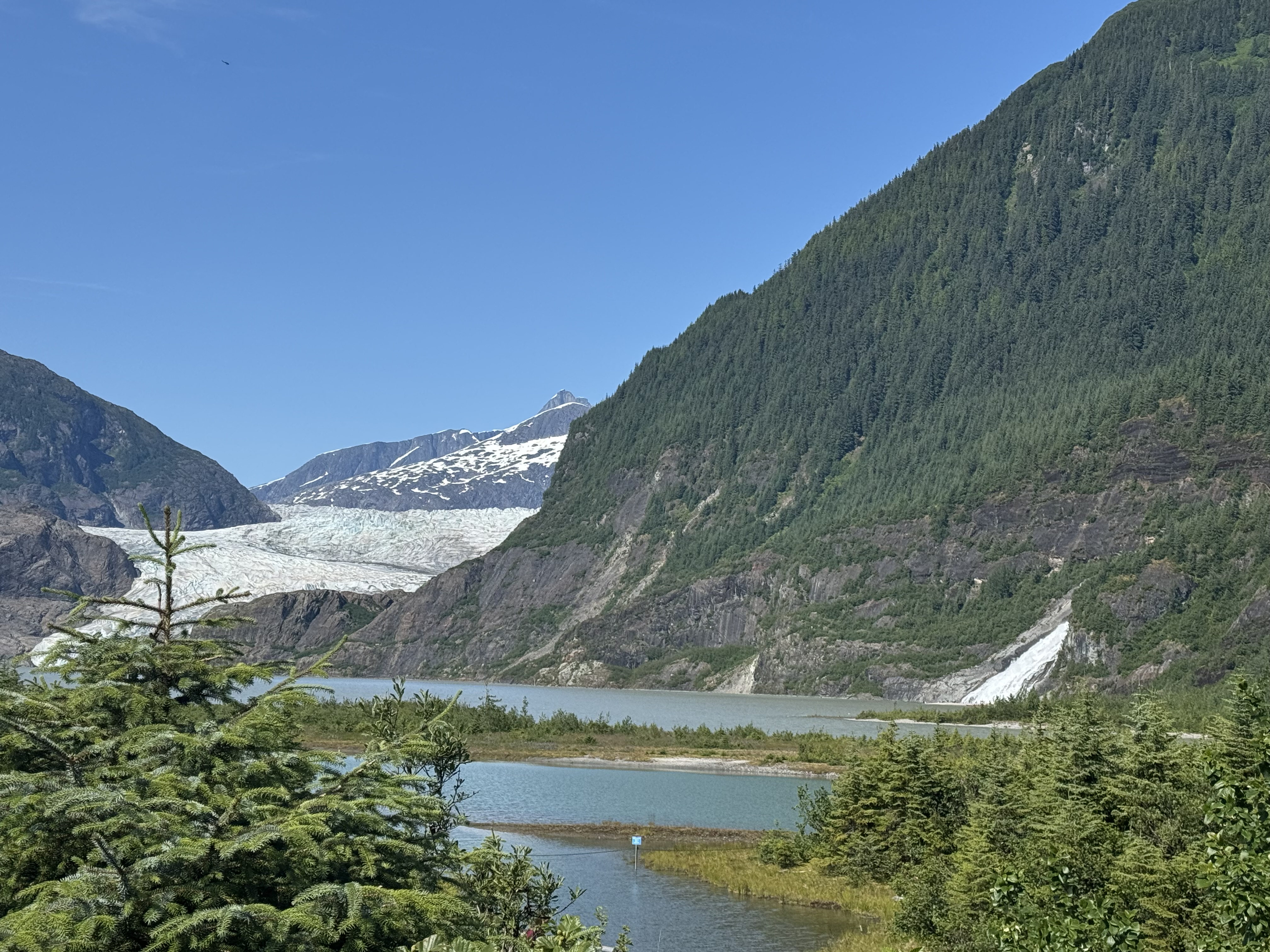
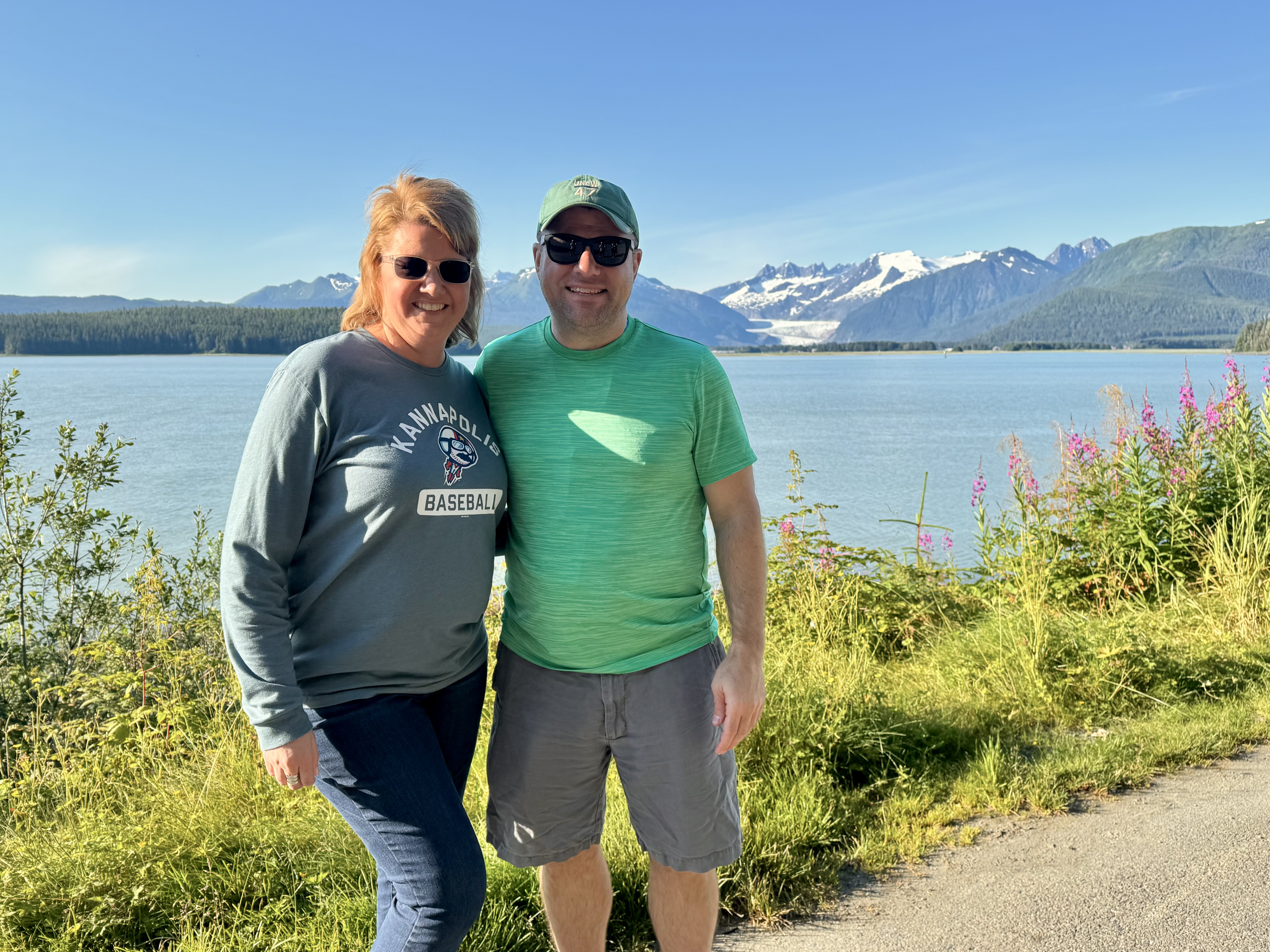
Our first stop was Mendenhall Glacier, roughly twenty minutes north of town. Brian and I had already seen glaciers in Switzerland, but this one was just as impressive in a completely different setting. We spent about twenty minutes in the visitor center and another forty-five on the nearby trails. With more time, I would have enjoyed continuing toward Nugget Falls. The recreation area gives visitors views across Mendenhall Lake rather than a walk onto the glacier itself, and it is an especially tangible place to understand that the glacier has retreated enough to leave the lake in front of it.
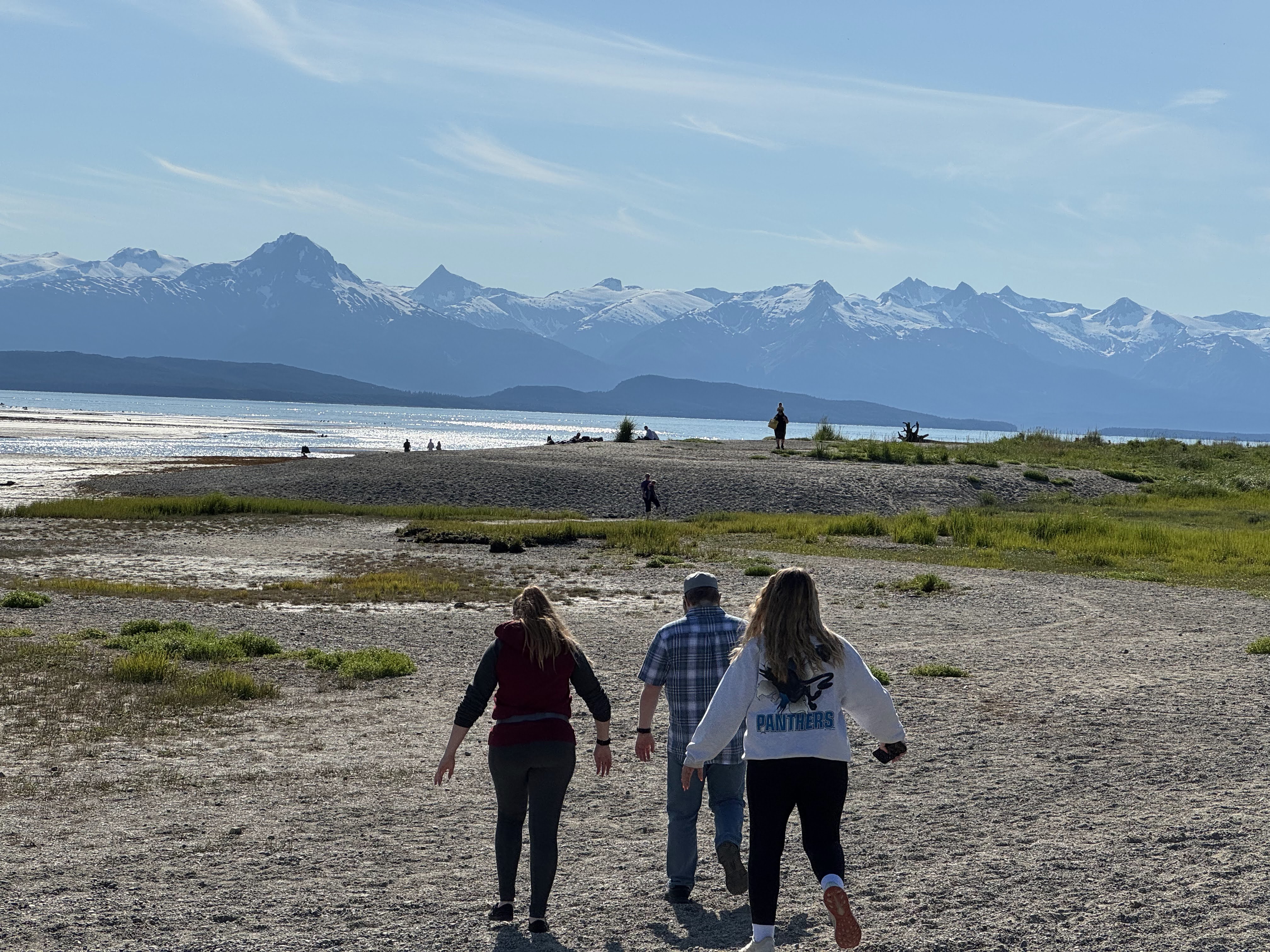
We continued north to Eagle Beach State Recreation Area and walked out across the broad, low-tide beach. At one point, the map made it look as if we should have been standing in the ocean—which was a wonderful little lesson in how much the shoreline changes with the tide. We stayed perhaps twenty or thirty minutes, looking across the water to the mountainous skyline and noticing the small van campers that seemed to be everywhere. That flexible, stop-where-you-want way of traveling felt very Alaska to us.
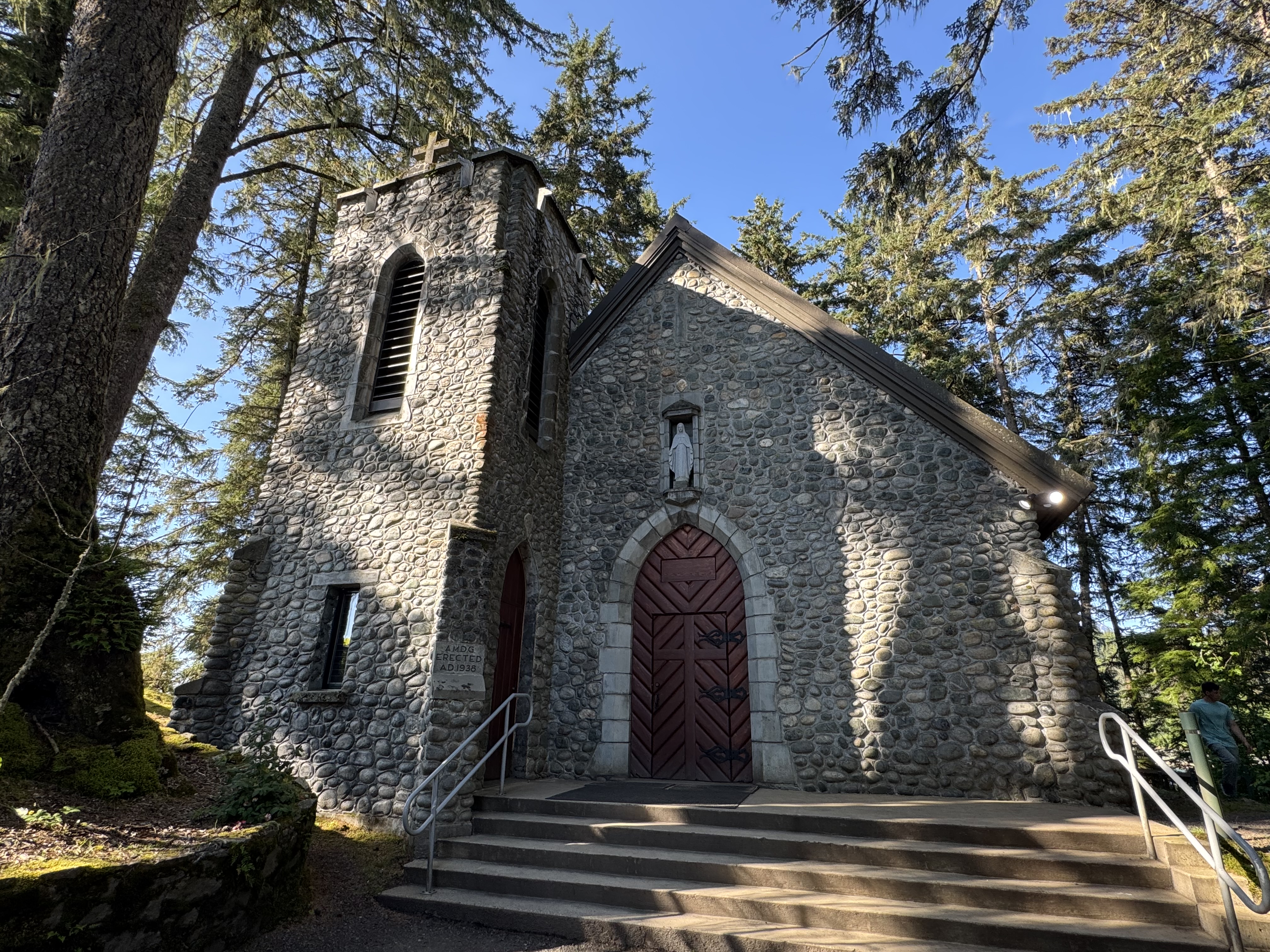
On the way back south, we stopped at the Shrine of St. Thérèse. The mostly paved paths, scenic setting, and little stone church made it feel peaceful after the motion and noise of the port. The shrine began in the 1930s as a retreat center, and its stone chapel sits on Shrine Island, reached by a causeway. We spent about an hour here, took dozens of photos, and were grateful our Jeep day had enough flexibility to include a place that had not been on our original must-see list.
Douglas Island and a View Worth the Detour
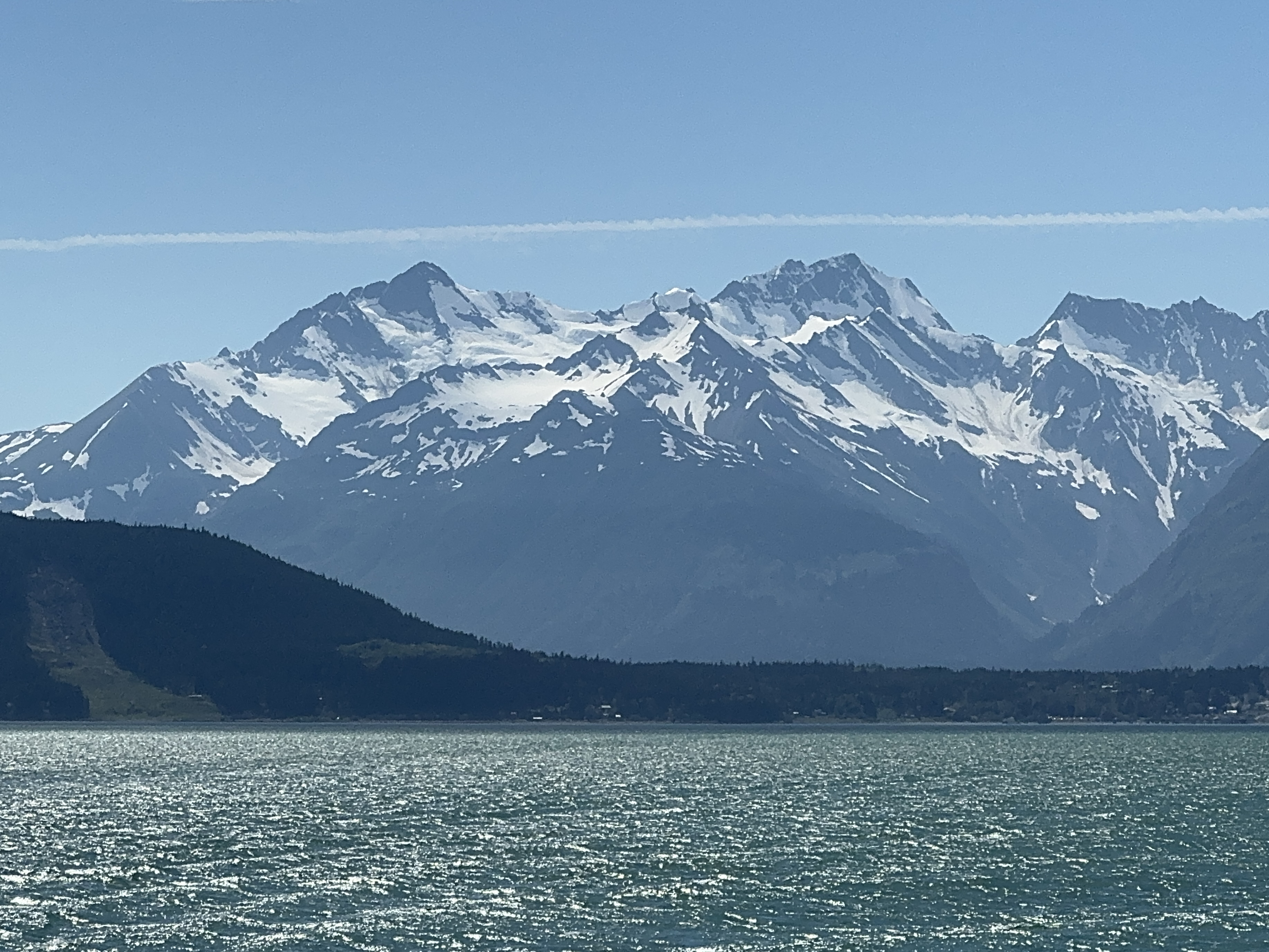
Before returning the Jeeps, we crossed the bridge onto Douglas Island. The island is separated from downtown Juneau by the Gastineau Channel and is much larger than it first looks from the ship. Our route took us toward its north side, where we found wide mountain views looking out toward Fritz Cove. It was one of those moments when we stopped because the guide told us to, then stayed because the landscape made us put our phones down for a few minutes.
We returned the Jeeps with an hour or two left before the ship departed—enough time to shop, find a snack, or simply get back onboard before the end-of-day rush. For us, the self-guided day was the right balance: enough Juneau to understand the port, and enough road time to see why people want to stay longer.
Skagway: Two Very Different Ways to Spend a Port Day
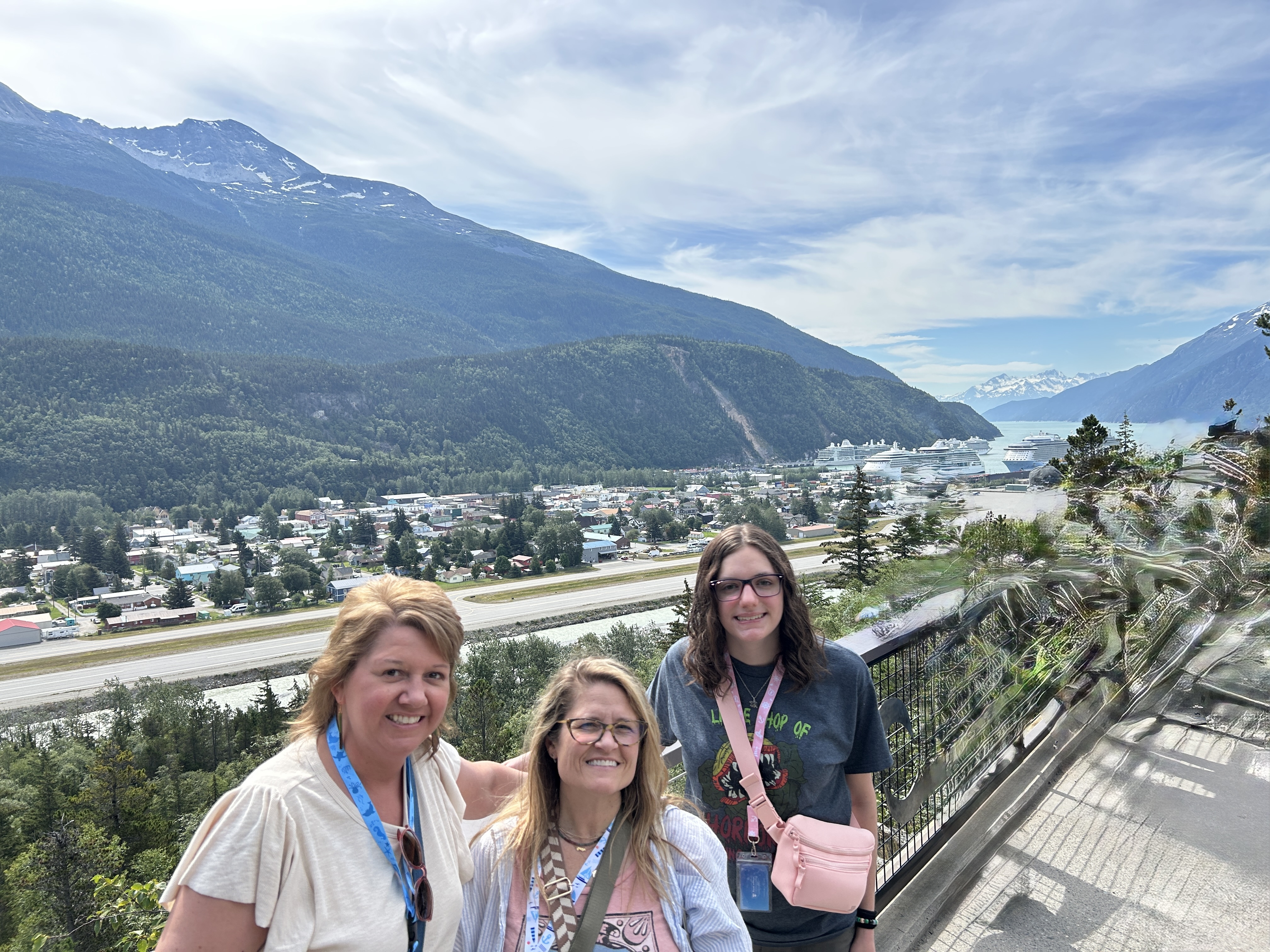
Day four started early with a 7:00 a.m. docking in Skagway. Anyone who was up with the sun was rewarded with views on both sides of the ship as we traveled north from Juneau through the narrow channels of Southeast Alaska. Skagway is compact, colorful, and deeply tied to the Klondike Gold Rush. Its historic district grew as a gateway for stampeders heading toward the Yukon, and that history is still everywhere in town.
Our group chose two completely different excursions, which was exactly right. Brian, Madison, Delaney, and Reilly booked the Wilderness Kayak Experience at Chilkoot Lake. Beth, Sidney, and I chose the much slower Skagway Street Car City Tour. Later, Beth and Sidney also did a sled-dog encounter and gold-rush-themed outing. There is no reason a family group has to choose one activity for everyone; this was a good example of letting people follow what genuinely interested them, then reconnecting afterward.
The scenic White Pass & Yukon Route railroad is another especially popular Skagway choice. It traces the same broad Gold Rush story as the town and climbs through the landscape toward White Pass, but it would be a different day than our group wanted this time.
The Chilkoot Lake Kayaking Day
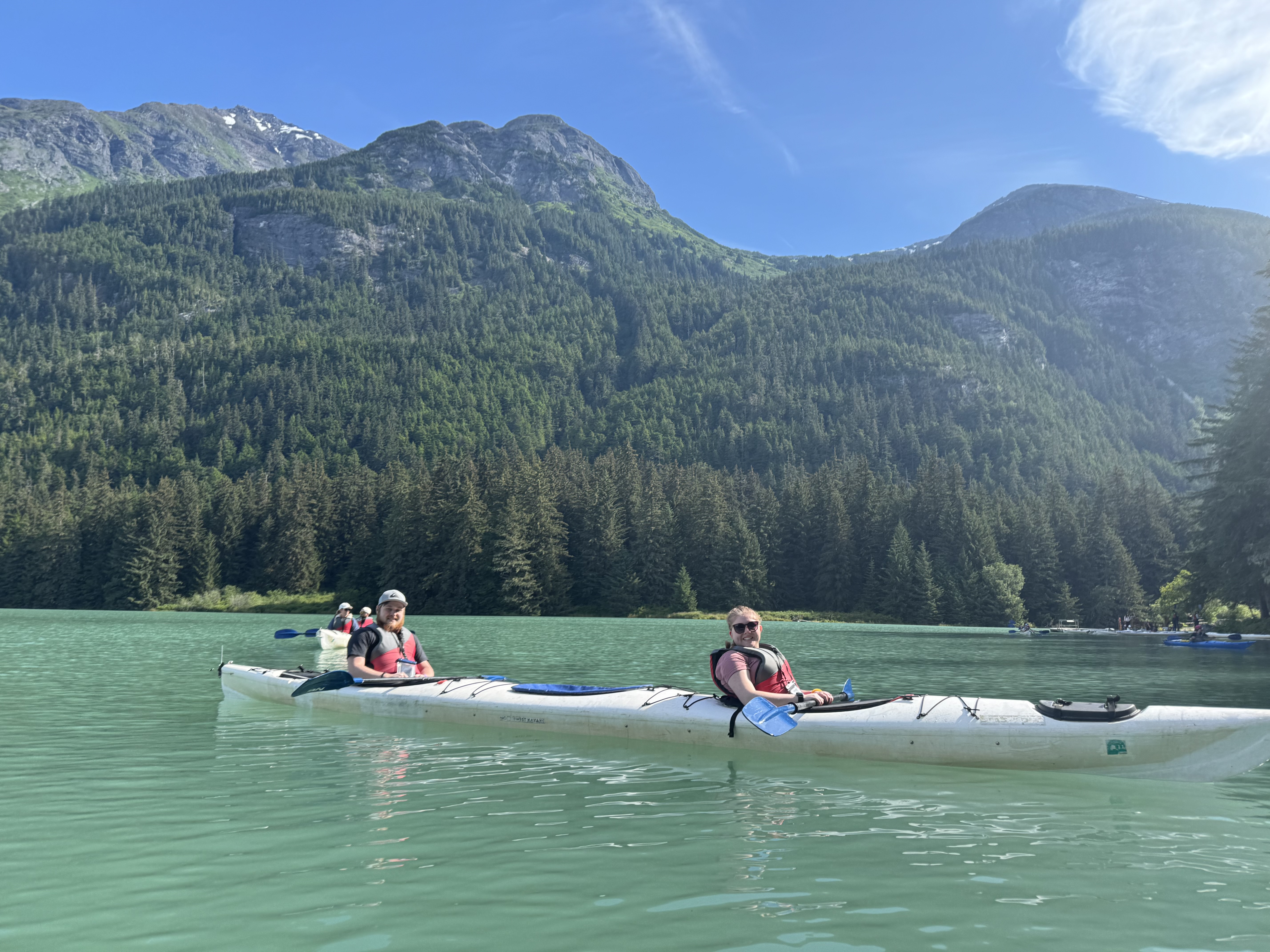
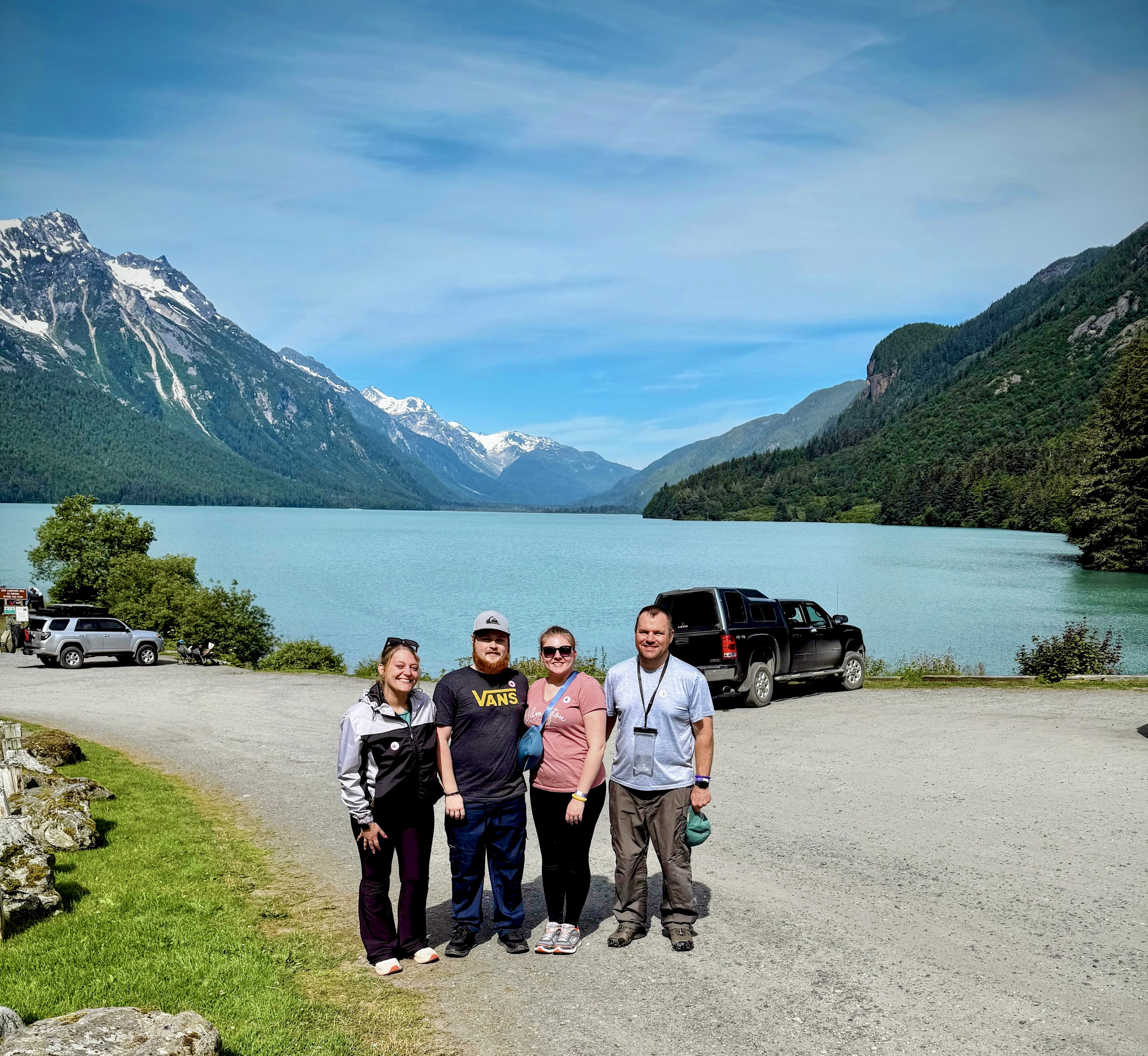
Brian and the younger crew called their kayak experience a once-in-a-lifetime day. They traveled by passenger ferry to Haines, then continued by small bus to Chilkoot Lake. Haines itself has an interesting military past: Fort William H. Seward was established there in the early 1900s and is now a National Historic Landmark. After a brief lesson in handling the kayaks—and securing loose items in a bear-proof cabinet—they spent close to two hours on the lake.
They paddled as a small guided group across a large stretch of Chilkoot Lake, spotting bald eagles along the shore, looking toward glaciers and waterfalls, and taking in a landscape that felt wonderfully removed from a cruise-ship timetable. The group’s practical advice was to bring a clear, attached phone case if you want photos without worrying about dropping your phone into the water. This type of experience can also be booked from Haines independently, and they saw several groups using the area that day.
Back in Skagway, they celebrated with Alaskan crab legs and beer at a nearby restaurant. It was the kind of day that gave some of our group an adventure story while the rest of us enjoyed a gentler look at the town.
Endicott Arm and Dawes Glacier
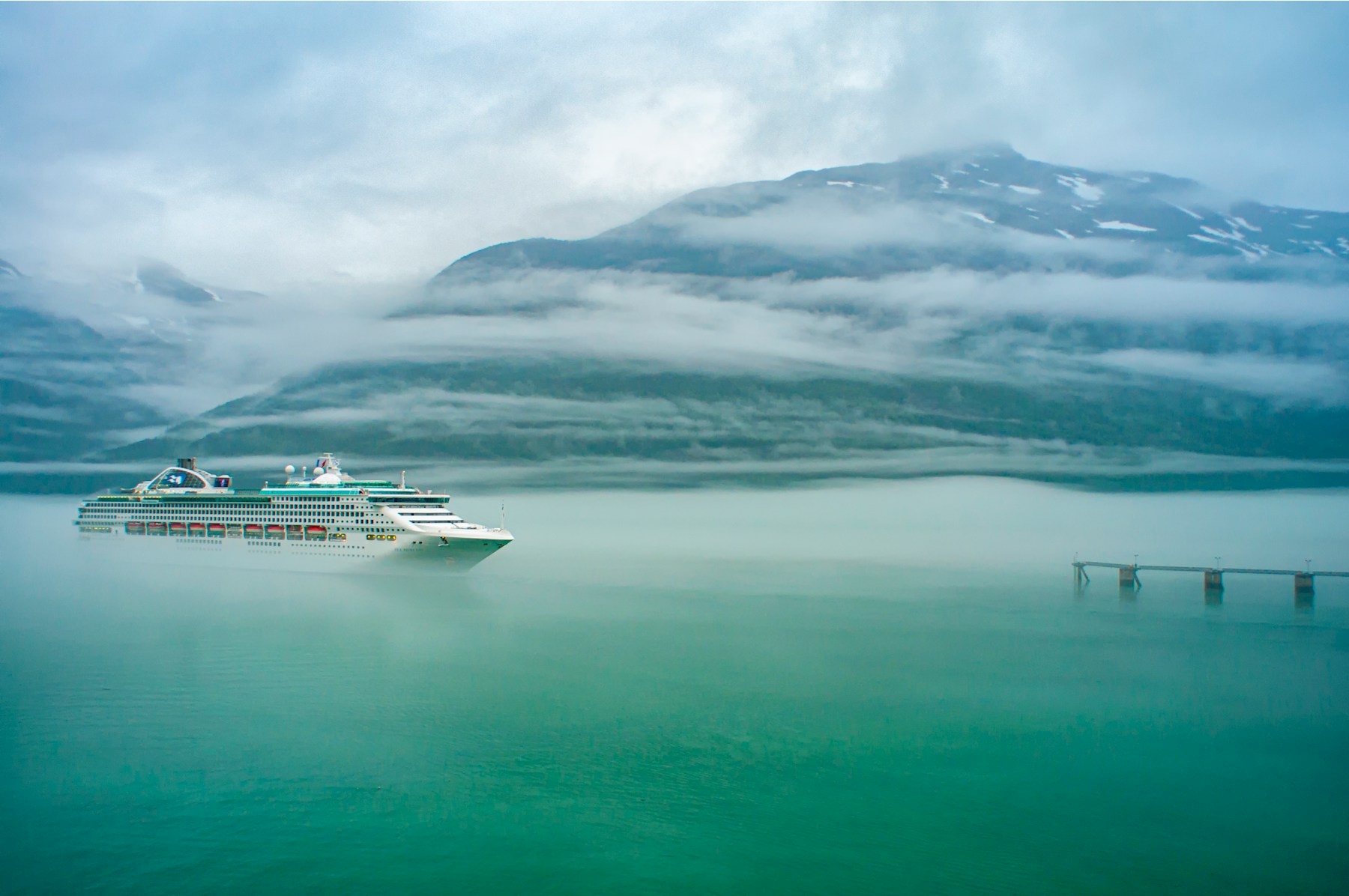
After Skagway, we traveled south through Chilkoot Inlet and seemed to take nonstop photos. The following day brought one of the cruise’s biggest visual moments: a slow, incredibly picturesque route through Endicott Arm toward Dawes Glacier. The approach itself was fantastic, with turquoise water, steep mountains, and the feeling that the ship was moving deeper into a place few roads could reach.
Once we were near Dawes Glacier, our captain turned the ship in a wide circle so passengers could see from both sides. The turn took close to thirty minutes, and it made the balcony-versus-no-balcony conversation feel even more obvious to me. We were fortunate with the conditions that day; the captain said they had not often been able to get that close. It was a beautiful reminder that an Alaska itinerary always depends a little on weather, ice, and the judgment of the people navigating the ship.
We then retraced the route south, enjoyed another full day at sea, and arrived in Victoria, British Columbia, at 8:00 a.m. I have a separate Victoria story coming, just as I have a separate Seattle guide planned for our time after the cruise. By the time we returned to Seattle, we had a full week of mountains, water, family logistics, and memories that felt much bigger than the ship itself.
What I Would Repeat—and What I Would Keep Separate
I would absolutely arrive in Seattle a day early again, choose a balcony again, and build in one flexible excursion for a larger group. The Jeep day in Juneau worked because it gave us privacy, choice, and enough time for a glacier, a beach, a quiet shrine, and a detour onto Douglas Island. In Skagway, splitting the group was the right call because nobody had to pretend a streetcar tour and a kayaking expedition were the same kind of fun.
I am deliberately keeping the detailed Seattle planning, general cruise recommendations, and our Victoria day in their own articles. This story is about the Alaska part: seeing scenery from the moment we sailed, going beyond the gift shops, letting each member of our party choose a day that suited them, and being prepared to stop whenever the view asked us to.