Personally Experienced · Last verified 2026-07-30
Explore Europe
Quick Take
A Southern Germany road trip with room for personal history and alpine views
- Our shared visits
- 2018 and 2026
- Best pace
- Seven to ten days
- Ideal transport
- A rental car, with rail for selected cities
- Do not miss
- Stuttgart, the Black Forest, Zugspitze, and Neuschwanstein
Germany can be difficult to summarize in a single travel guide. Berlin feels nothing like the Black Forest, and Cologne along the Rhine offers a different experience from the castles and mountain scenery of Bavaria. For this article, I am focusing on the part of the country Brian and I know best together: Southern Germany, particularly Baden-Württemberg and Bavaria.
We explored this region during larger European trips in 2018 and 2026. Brian also lived near Stuttgart for two years as a child, from 1987 to 1989, so returning with him gave the journey a personal dimension that went beyond ordinary sightseeing. Some stops connected him to childhood memories, while others—especially the Porsche Museum—connected directly to interests he has carried since childhood.
This is not the exact itinerary from either trip. It is the route I would build from the best parts of both: historic Heidelberg, Brian’s familiar Stuttgart, the Black Forest, the Bavarian Alps, Neuschwanstein, and the small experiences that made the driving days memorable.
Interactive map
Places in our Southern Germany road trip
Explore the firsthand route and the additional Southern Germany options discussed in this guide. Markers are approximate where the story describes a broader region or overnight base.
Loading interactive map…
Location 1 of 21
Frankfurt Airport
Our arrival airport before driving south to Heidelberg.
Map markers are approximate. Map data © OpenStreetMap contributors; tiles by OpenFreeMap.
Begin in Heidelberg
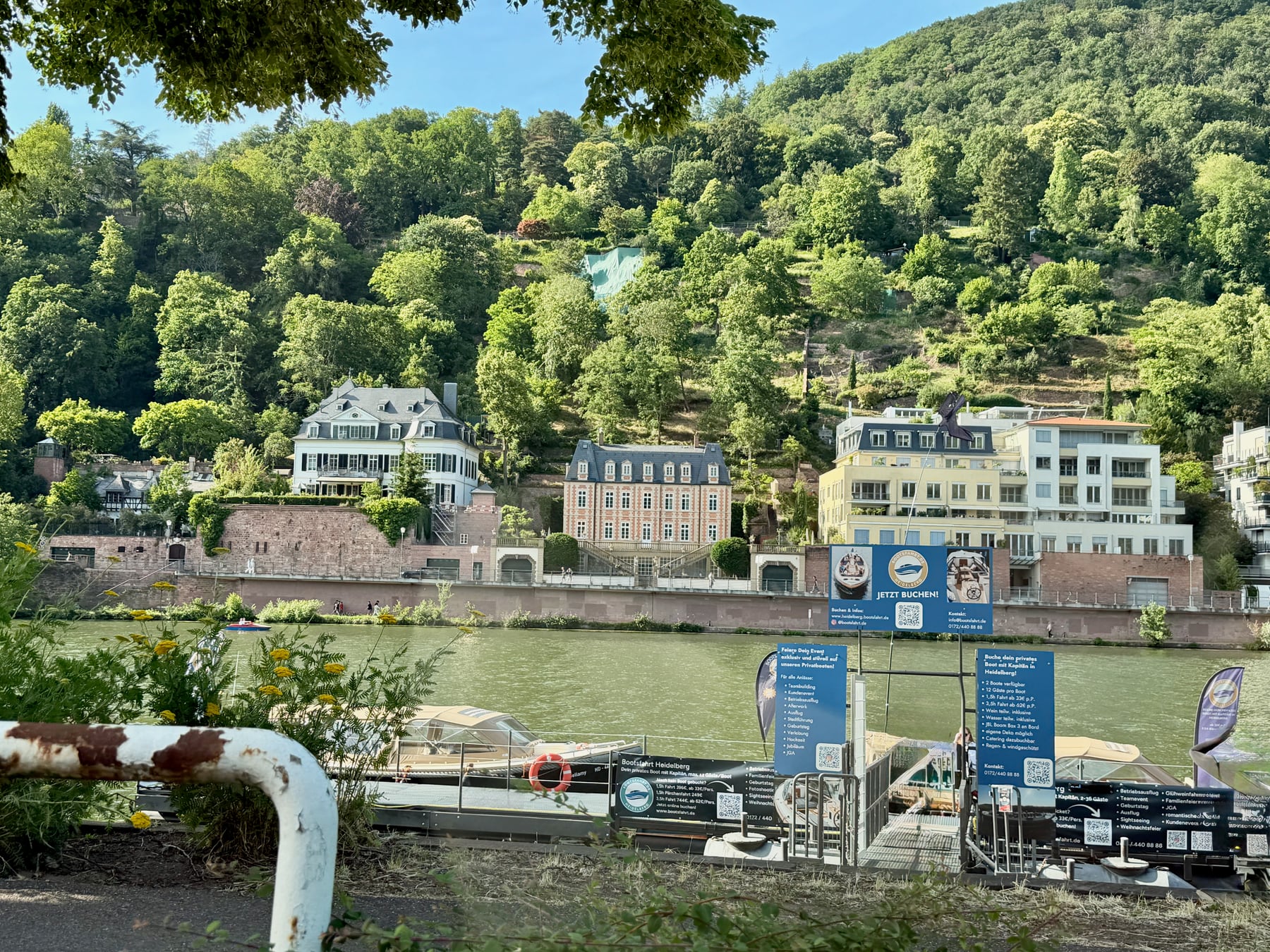
On our 2026 trip, we flew into Frankfurt after traveling in Italy, rented a car, and drove south to Heidelberg. It was an easy way to transition from an airport arrival into a much more atmospheric part of Germany.
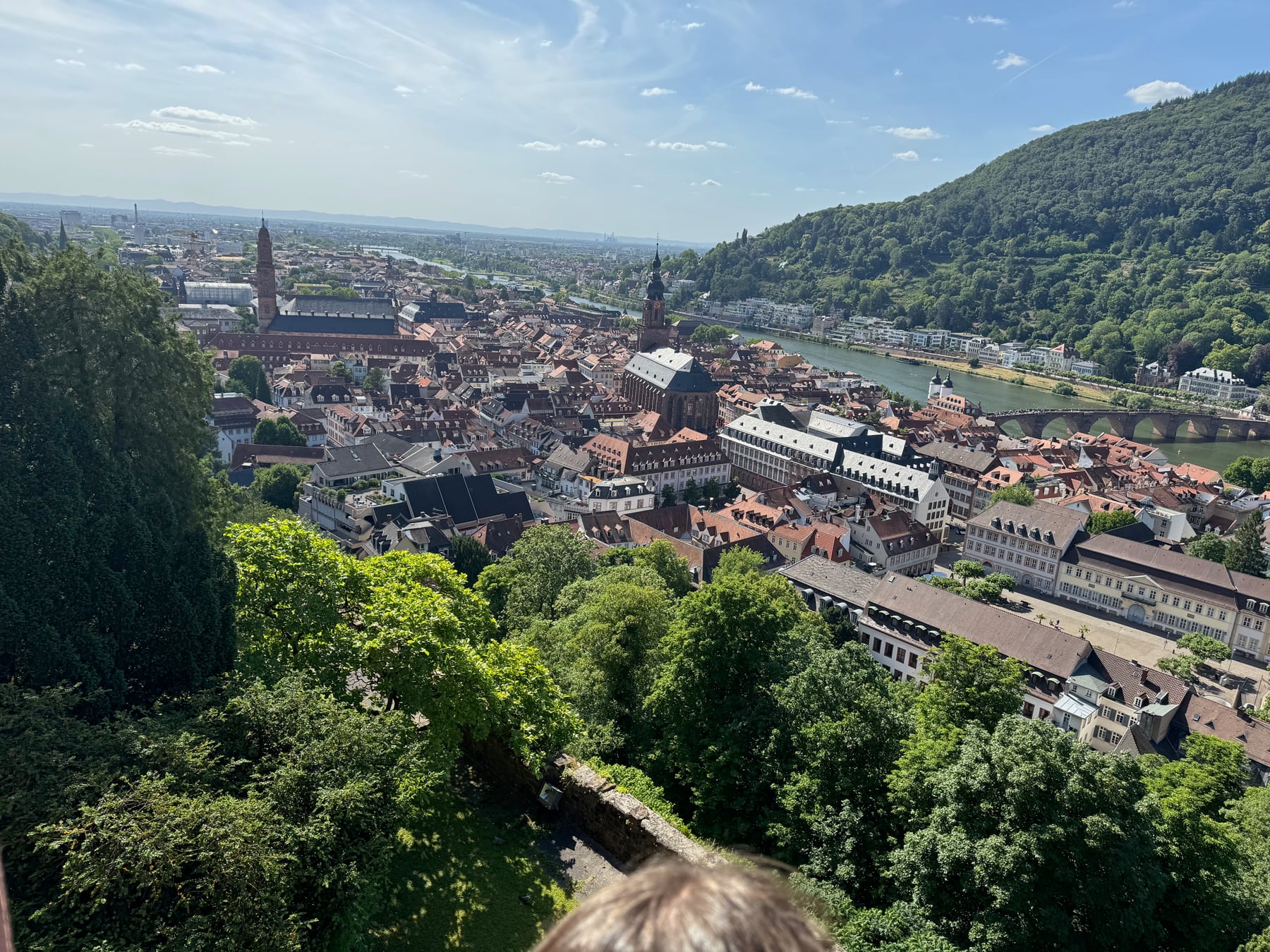
We stopped for a late lunch near the castle before taking the funicular from the old town up the hillside. Heidelberg’s lower funicular stops at the castle and continues to Molkenkur; travelers can also connect with the historic upper railway to Königstuhl for an even higher view over the city and Neckar Valley.
The castle is partly ruined, but that is part of its appeal. Its walls, courtyards, terraces, and elevated position give it a wonderfully dramatic presence above the old town. The views across Heidelberg’s rooftops, the Neckar River, and the surrounding valley were among the best city views of our trip.
Heidelberg works especially well as a first stop because it delivers an immediate sense of historic Germany without requiring several days. If time permits, stay overnight and explore the old town and Old Bridge after the day-trip crowds begin to thin.
See Heidelberg’s Enormous Wine Barrel
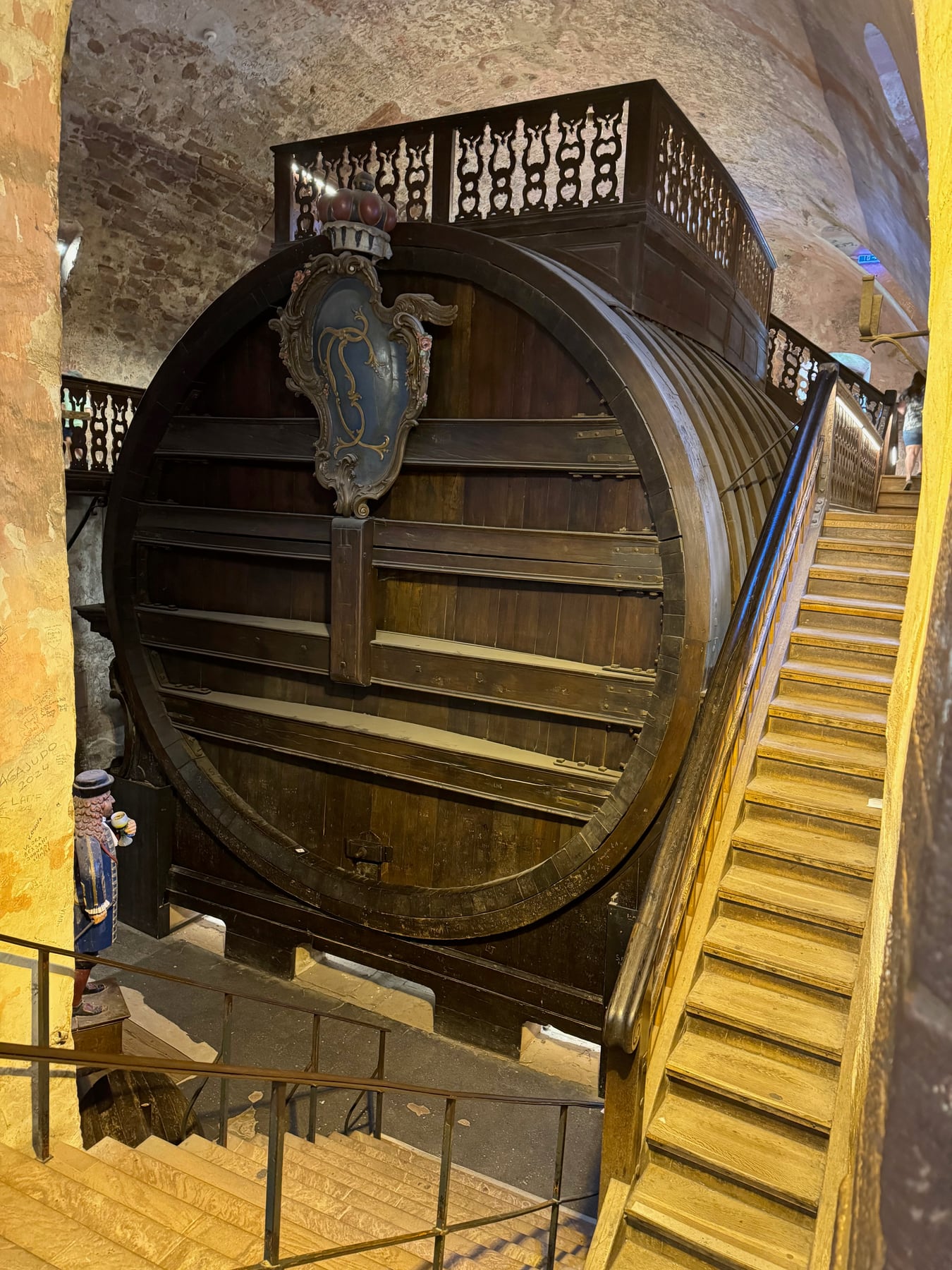
Inside the castle’s barrel cellar is the enormous Heidelberg Tun, commonly called the Great Barrel. The present barrel dates to the 18th century and could hold roughly 220,000 liters of wine. It was built in an era when wine collected from regional growers could be received as a form of taxation.
Standing beside it gives the word “barrel” an entirely different meaning. A staircase runs along its side and leads to a platform across the top, which makes its scale even easier to appreciate.
Let Stuttgart Be More Than a Transportation Stop
Stuttgart is sometimes treated primarily as a business city or a place to change trains, but it deserves more attention—especially for travelers interested in automobiles, architecture, or the history of Baden-Württemberg.
For Brian, returning was personal. After our first night near Stuttgart’s main train station in 2018, we rented a car and drove through areas he remembered from living near the city between 1987 and 1989. We stopped in Böblingen, where he had lived, although I would not necessarily place it on a first-time visitor’s sightseeing list unless you have your own connection to the area.
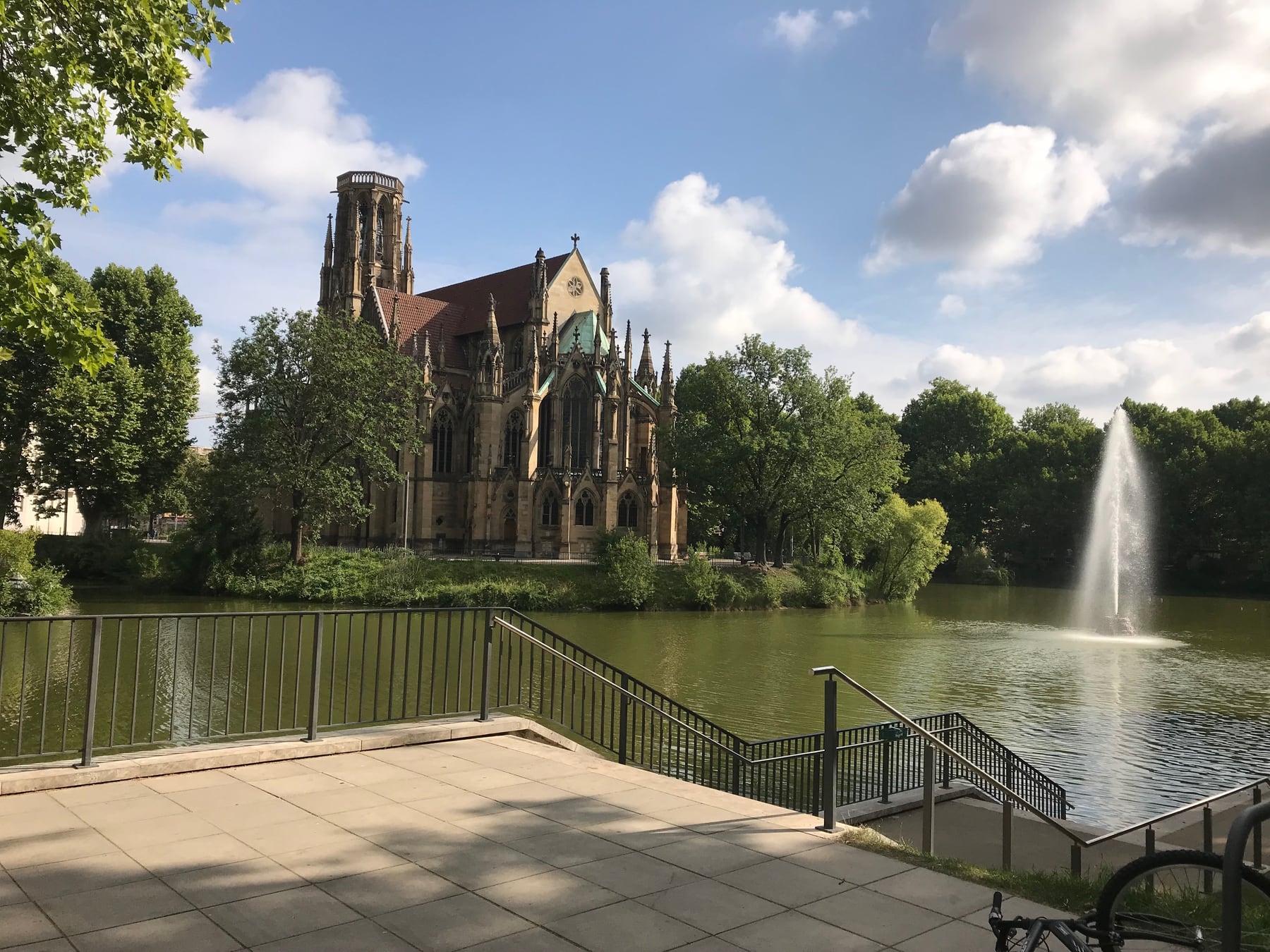
One place that does belong on a Stuttgart itinerary is Johanneskirche am Feuersee, the church Brian remembered near “Fire Lake.” The neo-Gothic church sits partly surrounded by the lake, creating one of Stuttgart’s loveliest city scenes. Its tower was badly damaged during World War II and intentionally retained its incomplete appearance, which many residents view as a memorial against war.
Even if Stuttgart is only a short stop, allow some time to walk rather than seeing it entirely through a rental-car window.
Give the Porsche Museum Enough Time
The Porsche Museum was one of the unquestionable highlights of our 2018 trip. Brian has considered Porsche his dream car since he was a child, so this was his version of heaven.
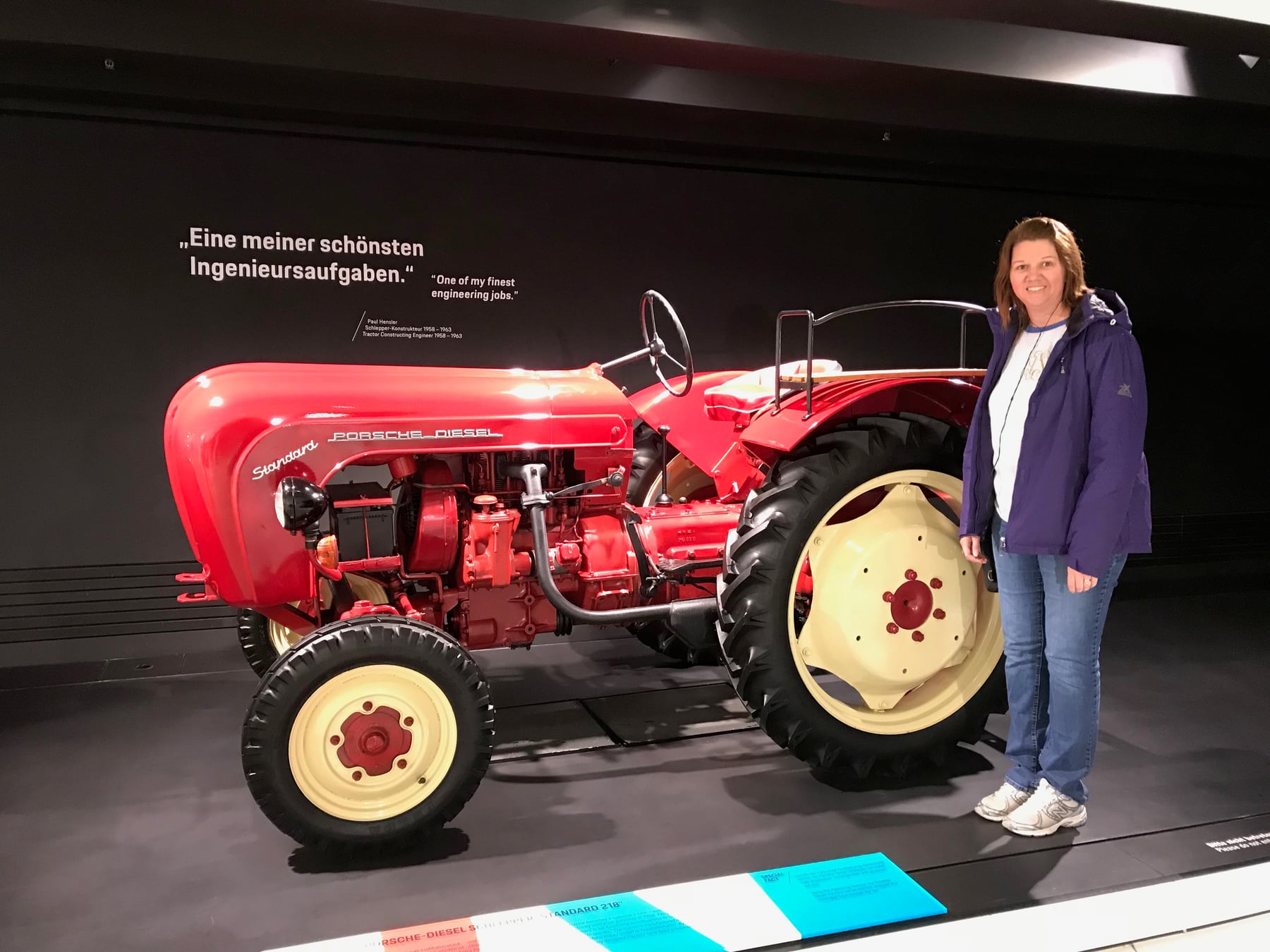
The museum traces the company’s development through road cars, race cars, engineering milestones, and some wonderfully unexpected vehicles. We saw models spanning decades of Porsche history, competition cars, police vehicles, and even a Porsche tractor. The variety makes the museum interesting even for visitors who do not know one Porsche model from another.
For an enthusiast like Brian, this is not a quick walk-through attraction. Leave enough time to read the displays, examine the racing history, and linger over the cars that trigger childhood memories. Stuttgart is also home to the Mercedes-Benz Museum, which could make the city a full automotive day for travelers interested in both companies.
See the Concept That Previewed the Taycan
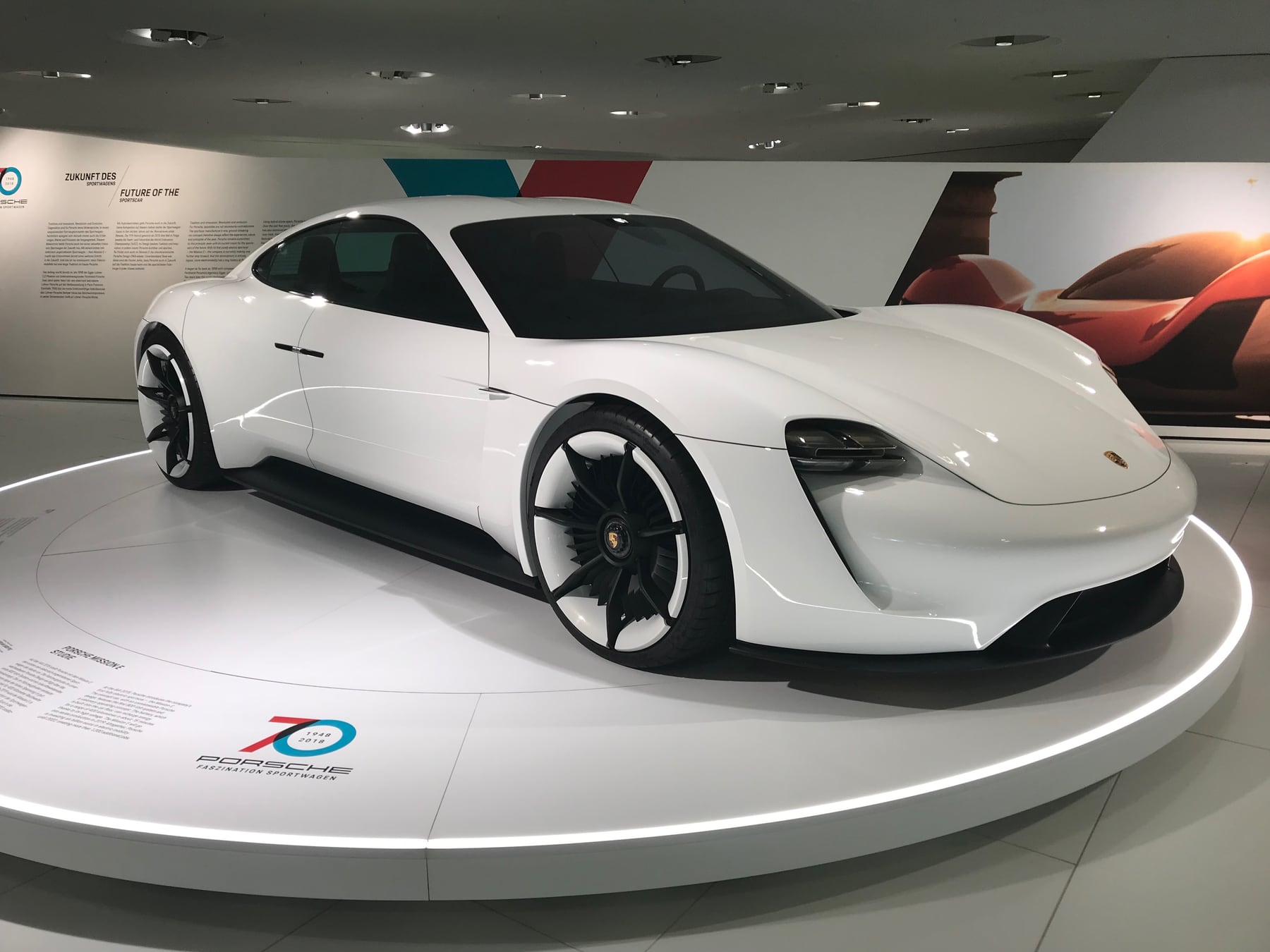
We also saw the Mission E concept that previewed the company’s first fully electric production sports car. Porsche announced in 2018 that the production model would be called the Taycan, so we were seeing a preview of a major transition for the brand before the finished car reached full production.
Concept vehicles are especially interesting because they show how a company imagines its future before practical production decisions reshape the final design. The Mission E looked futuristic in 2018, but many of its ideas became recognizable parts of the Taycan.
Stop at Schloss Solitude for the View
Schloss Solitude sits on high ground west of central Stuttgart. We did not tour the interior, but the stop was worthwhile for the architecture and broad views across the surrounding Württemberg countryside.
The palace was created in the 18th century for Duke Carl Eugen of Württemberg as a hunting lodge and summer residence. Its elevated location was chosen partly for the commanding view, which extends toward Ludwigsburg and across the lowlands north of Stuttgart.
A visit does not have to consume half a day. Travelers with limited time can enjoy the exterior, terrace, and setting. Those who want to see the Rococo and early Neoclassical interior should check the current guided-tour schedule, because interior visits are tour-based.
Make a Chocolate Detour to Waldenbuch
South of Stuttgart, Waldenbuch is home to Ritter Sport. We arrived hoping for a factory tour but discovered that an official production-floor tour was not available. We settled for the large shop, which was hardly a tragedy.
The shop carries the familiar square chocolate bars along with special products and flavors that are harder to find elsewhere. The current visitor experience also includes a free Chocolate Exhibition explaining the company’s history, cocoa, and the tree-to-bar process, plus reservable chocolate-making workshops. The company still does not offer a conventional factory tour.
This is a fun stop for families, chocolate lovers, or anyone driving from Stuttgart toward the Black Forest. It is not a substitute for a major sightseeing day, but it makes an ordinary driving day much more entertaining.
Slow Down in the Black Forest
From Waldenbuch, we continued south using leisurely roads through the Black Forest toward Lake Titisee. This was one of those cases where the drive itself mattered as much as the destination.
The Black Forest rewards travelers who leave room for wooded roads, mountain scenery, villages, and unplanned stops. Trying to race through it simply to say you have seen it misses much of the point.
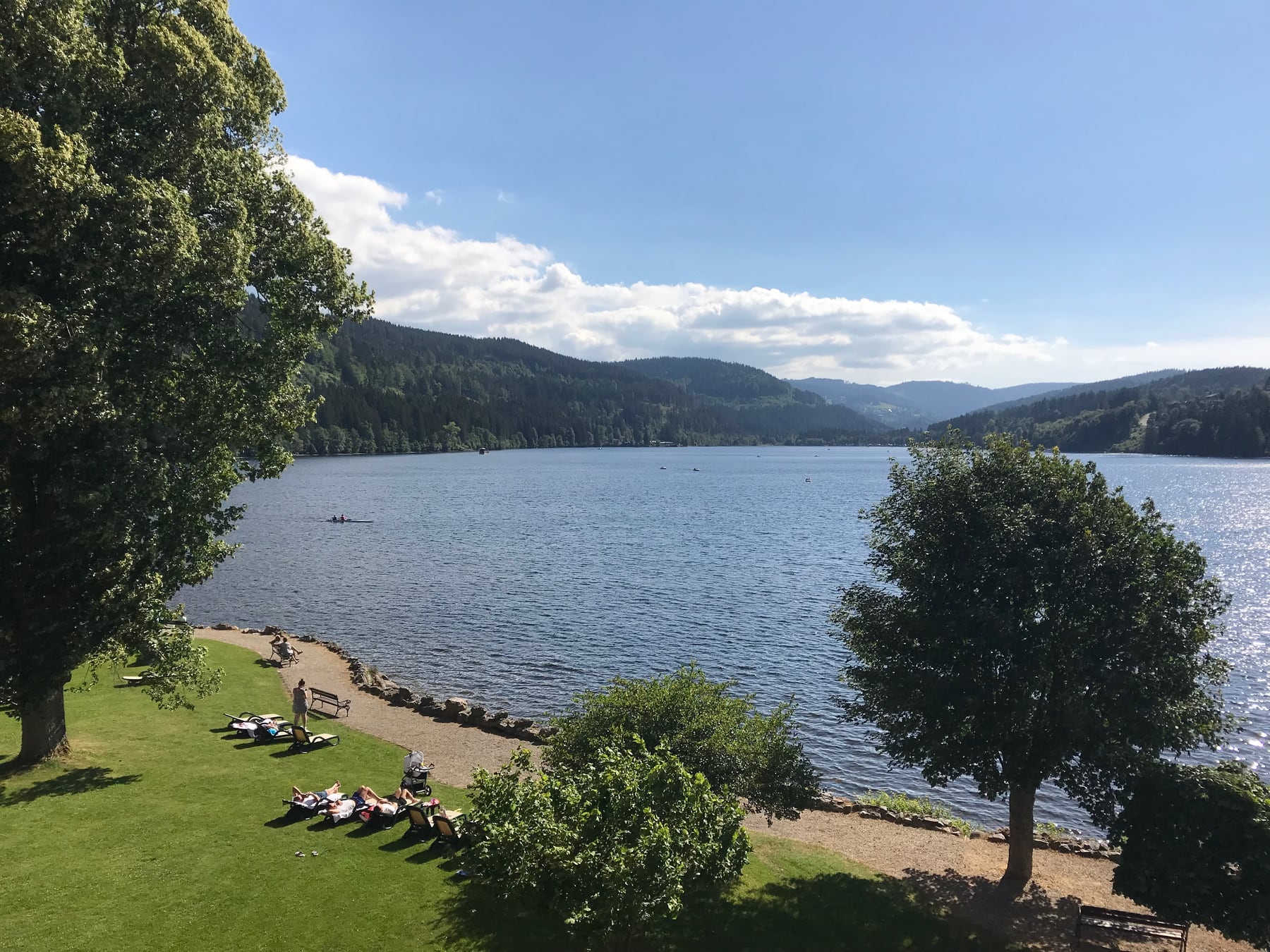
We stayed at the Maritim TitiseeHotel, directly beside the lake. The waterfront location made it easy to walk into town, enjoy the mountain views, and relax without getting back into the car. For us, its setting was the most important feature.
Titisee is an accessible introduction to the Black Forest, although it can feel busy and tourist-oriented. Travelers with more time could also explore Freiburg, the Triberg waterfalls, smaller spa towns, or additional hiking routes. I would add those selectively rather than trying to turn one peaceful Black Forest day into a checklist.
Use Ulm as a Comfortable Overnight Stop
In 2026, we returned to the Stuttgart area before continuing east to Ulm. We walked near the Danube and stayed at the Maritim Hotel Ulm beside the river.
The hotel felt a little dated to us, but it was comfortable and well located for an overnight stay. That distinction matters: a hotel does not have to be the newest or most stylish property in a city to work well within a road trip.
The next morning, we bought breakfast from a bakery inside a grocery store. Everyone was happy, it was easy, and it got us back on the road without turning breakfast into an expensive production. German bakeries are excellent allies on driving days.
We did not build enough time into this trip for Ulm’s most famous landmark, Ulm Minster, whose tower dominates the city skyline. If I were planning the route again, I would allow at least a few hours for the old town and minster instead of treating Ulm almost entirely as an overnight stop.
Go Up the Zugspitze Even When the Forecast Is Imperfect
After spending time in Austria, we drove west toward the Zugspitze, Germany’s highest mountain.
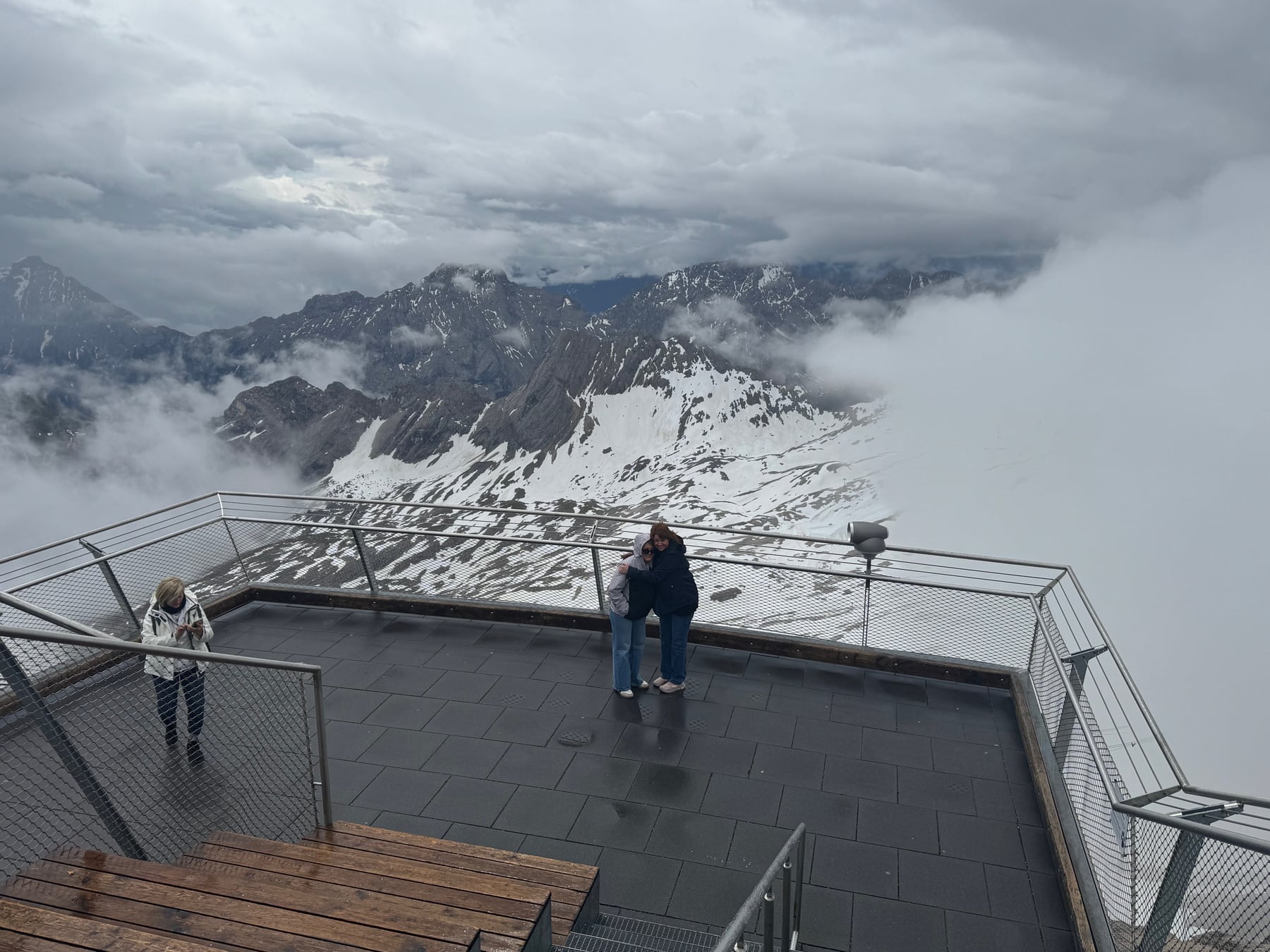
The weather was not especially cooperative. Clouds moved around the summit, and the temperature difference between the valley and the top was dramatic. It was in the upper 50s or 60s Fahrenheit below, but the wind chill at the summit was around 27 degrees.
We went anyway.
The cable car carried us into the clouds, and brief openings gave us impressive glimpses of the surrounding mountains. A perfectly clear day would have produced broader views, but shifting clouds made the experience feel dramatic in a different way. We ate in the summit cafeteria, which was expensive, but sometimes you are paying for the location as much as the meal.
The Zugspitze can be reached through a combination of the main cable car, cogwheel train, and glacier cable car. Summit and glacier restaurants are available, although operating conditions can change with weather and seasonal maintenance.
Check the live weather and webcams before buying tickets, but do not assume a cloudy morning automatically ruins the entire day. Mountain conditions can change quickly. Bring a warm layer even when the valley feels comfortable.
Treat Neuschwanstein as a Timed Experience
From the Zugspitze, we continued toward Neuschwanstein Castle. Rain returned as we arrived, sending us temporarily into one of the many tourist shops near the base.
We then took the shuttle bus uphill, thinking it would deliver us almost to the entrance. It did not. The bus reduces the climb, but visitors should still expect additional walking over sloping ground. In our case, reaching the castle involved another 10 to 15 minutes of hills after leaving the bus.
The exterior is as theatrical as it appears in photographs, but its history is more interesting than the familiar “fairy-tale castle” label suggests. King Ludwig II began the project in the 19th century as an idealized recreation of a medieval castle and a private retreat inspired by romantic legends and the operas of Richard Wagner. Behind the medieval appearance were advanced features for the period, including central heating, running water, telephones, and a service lift. Ludwig saw only part of his vision completed before his death in 1886.
Inside, the Throne Hall, Singers’ Hall, murals, swan imagery, and theatrical spaces reflect Ludwig’s highly personal fantasy world. The castle was never an authentic medieval fortress; it was a 19th-century interpretation of one, created with contemporary engineering and elaborate stage-like design.
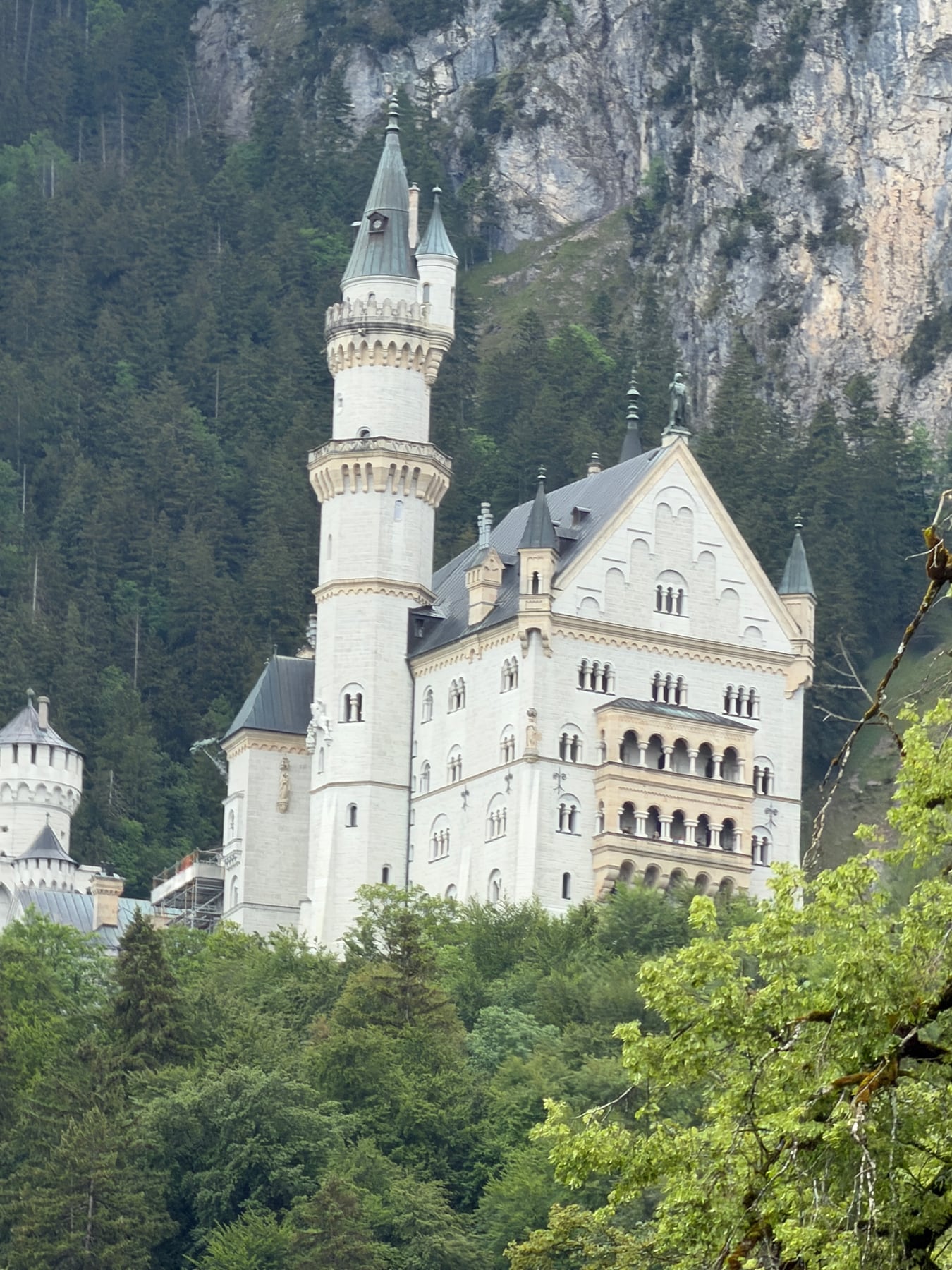
Neuschwanstein’s Timing Rules Matter
Neuschwanstein can only be visited as part of a guided or audio-guided tour tied to a specific admission time. Tours begin punctually, and late arrival can mean losing the visit.
Our experience added another lesson: arriving early did not mean we could simply enter early. Admission was controlled closely, and we were not allowed into the entrance area until shortly before our assigned tour.
Plan backward from the tour time. Allow for parking, obtaining or confirming tickets, waiting for transportation, walking from the shuttle stop, security, crowds, and bad weather. Do not schedule the drive as if the parking lot and castle entrance were beside each other.
Photography is not permitted inside the castle, so put away the camera and pay attention to the rooms. Exterior photography for private use is allowed.
We did not tour nearby Hohenschwangau Castle, where Ludwig spent part of his childhood, but it could fit into a longer day if the admission times are coordinated carefully. I would not book the two castles too close together.
End the Day in Füssen
After Neuschwanstein, we ate dinner in Füssen, where the walkable center offers numerous restaurants and a much more relaxing atmosphere than the busy castle complex.
Füssen can work as more than a dinner stop. Staying overnight would allow time to enjoy the town, nearby lakes, and mountain scenery after many of Neuschwanstein’s day visitors have departed.
We instead drove north to Stuttgart and spent the night at the Steigenberger Graf Zeppelin. The hotel was upscale, comfortable, and exceptionally convenient to Stuttgart’s central train station, which mattered because we were departing for Paris the next day.
The station area was still heavily affected by Stuttgart 21, the enormous rail redevelopment project that has been under construction for years. Travelers using Stuttgart Hauptbahnhof should allow extra walking time and follow current station signs rather than assuming an older map shows the most direct route.
What I Would Add With More Time
Munich is the most natural addition to this itinerary. It fits geographically with the Bavarian portion of the trip and offers historic squares, palaces, museums, beer halls, markets, and easy connections to other parts of Southern Germany. Brian has visited Munich, but we did not include it in these two shared road trips, so I would treat it as an extension rather than a firsthand stop in this itinerary.
Nuremberg is another logical addition, especially for travelers interested in medieval architecture and 20th-century history. It sits farther north than our Füssen and Zugspitze route but still works within a broader Bavaria itinerary.
Brian has also visited Berlin, Cologne, and Fulda, but I would save those places for separate Central and Western Germany itineraries. Adding them to this article would create unnecessary distance and turn a focused Southern Germany road trip into a national checklist.
How I Would Organize This Southern Germany Road Trip
For a first trip, I would allow approximately seven to ten days: one night in Heidelberg; two nights in Stuttgart; one or two nights for Waldenbuch and the Black Forest; one night in Ulm or Munich; one or two nights around the Zugspitze or Garmisch-Partenkirchen; and one or two nights for Neuschwanstein and Füssen.
A rental car gives you the greatest flexibility for Waldenbuch, the Black Forest, Zugspitze, and Füssen. Heidelberg, Stuttgart, Ulm, Munich, and Nuremberg can also be connected by rail, so a mixed rail-and-car itinerary may be more practical than keeping a rental car for the entire trip.
Do not underestimate driving times simply because the distance looks short. Weather, construction, parking, mountain roads, and the time needed to retrieve or return a rental car can all change the day.
What Made Southern Germany Memorable for Us
The best parts of Southern Germany were not limited to its famous castles. They included watching Brian walk into the Porsche Museum like a kid fulfilling a lifelong dream, returning to places he remembered from childhood, buying entirely too much chocolate in Waldenbuch, seeing the clouds briefly open on the Zugspitze, and finding a simple bakery breakfast that made everyone happy.
Heidelberg and Neuschwanstein supplied the dramatic landmarks. Stuttgart gave the journey its personal history. The Black Forest and Bavarian Alps provided room to slow down between cities.
That combination is what makes Southern Germany such a rewarding trip. You can move between castles, automotive history, old towns, chocolate, forest roads, lakes, and mountain scenery without every day feeling like a variation of the one before it.
The most useful itinerary will not include every major German city. It will connect the places that fit your interests at a pace that leaves enough time to enjoy them.