Researched Travel Guide · Last verified 2026-07-29
Explore Europe
Quick Take
Scotland’s real places, clearly separated from the screen story
- Our firsthand visit
- Scotland in 2018
- What this guide covers
- Publicly documented Scottish filming locations
- What it does not claim
- That we visited every listed place
- Best companion
- Our Outlander-inspired Scotland itinerary
Scotland does far more than play itself in Outlander. Its castles become prisons and clan strongholds, its villages become Inverness and Cranesmuir, and its city streets and country houses stand in for Paris, Boston, Jamaica, and colonial America. This guide is deliberately about those filming locations—not routes, drive times, or how to fit them into a trip, which we cover in our larger Outlander-inspired Scotland itinerary.
Our goal is to name every publicly documented Scottish location we could substantiate through official site records, location owners, and current filming research. That still requires an honest boundary: studio interiors, private land, temporary sets, and some later-season locations are not all publicly identified. When a place is connected to the books or real history but was not the screen location, we say so.
Falkland: Inverness across three decades
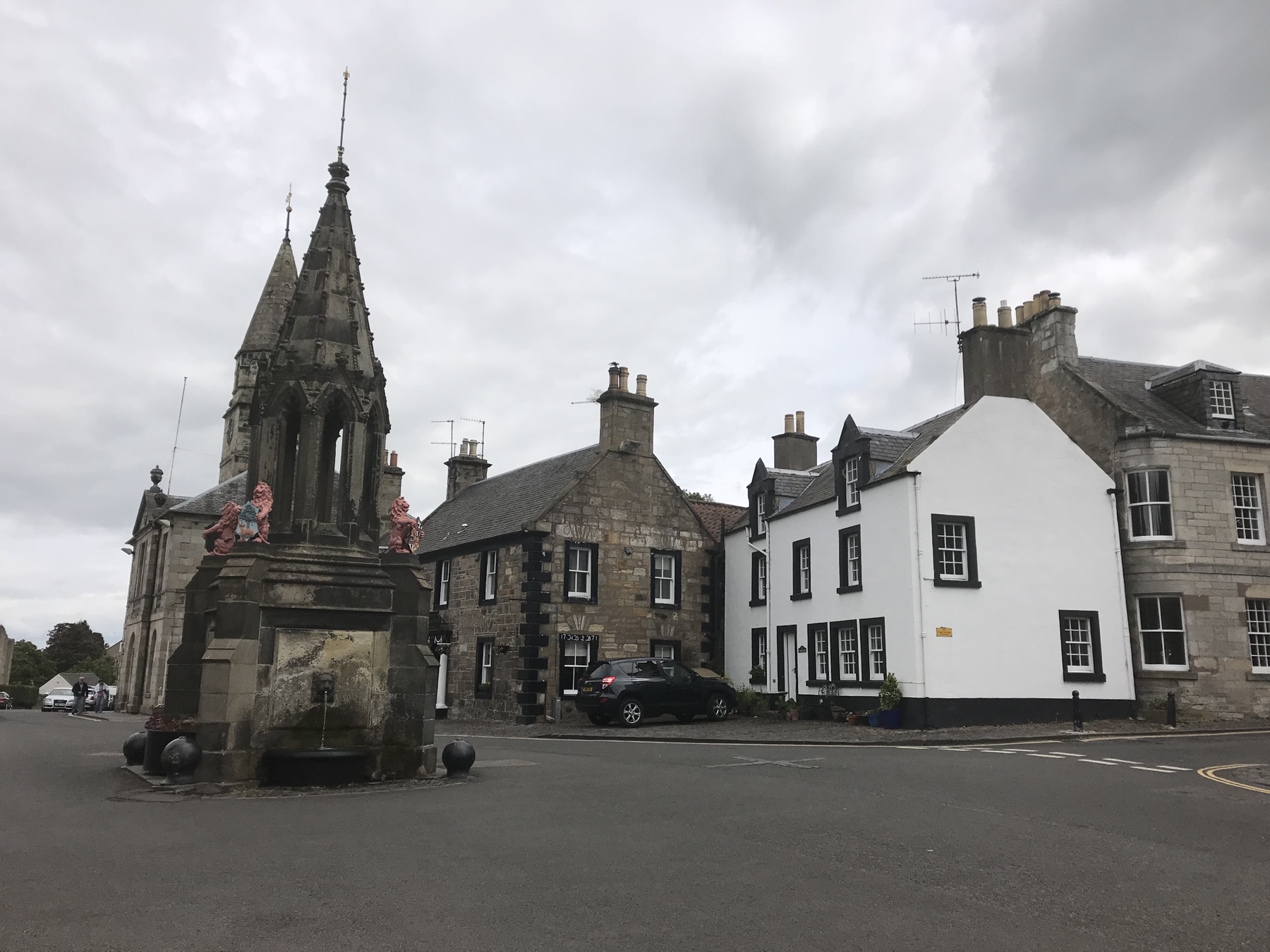
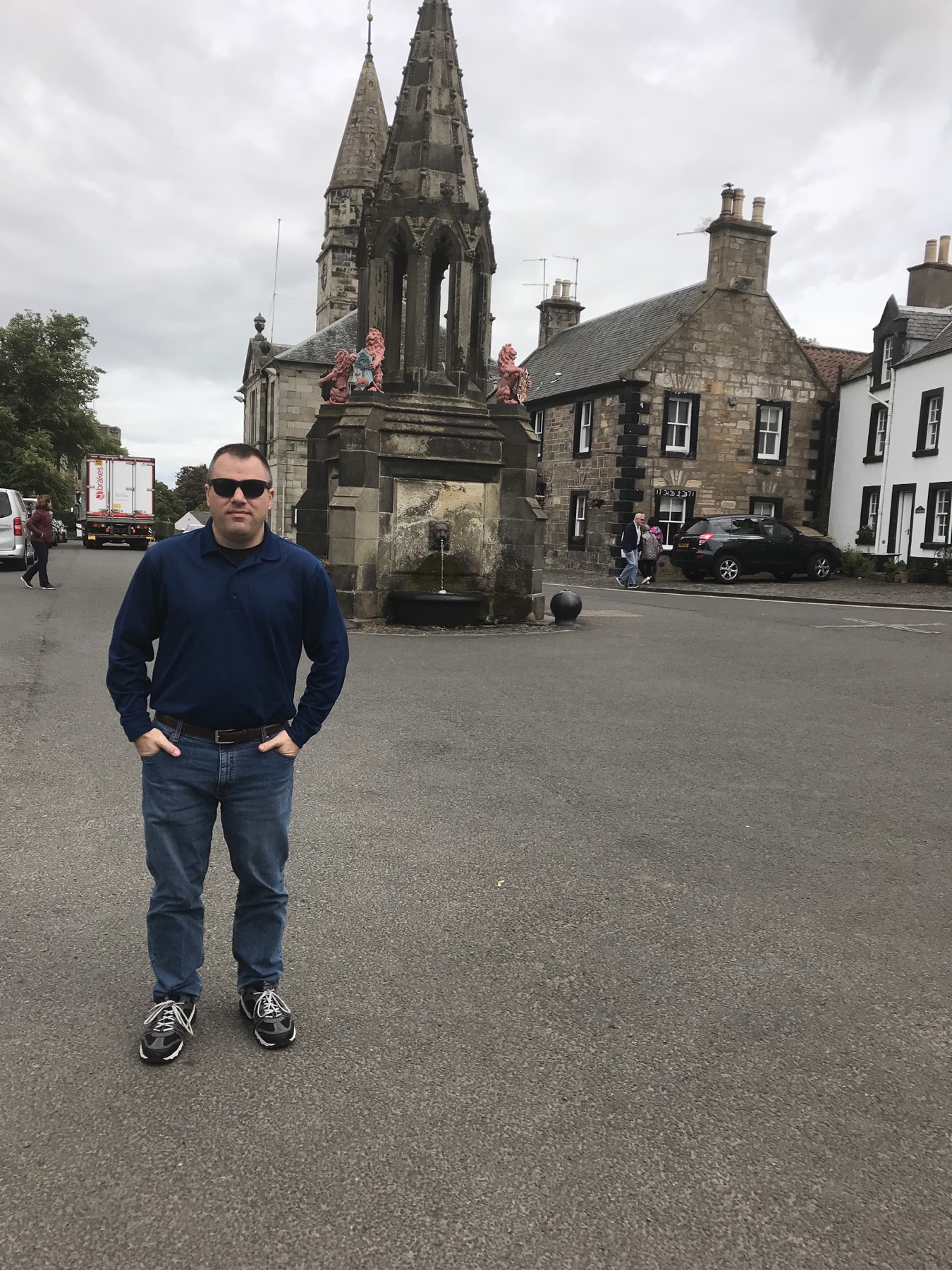
Falkland is one of the series’ most recognizable transformations. The Fife village first became 1940s Inverness for Claire and Frank’s second honeymoon. The Covenanter Hotel played Mrs. Baird’s guesthouse, Bruce Fountain anchored the square where Jamie’s ghost appeared, and nearby storefronts became Campbell’s Coffee Shop and Farrell’s Hardware and Furniture Store.
The production returned for later versions of Inverness. Falkland Town Hall became the records office where Claire, Brianna, and Roger searched for evidence of Jamie, while a cellar at Falkland Palace became an 18th-century apothecary. The village’s screen identity is spread across the square rather than confined to one building.
Doune Castle: Castle Leoch
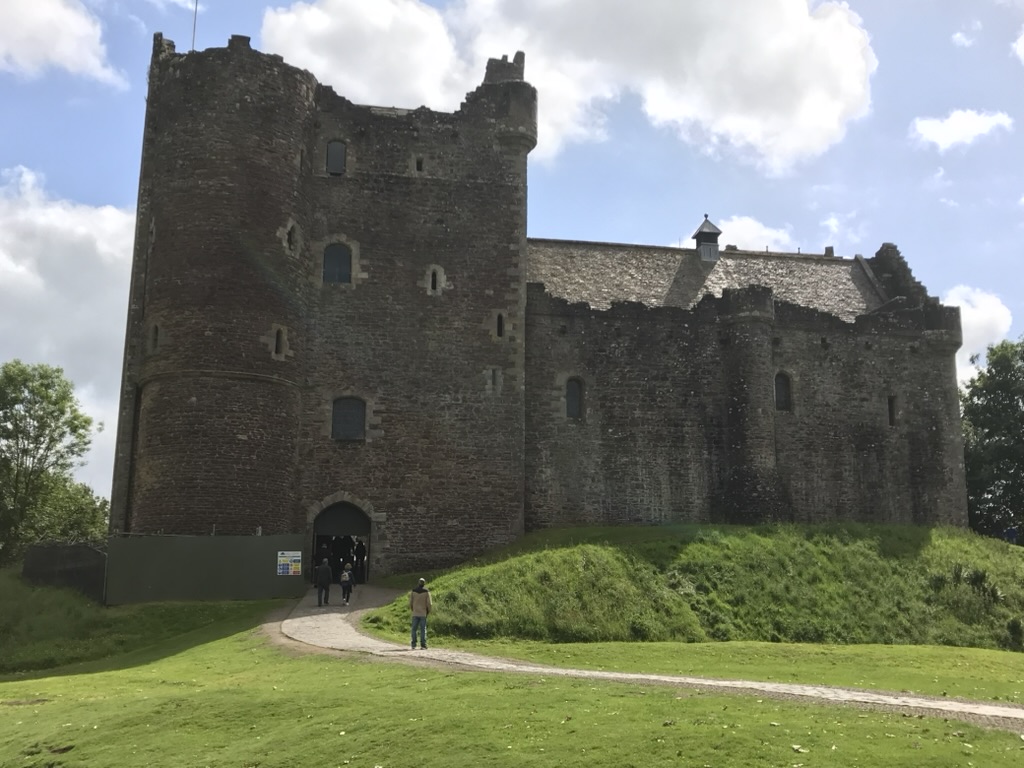
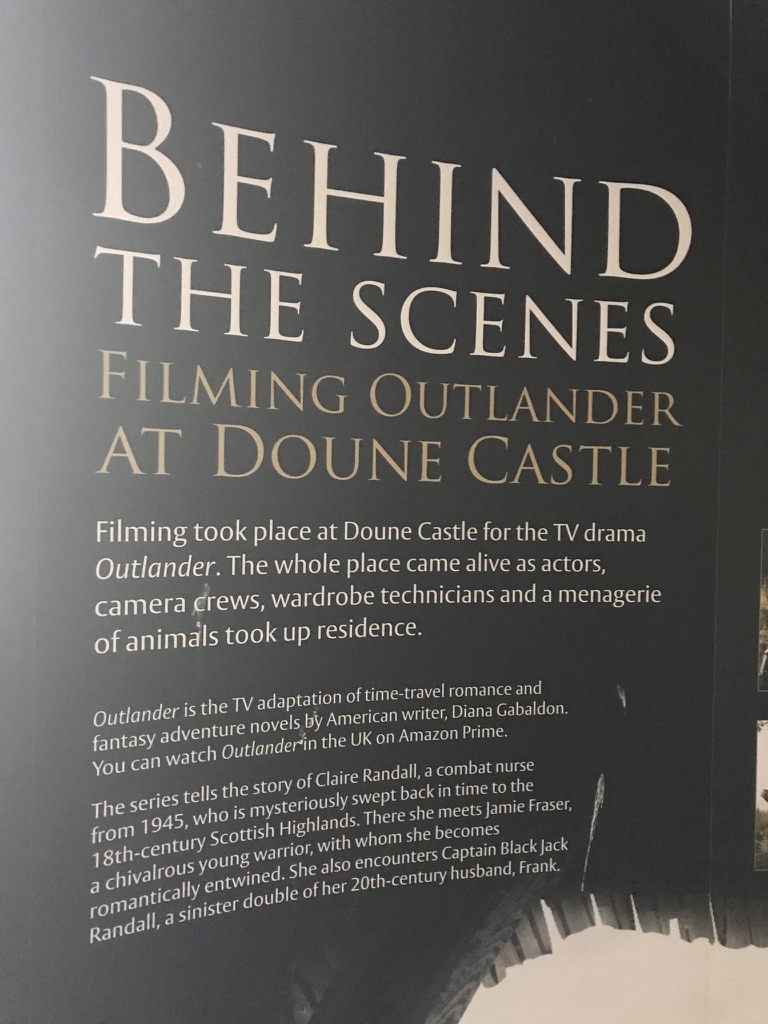
Doune Castle supplied the exterior, courtyard, gatehouse, great hall, and kitchen seen as Castle Leoch, the home of Clan MacKenzie. It is the clearest real-world answer to the question “Where is Castle Leoch?” and one of the Scottish locations most extensively recognizable on screen.
The production dressed different parts of the medieval castle to create the busy clan stronghold Claire enters in the first season. Doune’s own exhibition also documents the scale of the cast, crew, costumes, equipment, and animals involved in turning a protected historic property into a working set.
Midhope Castle and the wider Hopetoun Estate
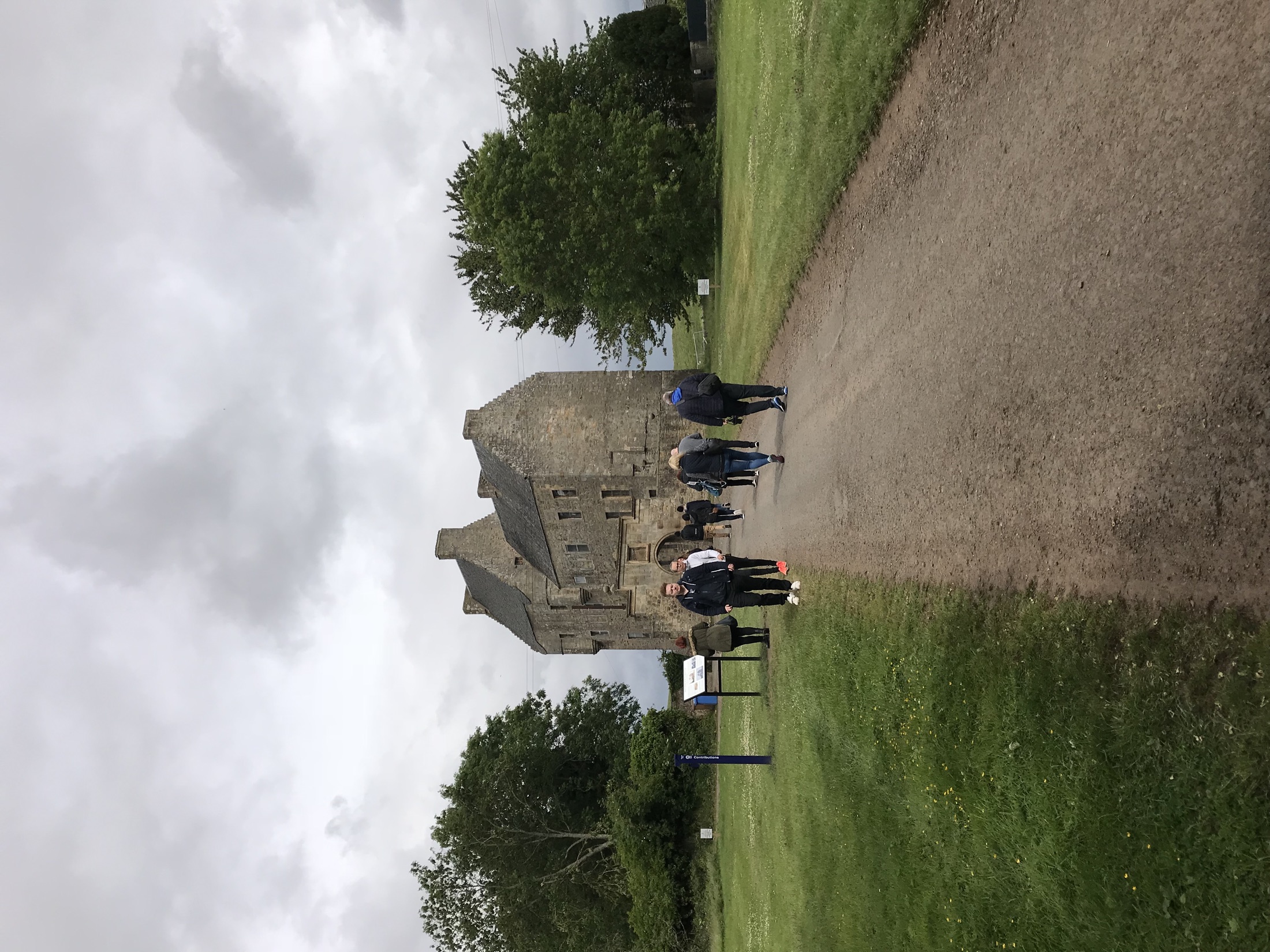
Midhope Castle is Lallybroch, also called Broch Tuarach, the Fraser family home. The tower house provided the famous exterior and courtyard approach; the interiors were created elsewhere. Its weathered walls make it look like a complete home on screen, but that illusion is the work of careful framing and set design.
The surrounding Hopetoun Estate is almost a location collection of its own. Hopetoun House and its grounds have appeared as the Duke of Sandringham’s estate, Parisian streets and rooms, Helwater-related riding scenes, and several encounters staged as other countries or estates. The production repeatedly reused different façades, rooms, courtyards, and woodland without asking the audience to recognize that they belong to the same property.
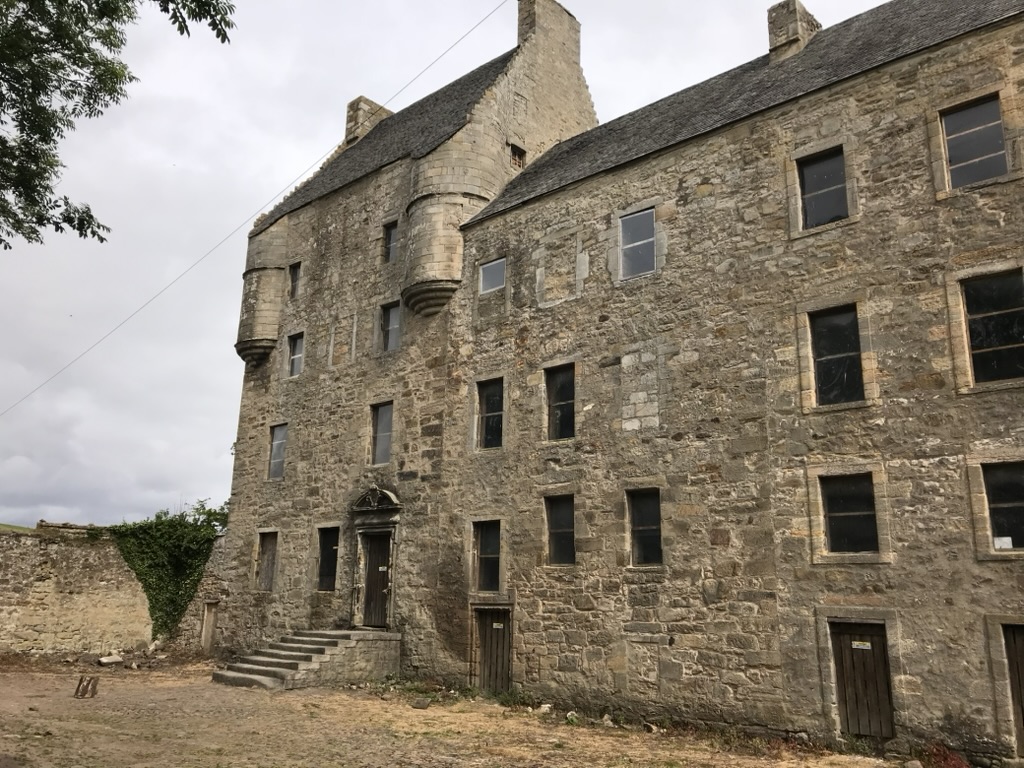
Blackness, Linlithgow, Bo’ness, and Callendar House
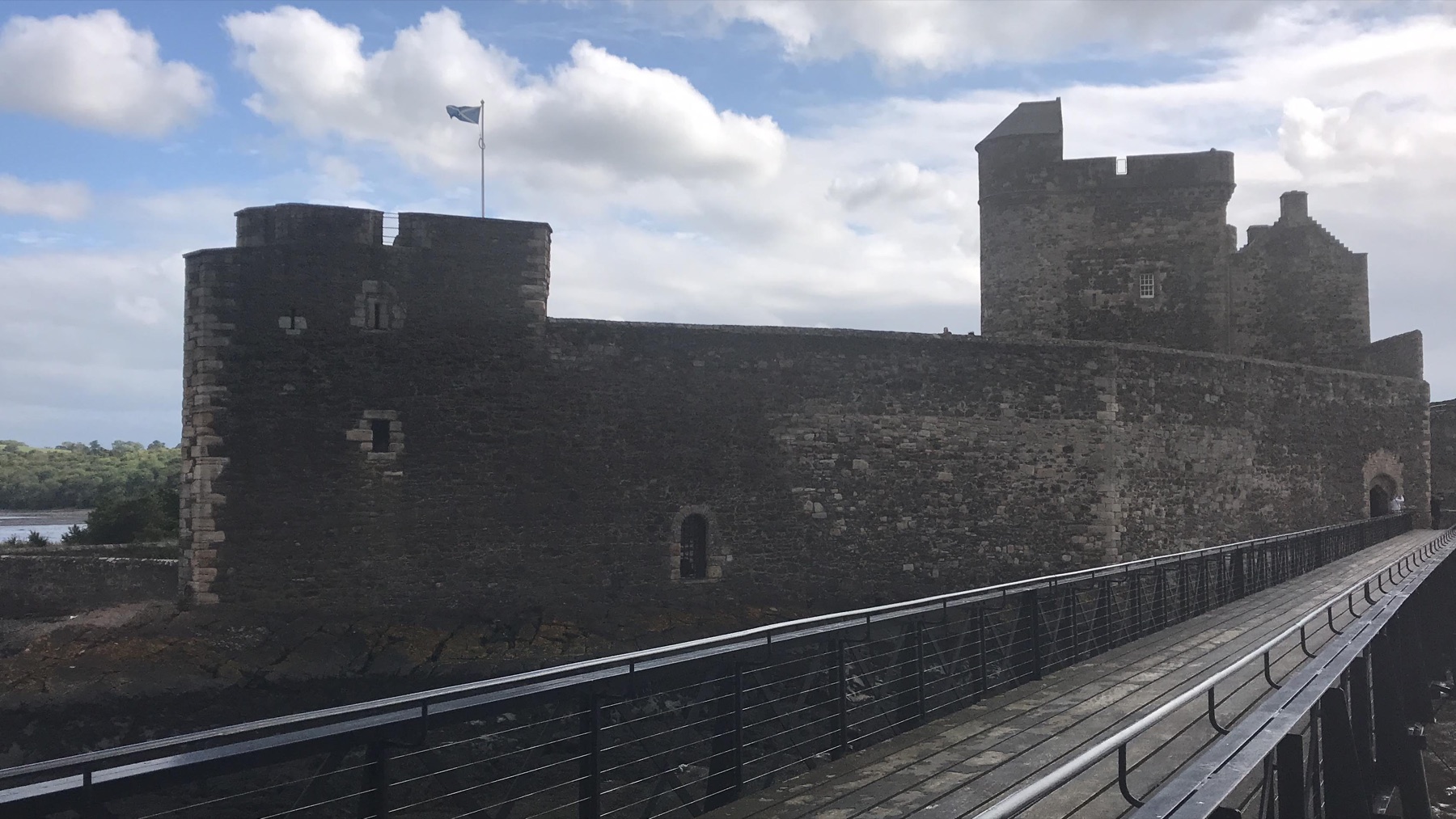
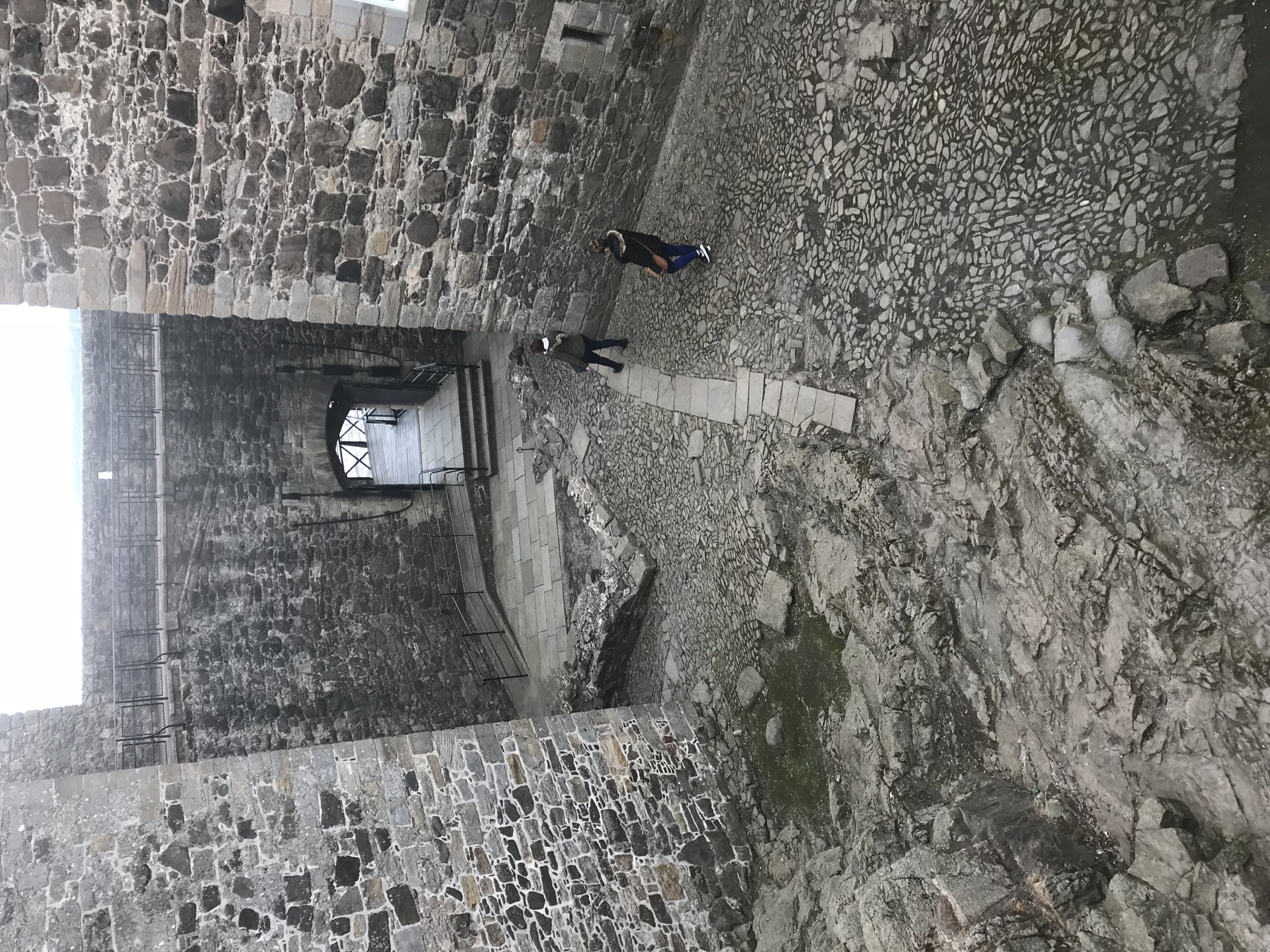
Blackness Castle became Fort William, including the courtyard and walls associated with Black Jack Randall and Jamie’s flogging. Linlithgow Palace supplied the dark interiors of Wentworth Prison; the prison exterior was filmed outside Scotland at Bamburgh Castle in Northumberland.
Nearby, the Bo’ness & Kinneil Railway became the London station where Claire and Frank said goodbye during the Second World War. Callendar House in Falkirk supplied the Duke of Sandringham’s kitchen, including the season-two confrontation involving the duke, Murtagh, Claire, Jamie, and Mary Hawkins.
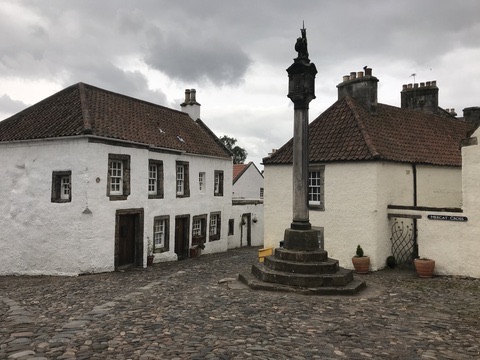
Culross: Cranesmuir, Castle Leoch’s garden, and more
Culross played several roles over multiple seasons. Mercat Cross and the surrounding Royal Burgh became Cranesmuir; the Study House supplied the exterior of Geillis Duncan’s home; and rooms in Culross Palace became her interiors. The palace garden became Claire’s herb garden at Castle Leoch.
The production returned to Culross Palace for the Ram’s Hedd Taverne, a Derby bedroom, Balriggan Cottage interiors, and Geillis’s later home. West Kirk, outside the village, became the Black Kirk. The interior of the Cranesmuir witch trial was filmed separately at Tibbermore Parish Kirk near Perth.
Fife and the east coast
Beyond Falkland and Culross, Fife supplied several distinct worlds. Aberdour Castle became the French monastery where Jamie recovered after Wentworth. Dysart Harbour stood in for Le Havre, and nearby harbour buildings helped complete the French port.
Balgonie Castle appeared as Eldridge Manor, where Claire and Jamie sought help for an ailing child. Farther south in East Lothian, Preston Mill became the mill on the Lallybroch estate, and its exhibition room was used as an anteroom for the preliminary hearing of Claire and Geillis.
Edinburgh: the print shop, closes, and grand interiors
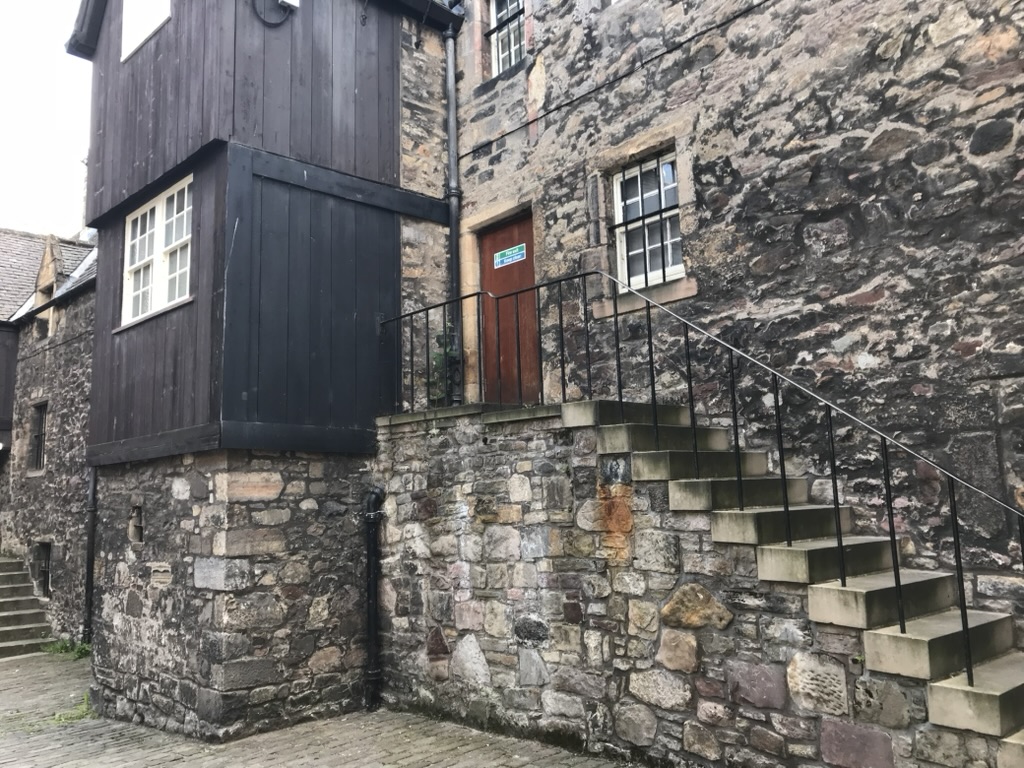
Bakehouse Close off the Royal Mile became Carfax Close and the exterior stairway to A. Malcolm’s print shop, where Claire and Jamie reunited. The adjoining Acheson House supplied the exterior of Madame Jeanne’s brothel. Tweeddale Court became an 18th-century marketplace where Claire and Jamie encountered Fergus.
The Signet Library became the governor’s mansion in Jamaica, while Craigmillar Castle became Ardsmuir Prison. Summerhall’s historic anatomy lecture theatre supplied Claire’s Boston medical-school classroom. Other documented Edinburgh-area locations include Glencorse Old Kirk for Claire and Jamie’s wedding and Gosford House as Helwater Estate.
Glasgow playing Paris, Boston, and Harvard
Glasgow Cathedral’s crypt became L’Hôpital des Anges in Paris. The University of Glasgow’s cloisters and main building doubled as Harvard, while Kelvingrove Park and residential streets in the West End helped create Claire and Frank’s Boston years. George Square was dressed for 1940s city scenes.
Pollok Country Park supplied Castle Leoch grounds and countryside used for Scotland and France. St Andrew’s in the Square became a theatre, and additional Glasgow interiors and streets were reused as the story moved across continents and centuries. These are working city locations rather than a single preserved Outlander set.
The Highlands and Highland Perthshire
Kinloch Rannoch is the landscape of Craigh na Dun. The standing stones were temporary props and were removed after filming, but the hill and surrounding view are real. The Highland Folk Museum at Newtonmore supplied the turf-roofed township used for the MacKenzie rent-collection sequence.
Rothiemurchus Estate and Tulloch Ghru near Aviemore provided woodland, paths, and open Highland country for journeys and encounters. Glencoe appears in the title sequence and scenic material. The series also used Highland landscapes around Glen Affric, while Drummond Castle Gardens near Crieff became the formal gardens of Versailles.
The Trossachs, Ayrshire, and southern Scotland
Finnich Glen and the Devil’s Pulpit became St. Ninian’s Spring, also called the Liar’s Spring. Loch Katrine supplied the waterside setting for Brianna and Roger’s early relationship. Dean Castle in Kilmarnock became Beaufort Estate, the home of Jamie’s grandfather Lord Lovat.
Dunure Harbour and castle on the Ayrshire coast became several places, including the port where Claire and Jamie left Scotland and the shore associated with Silkies’ Island. Drumlanrig Castle in Dumfries and Galloway became Bellhurst Manor. Additional rural work took place around Cumbernauld, including the field used to recreate the Battle of Culloden.
Scotland standing in for North Carolina
Later seasons kept production in Scotland while the story moved to America. Newhailes House became Governor Tryon’s home. The Hermitage in Perthshire, Beecraigs Country Park in West Lothian, Calderglen Country Park, Gray Buchanan Park near Polmont, and woodland around the central belt supplied American wilderness.
The Fraser’s Ridge settlement was built as a production set rather than a normal visitor attraction. Duncarron Medieval Village was adapted for Fort Ticonderoga, and North Third Reservoir near Stirling supplied King’s Mountain in the final season. These locations show how frequently the series used Scottish terrain to represent another continent.
Other documented Scottish locations
The longer location record also includes Arniston House, used for grand interiors; Gosford House for Helwater; Wardpark Studios in Cumbernauld for purpose-built interiors and sets; and quarries, estates, farms, and woodland around West Lothian, Stirling, and Cumbernauld whose exact private coordinates are not promoted.
A truly literal “every location” list is therefore not possible from public records alone. Productions protect private property, combine studio and location work, reuse the same estate as several fictional places, and sometimes disclose only a general area. This article names the publicly documented places without pretending that a studio door or private field is a visitor site.
Places connected to Outlander—but not the filming location
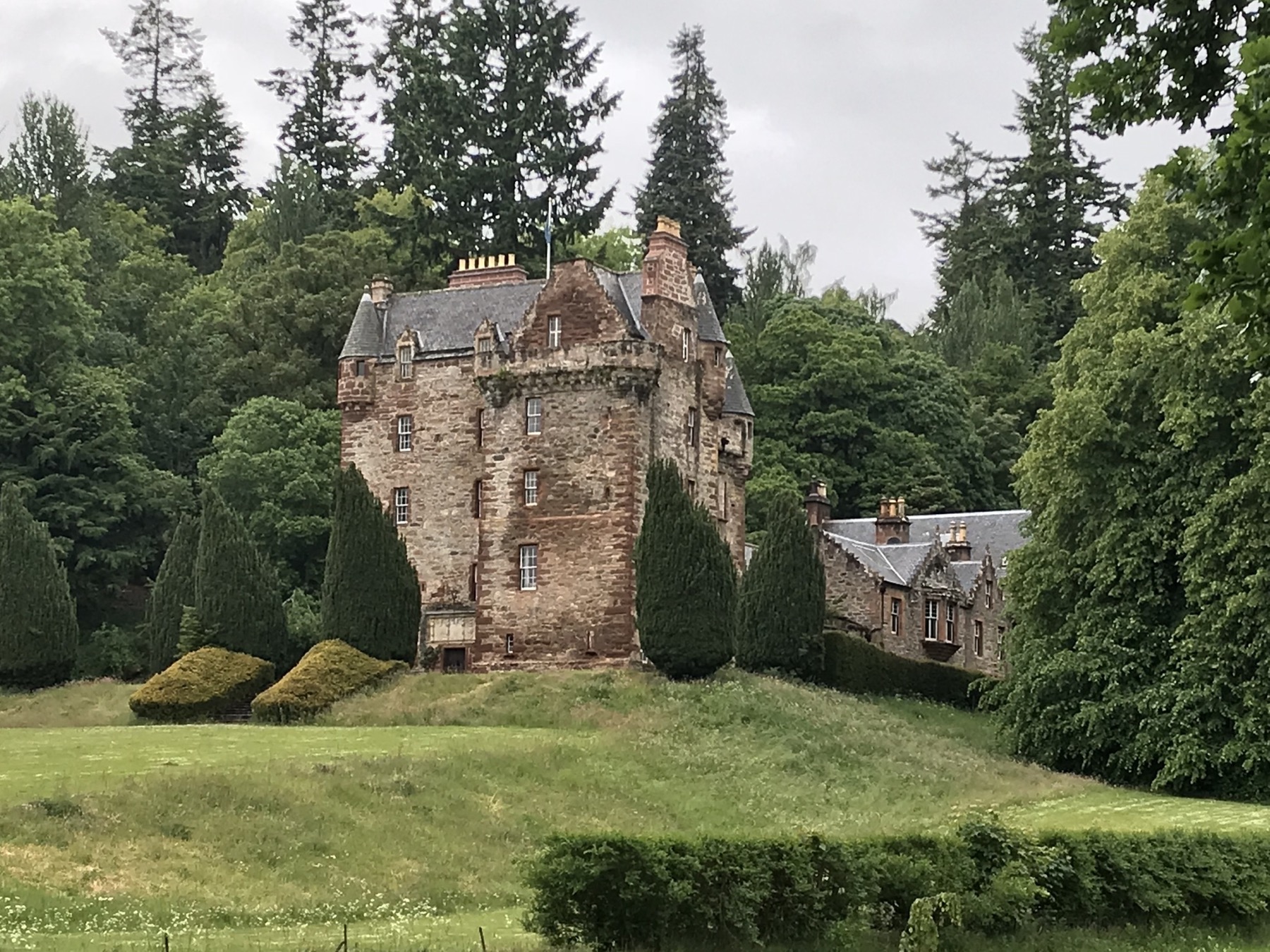
Castle Leod is closely associated with the real Clan MacKenzie and is often described as an inspiration for Castle Leoch, but Doune Castle is the screen location. Clava Cairns and the Callanish standing stones are frequently connected with the idea of Craigh na Dun, but the television stone circle stood on a hill at Kinloch Rannoch.
Culloden Battlefield is essential to the real history and appears when characters visit the memorial landscape, but the battle itself was recreated in a field near Cumbernauld. The Palace of Holyroodhouse belongs to the history and books, but is not one of the main series’ filming locations. Keeping those distinctions clear honors both the production story and the real places.
A personal Outlander connection at Castle Leod
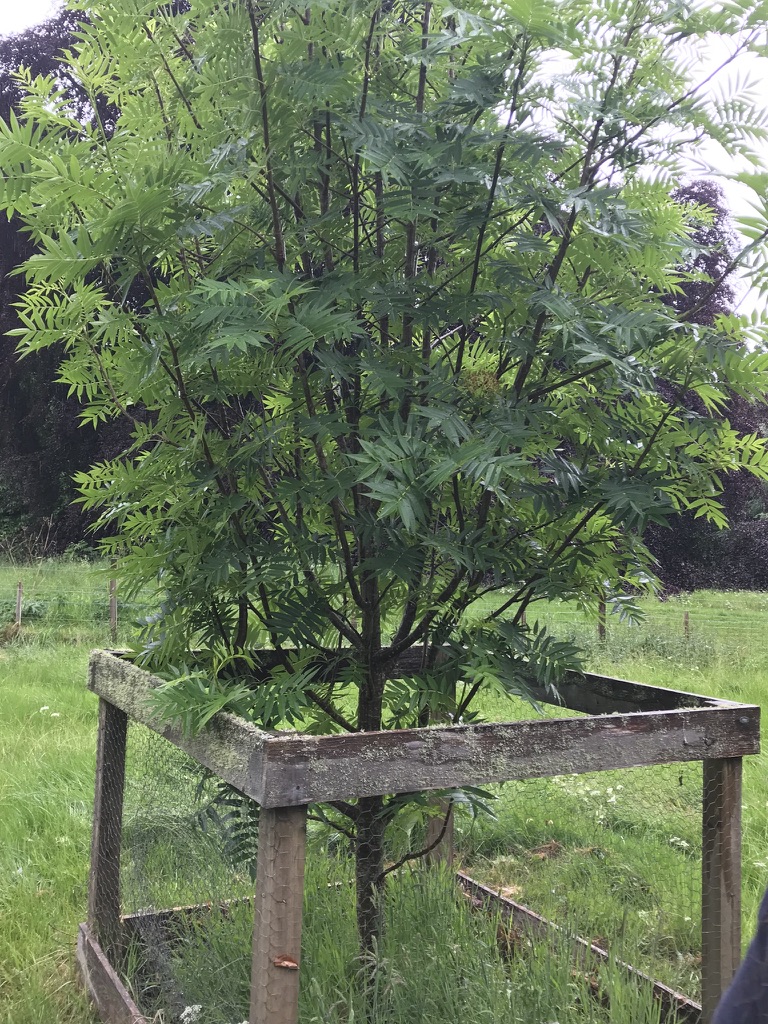
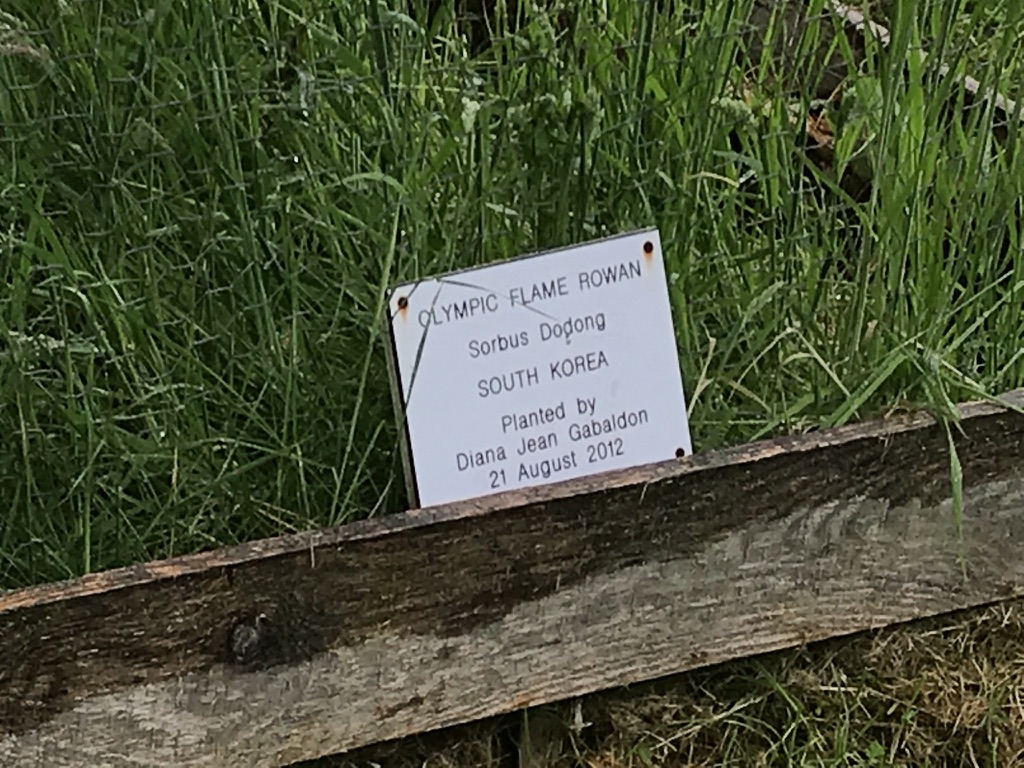
Our Castle Leod photographs belong in this guide only with that distinction in place. They document the wider Outlander world rather than a television set. On the grounds, a sign identifies an Olympic Flame rowan planted by Diana Gabaldon in August 2012—an unusually personal bridge between the author and the Scottish landscape.
That is part of what makes Outlander Country larger than a checklist of camera positions. The filming locations, clan places, archaeological sites, and real Jacobite history overlap, but they are not interchangeable. Knowing which is which makes each one more meaningful.
The location list at a glance
Central Scotland and the Lothians: Doune Castle; Midhope Castle; Hopetoun House and Estate; Blackness Castle; Linlithgow Palace; Bo’ness & Kinneil Railway; Callendar House; Preston Mill; Glencorse Old Kirk; Gosford House; Newhailes House; Beecraigs Country Park; Gray Buchanan Park; North Third Reservoir; and Duncarron Medieval Village.
Fife: Falkland village and palace; Culross Royal Burgh, Palace, garden, Study House, and West Kirk; Aberdour Castle; Dysart Harbour; and Balgonie Castle. Edinburgh: Bakehouse Close; Acheson House; Tweeddale Court; the Signet Library; Craigmillar Castle; Summerhall; and Arniston House.
Glasgow and the west: Glasgow Cathedral; University of Glasgow; Kelvingrove Park; George Square; Pollok Country Park; St Andrew’s in the Square; Glasgow’s West End streets; Finnich Glen; Loch Katrine; Dean Castle; Dunure Harbour and Castle; and Calderglen Country Park.
Highlands, Perthshire, and the south: Kinloch Rannoch; Highland Folk Museum; Rothiemurchus Estate; Tulloch Ghru; Glencoe; Glen Affric; Drummond Castle Gardens; Tibbermore Parish Kirk; the Hermitage; Drumlanrig Castle; rural Cumbernauld; and Wardpark Studios. The list includes publicly documented filming places, not every private field, temporary set, or undisclosed unit location.
Outlander made Scotland many places at once
The pleasure of these locations is not only recognizing a doorway or courtyard. It is seeing how the production looked at one Scottish village and found Inverness, at one library and found Jamaica, at one forest and found North Carolina.
Our own Outlander connections have extended beyond Scotland. We explored Tryon Palace in New Bern, North Carolina, the historic home associated with royal governor William Tryon, whose fictionalized counterpart enters the series as Jamie and Claire build their life in America. Later, in Yorktown, Virginia, we saw a traveling display of costumes worn in Outlander. Neither experience was a filming location, but together they added another layer to our understanding of the real history and production artistry behind the story.
We have stood in several of these places ourselves and researched the wider list for this guide. That combination is why we stay precise about what we experienced, what the screen used, and what still belongs on a future Scotland journey.