Personally Experienced · Last verified 2026-07-28
Explore Europe
Quick Take
A walkable Edinburgh first visit that leaves room for weather and detours
- When we went
- June 2018
- Ideal pace
- Two full sightseeing days
- Best planning tool
- Timed priorities with flexible walks between them
- Do not underestimate
- Hills, cobbles, stairs, wind, and jet lag
I covered some of our Edinburgh advice in my main Scotland itinerary inspired by Outlander, but the city deserves more detail than I could give it there. We did not experience everything below in one neat 48-hour window. This itinerary combines what we personally saw with the places we wanted to reach but could not, arranging them into two realistic sightseeing days.
Edinburgh rewards travelers who leave room for detours. A castle may close because of wind, a close off the Royal Mile may catch your attention, or your legs may decide that one more hill is not happening. Two days give you enough structure to see the major sights while still letting the city surprise you.
Arriving in Edinburgh: Make Daylight Your First Strategy
Like many westbound-to-Europe itineraries from the United States, an Edinburgh trip may begin with an overnight flight and an early- or mid-morning arrival. Your body may insist that it is time to sleep. If you can manage it safely, get outside, find daylight, eat on the local schedule, and take an easy walk rather than going straight to bed for the day.
That does not mean placing an expensive, must-see reservation immediately after landing. Our jet lag was stronger than expected, and I would still protect the arrival day from anything I would be heartbroken to miss. Think of it as an orientation day: walk through a garden, learn the route between your hotel and the Old Town, have an early dinner, and then get a full night of sleep.
Where We Stayed—and Why the Location Worked
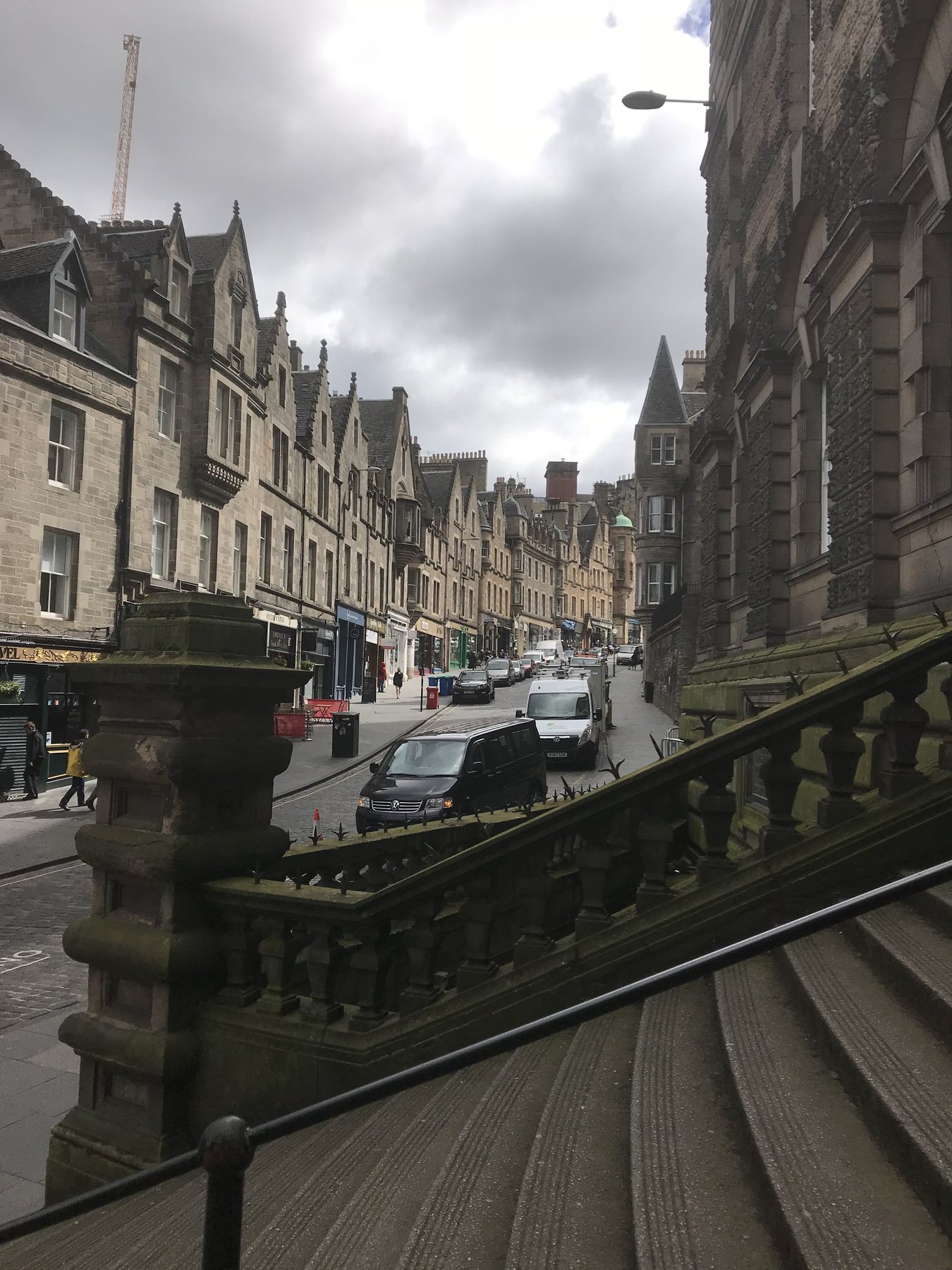
Edinburgh is very walkable, especially if you stay near the Royal Mile, Princes Street, or the eastern end of New Town. The tradeoff is terrain: Old Town includes hills, closes, cobbles, and stairs. We found the walking manageable, but comfortable shoes matter and the same distance can feel very different after a long travel day.
We stayed at ibis Styles Edinburgh St Andrew Square. Ibis Styles is part of Accor’s international hotel portfolio, and for us the familiar chain made the stay feel predictable in a good way. I would stay there again because the location put us close to Edinburgh Waverley railway station, St Andrew Square, and Edinburgh Bus Station.
That convenience became particularly valuable when our Rabbie’s tour departed from the bus station. Instead of arranging a transfer with luggage, we walked roughly a block. Hotel details and tour departure points can change, so confirm the exact property and meeting location for your own dates.
A Luggage Strategy for a Longer European Trip
Scotland was only one part of a longer international trip, so we packed two bags each: a smaller bag for the multi-day Rabbie’s tour and a larger bag for everything that came afterward. Because we could not take both bags per person on the mini coach, we stored the larger bags at Edinburgh Airport when we arrived.
The staffed, concierge-style storage felt secure to us, and retrieving the bags before our departing flight was straightforward. I would use the same strategy again, but I would verify the airport’s current operator, hours, prices, size restrictions, and collection procedures before relying on it. Keep medication, documents, valuables, and anything needed during the Scotland portion with you.
Day 1 Morning: Princes Street Gardens and Edinburgh Castle
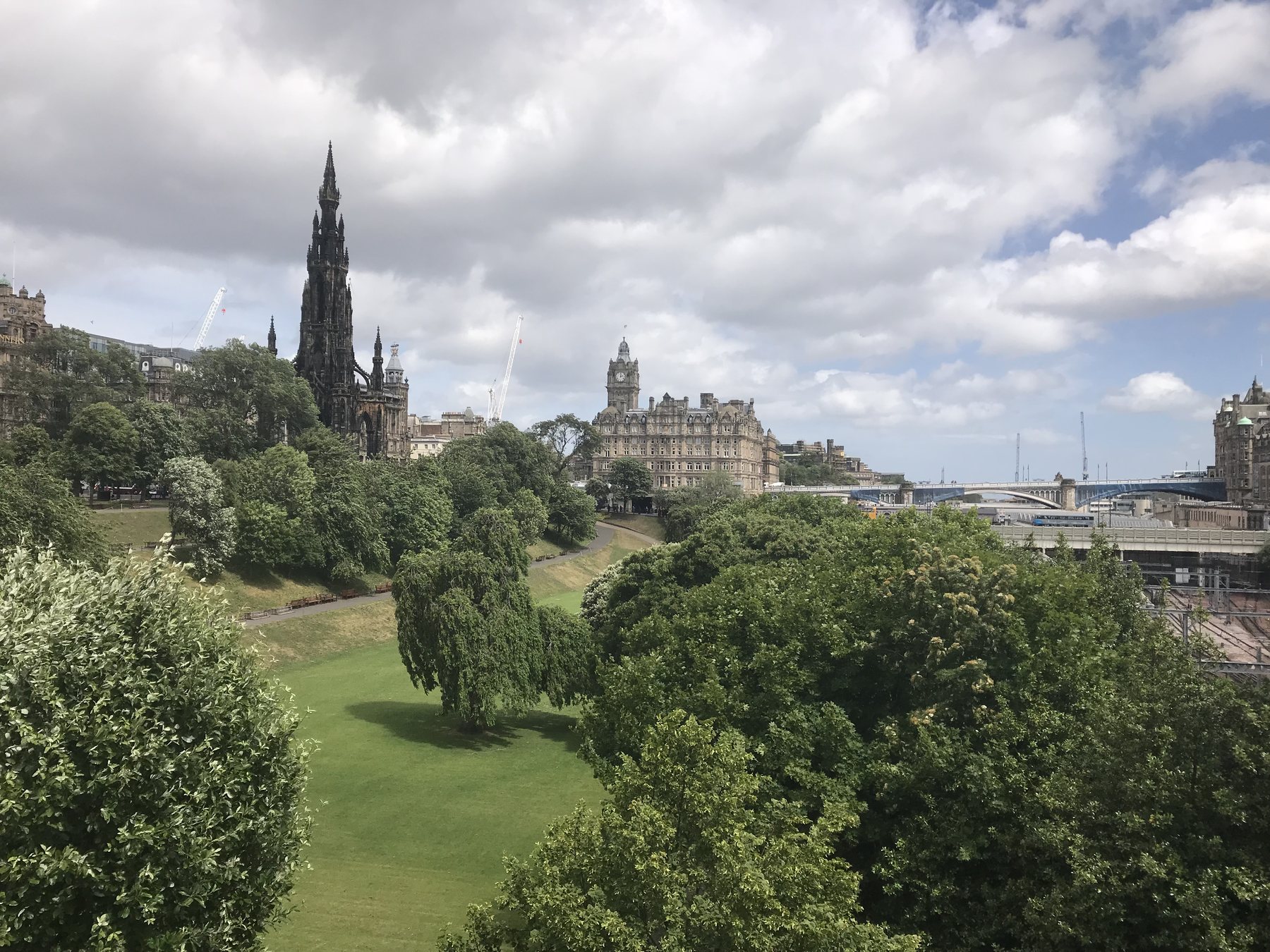
Begin in Princes Street Gardens and use the walk to take in the contrast between New Town and the steep Old Town skyline. We crossed the gardens at least three times while moving between our hotel and the Royal Mile, and the route never felt like merely getting from one place to another.
From there, climb toward Edinburgh Castle. Advance tickets are wise because popular dates can sell out. We had timed tickets, but the castle closed because of high winds. Our refund was handled easily, and the unexpected opening in the schedule was not entirely unwelcome because jet lag had caught up with us.
Weather is part of planning Edinburgh, not an afterthought. Build the castle into the first morning of a two-day visit so there is at least a chance to reschedule if conditions force a closure. Check the official closure information before making the uphill walk.
Day 1 Midday: The Scotch Whisky Experience
Near the castle, the Scotch Whisky Experience made an excellent next stop. Our paid tour introduced the whisky-making process, regional styles, and flavor profiles, followed by samples and time in a large gift shop.
Doing this in Edinburgh before traveling deeper into Scotland gave later distillery visits more context. When guides discussed Highland, Lowland, Speyside, Islay, and Campbeltown whiskies, we already had a framework for the regions and the differences we might notice. Even a traveler who is more curious than devoted to whisky can get something useful from that introduction.
Choose the current tour that matches your interest and tolerance, and never assume that a tasting requires finishing every sample. Tour formats, prices, and inclusions change.

Day 1 Afternoon: Walk the Royal Mile and Visit St Giles’
The Royal Mile is not one single attraction to complete. It is the route itself: historic buildings, souvenir and specialty shops, street performers, restaurants, narrow closes, and frequent reasons to stop. We walked High Street and Canongate more than once and noticed something different each time.
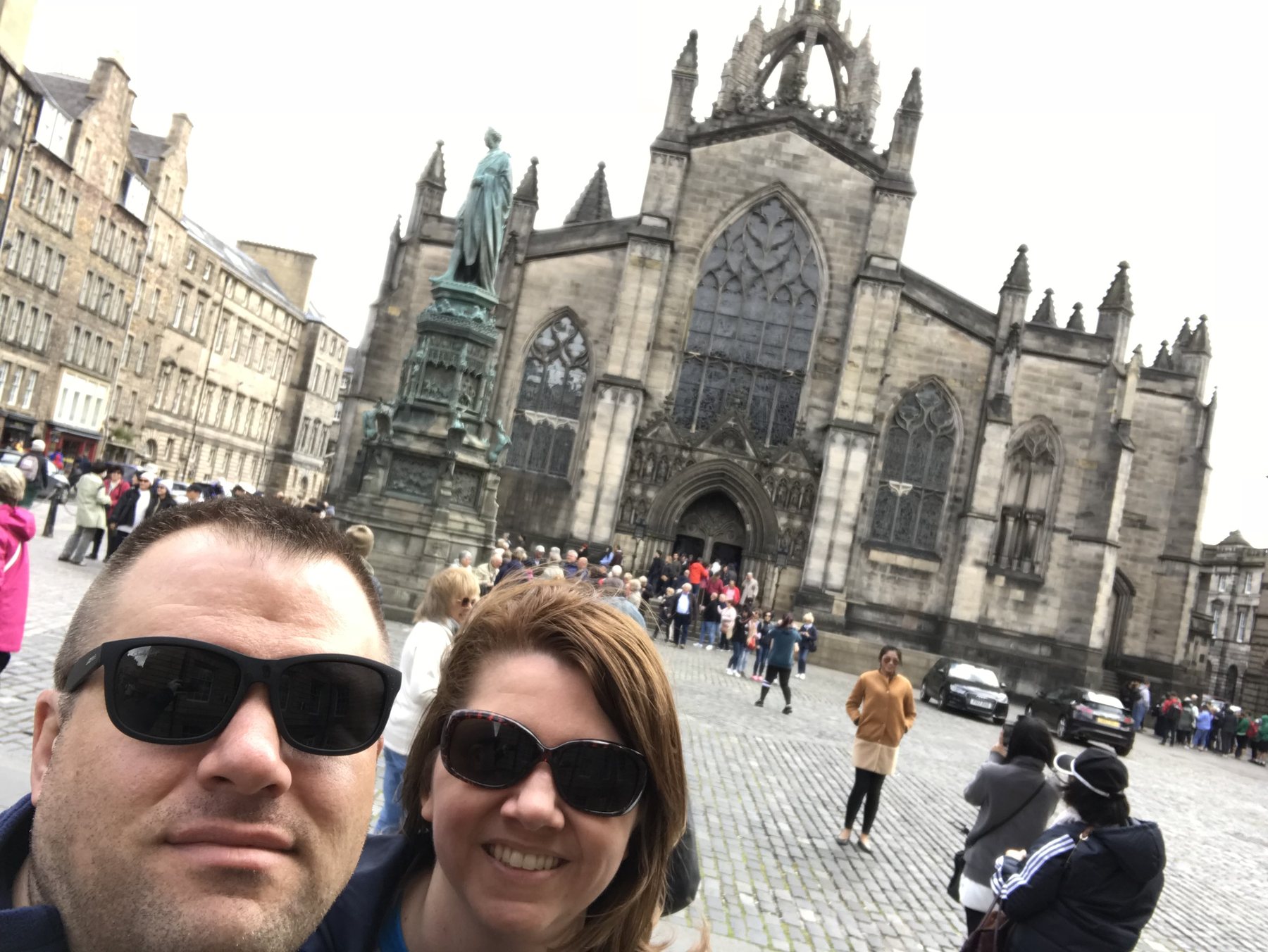
Make time for St Giles’ Cathedral on High Street. The church is supported by donations rather than a required general-admission ticket, although tours or special access may carry a charge. Step inside for the architecture, memorials, stained glass, and a quieter pause from the activity outside. Check worship services and visitor hours before your trip because it remains an active church.
Day 1 Late Afternoon: Greyfriars Kirk and Greyfriars Bobby
Walk south from the Royal Mile toward Greyfriars Kirk. We visited the kirk and adjoining kirkyard, where centuries of Edinburgh history sit within a surprisingly compact space. Give the grounds the tone they deserve; this is an active place of worship and a burial ground, not simply a setting for legends.
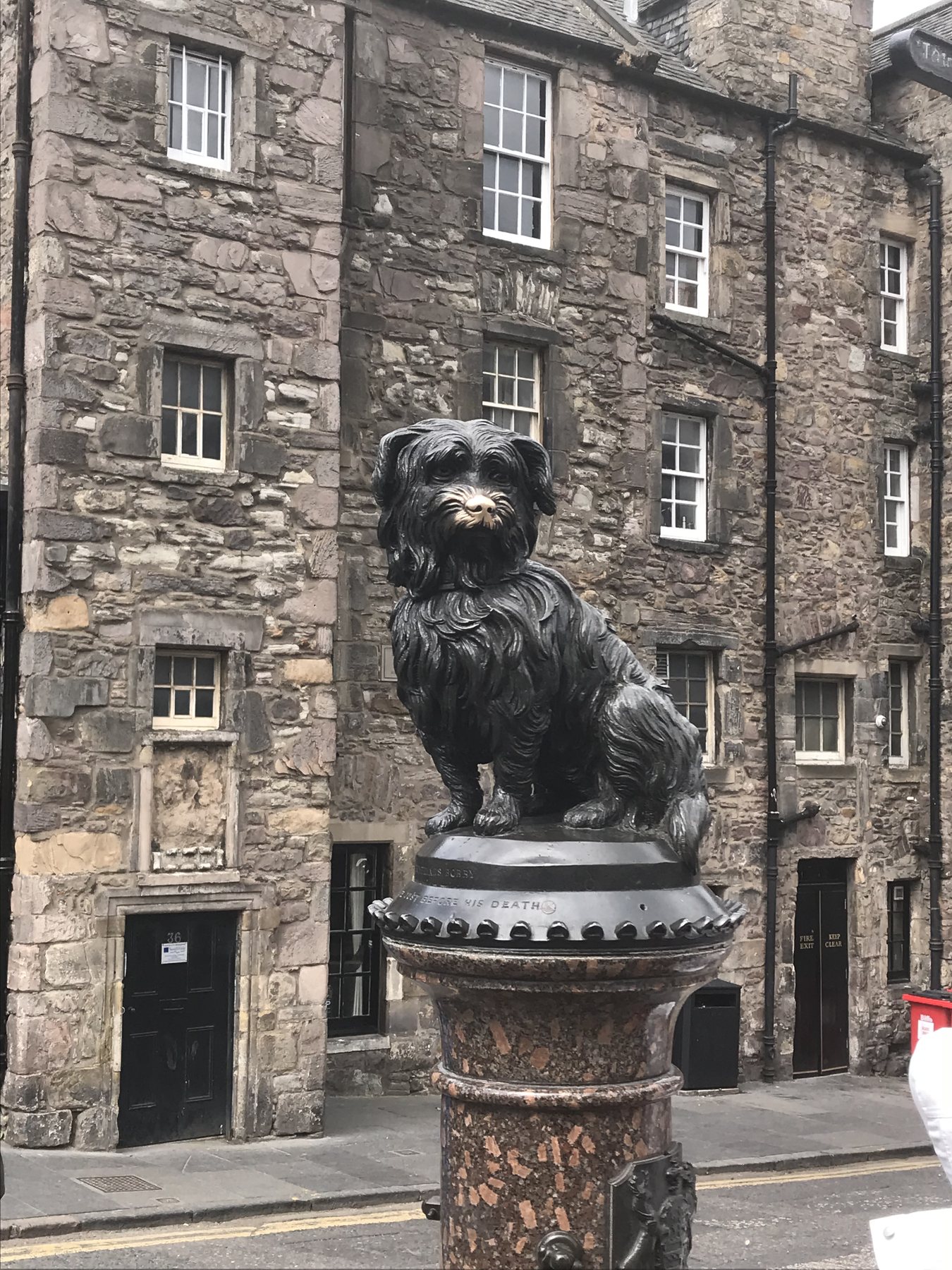
Nearby stands the small statue of Greyfriars Bobby, the Skye terrier remembered for his loyalty. Visitors often hear that rubbing the dog’s nose brings good luck, and the polished bronze shows how many people have done it. Local preservation messages discourage the custom because repeated touching damages the finish, so enjoy the story and take the photograph without adding another rub.
Day 1 Evening: Choose a View Without Overloading the Day
If your legs still have energy, Calton Hill offers a high-impact city view without committing to the longer climb up Arthur’s Seat. We did not reach it, but it is the viewpoint I would add to the end of this first day.
If jet lag or the city’s stairs have already won, let them. Have dinner near the Royal Mile or St Andrew Square and save the bigger landscape for tomorrow. A two-day itinerary works only if the second day still feels possible.
Day 2 Morning: Holyroodhouse, Holyrood Abbey, and the Gardens
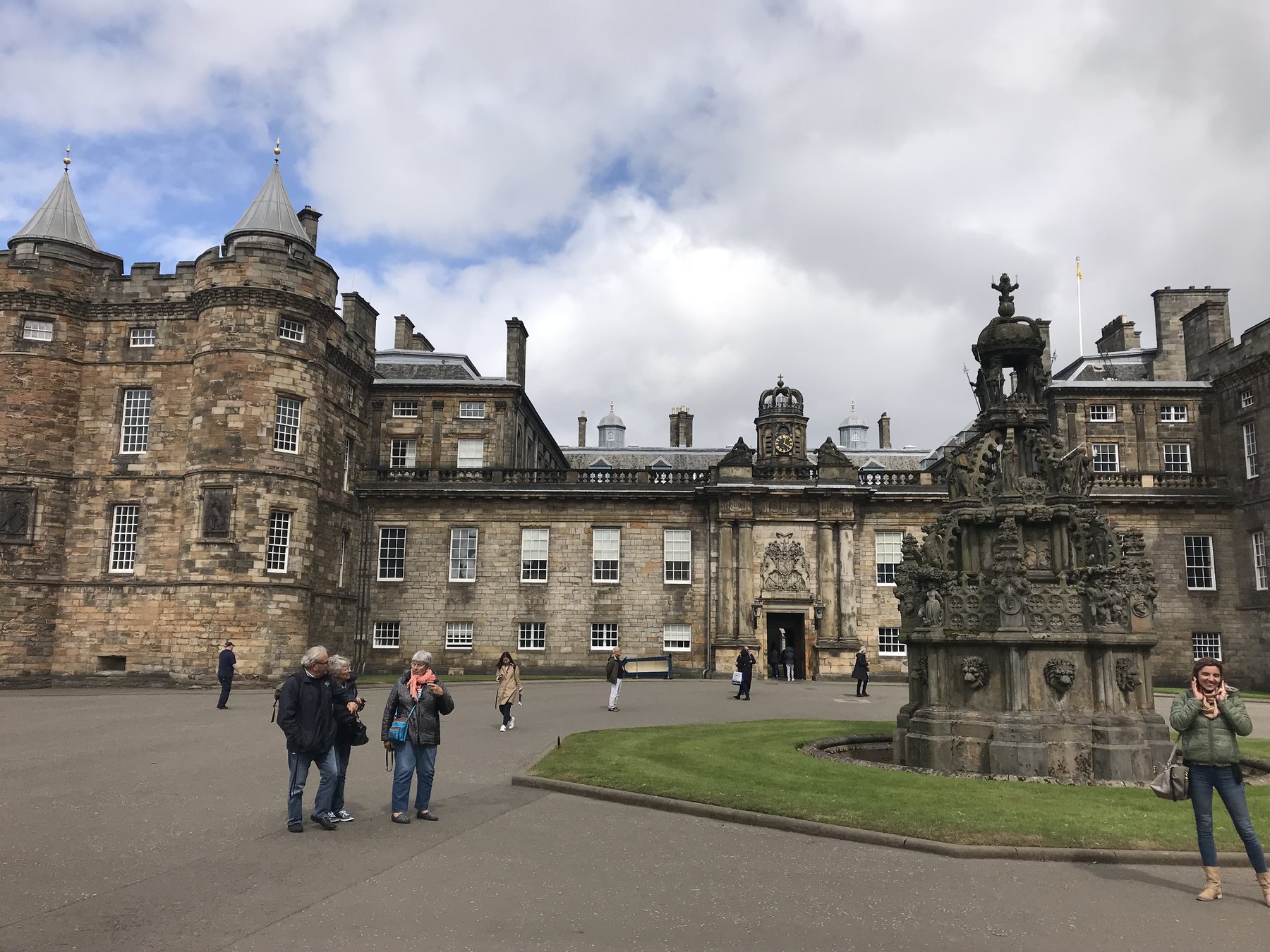
Start the second day at the eastern end of the Royal Mile with the Palace of Holyroodhouse. The palace is the monarch’s official residence in Scotland, but its rooms also carry the much older stories of Mary, Queen of Scots, Bonnie Prince Charlie, and successive royal residents. We used the included audio tour, and it gave us far more context than walking through the rooms alone would have.
The sequence of rooms helps explain how royal access and ceremony worked. The State Apartments become progressively grander, while the historic apartments associated with Mary, Queen of Scots bring political intrigue into a much more human scale. Current visitor rules restrict photography inside, which encourages you to pay attention to the rooms rather than experience them through a screen.
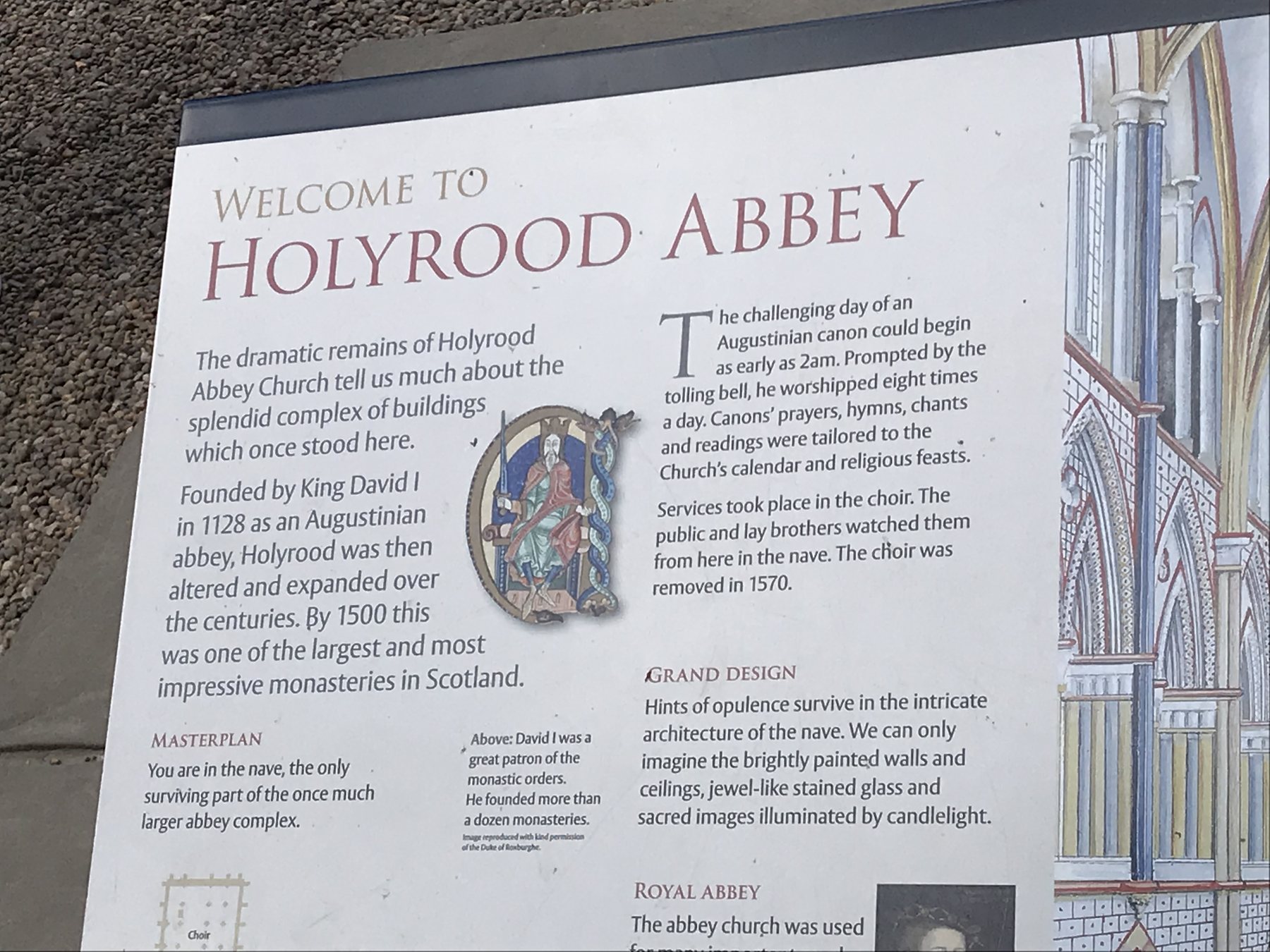
The ticketed visit continues into the roofless remains of Holyrood Abbey. Founded in the 12th century, the abbey once ranked among Scotland’s great medieval religious buildings. Its surviving arches, Gothic windows, and open sky create a completely different atmosphere from the formal palace interiors next door.
Leave time for the palace gardens as well. They sit against the dramatic backdrop of Arthur’s Seat and Salisbury Crags, and that relationship between royal Edinburgh and the natural landscape is part of what makes this end of the city memorable. Garden access and portions of the visitor route can depend on weather or royal use, so check the official schedule.
The Holyrood Complex Is Worth Slowing Down For
Do not treat Holyroodhouse as a quick photo stop before turning around. Between the multimedia tour, the State Apartments, the historic rooms, the abbey ruins, and the gardens, the site can comfortably occupy two to three hours for a first visit.
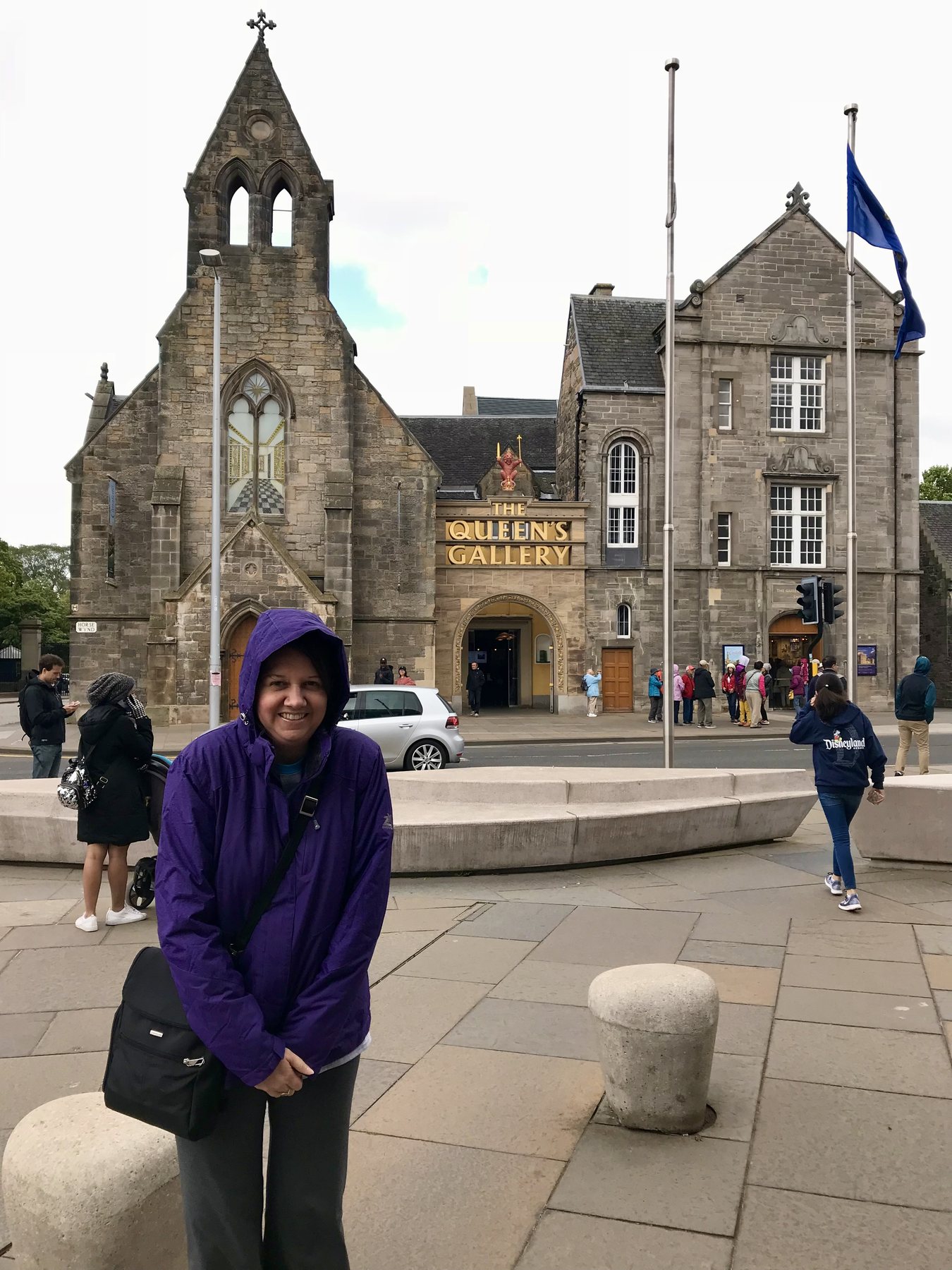
The neighboring gallery and public garden may add another layer depending on current exhibitions and opening arrangements. We enjoyed the landscaped areas around the complex, but the lasting value came from understanding how the palace, abbey, and surrounding park belong to the same historic setting.
Day 2 Midday: Find Jamie’s Printshop at Bakehouse Close
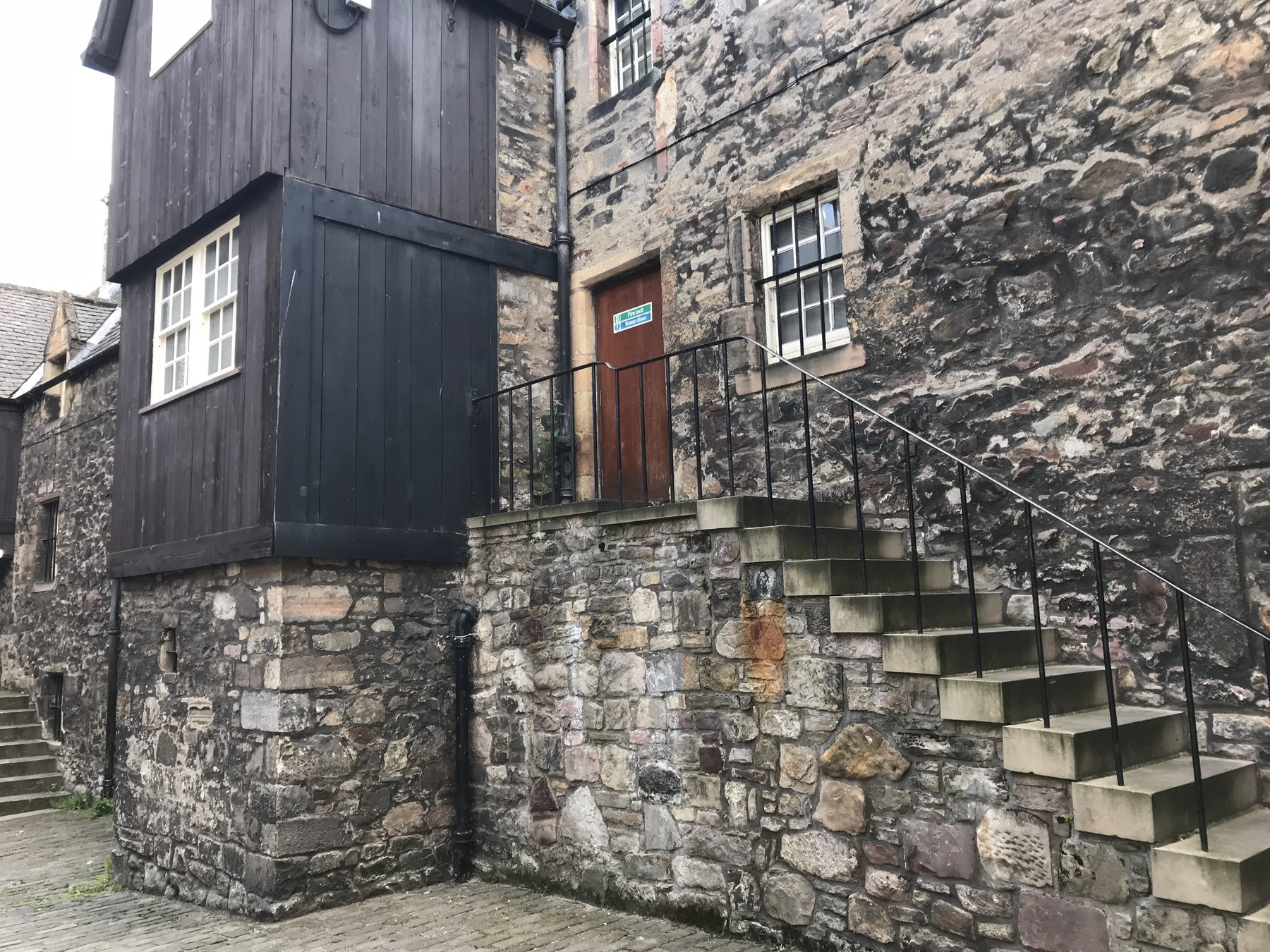
On the walk back up Canongate, Outlander viewers should turn into Bakehouse Close beside the Museum of Edinburgh. Its stone steps and projecting wooden frontage were used as the exterior approach to Alexander Malcolm’s printshop in season three, when Claire and Jamie reunite in Edinburgh.
You cannot tour Jamie’s fictional shop interior here, but the exterior is free to see and easily recognizable in photographs. The close is a real historic passage rather than a television set, so be considerate of residents, businesses, and other visitors. It is a small stop, but for us it connected Edinburgh directly to the story that first inspired the larger Scotland trip.
Day 2 Afternoon: Arthur’s Seat—or a Gentler Alternative
Our ambition was to climb Arthur’s Seat, the ancient volcanic summit rising above Holyrood Park. Our legs made a different decision. The view over Edinburgh and toward the Firth of Forth is likely extraordinary, but this is a real hill walk with uneven and sometimes steep terrain, not a casual extension of the palace tour.
If conditions, footwear, daylight, and energy align, allow several hours and use an appropriate route. Salisbury Crags can offer a shorter alternative, while Calton Hill is the better choice for travelers who want a city viewpoint with less commitment. High wind, rain, or tired legs are good reasons to choose another plan.
Optional Detour: See the Three Forth Bridges
If city viewpoints are less important to you—or if you have additional time—travel to South Queensferry for the Forth Bridges Viewpoint. This is not a walk from the Royal Mile, so account for train, bus, taxi, or driver time.
From the waterfront you can appreciate three very different crossings together: the red cantilever Forth Bridge carrying rail traffic, the Forth Road Bridge, and the Queensferry Crossing. The railway bridge is enormous in person, and seeing all three along the water turns an engineering landmark into a broader story about how Scotland has crossed the firth in different eras.
I would treat South Queensferry as an alternative half-day or a bonus for a longer stay, not something to squeeze between Holyroodhouse and an Arthur’s Seat climb.
What I Would Book Ahead
Reserve Edinburgh Castle, the Scotch Whisky Experience, and the Palace of Holyroodhouse in advance when they are priorities. Keep the Royal Mile, St Giles’, Greyfriars, Bakehouse Close, Princes Street Gardens, and viewpoints more flexible around those timed entries.
Recheck every official site shortly before traveling. Edinburgh Castle can close in severe weather; Holyroodhouse can close for royal or ceremonial use; church access works around worship; and outdoor viewpoints require your own judgment about wind, visibility, footwear, and energy.
The Best 48 Hours Leave Something for Next Time
We saw a great deal of Edinburgh, but the city did not feel completed. We missed the castle because of wind. We chose tired legs over Arthur’s Seat. Calton Hill stayed on the list. Those were not failures; they were reminders that a good city itinerary should bend when weather and bodies have other plans.
With two full days, I would keep the first day centered on the castle end of the Royal Mile, whisky, St Giles’, and Greyfriars. I would give the second day to Holyroodhouse, Bakehouse Close, and one landscape choice. That pace covers more than our original visit without turning Edinburgh into a race.