Personally Experienced · Last verified 2026-07-28
Explore Europe
Quick Take
Four thousand years of Highland history in one quiet, open site
- Our visit
- June 2018
- Allow
- About one hour
- Pair it with
- Culloden Battlefield
- Go for
- Bronze Age history, not only Outlander
Clava Cairns was one of those places that became more extraordinary the longer I stood there.
At first, I saw circles of stone, standing stones, grass, and trees. Then I tried to picture people gathering in that same landscape approximately 4,000 years ago—choosing the stones, arranging them, building passages, and returning to a place they considered sacred.
We visited immediately after Culloden Battlefield because the two sites are only minutes apart. They fit naturally into the same day, but they belong to completely different periods of Scottish history and create very different emotional experiences.
What are the Clava Cairns?
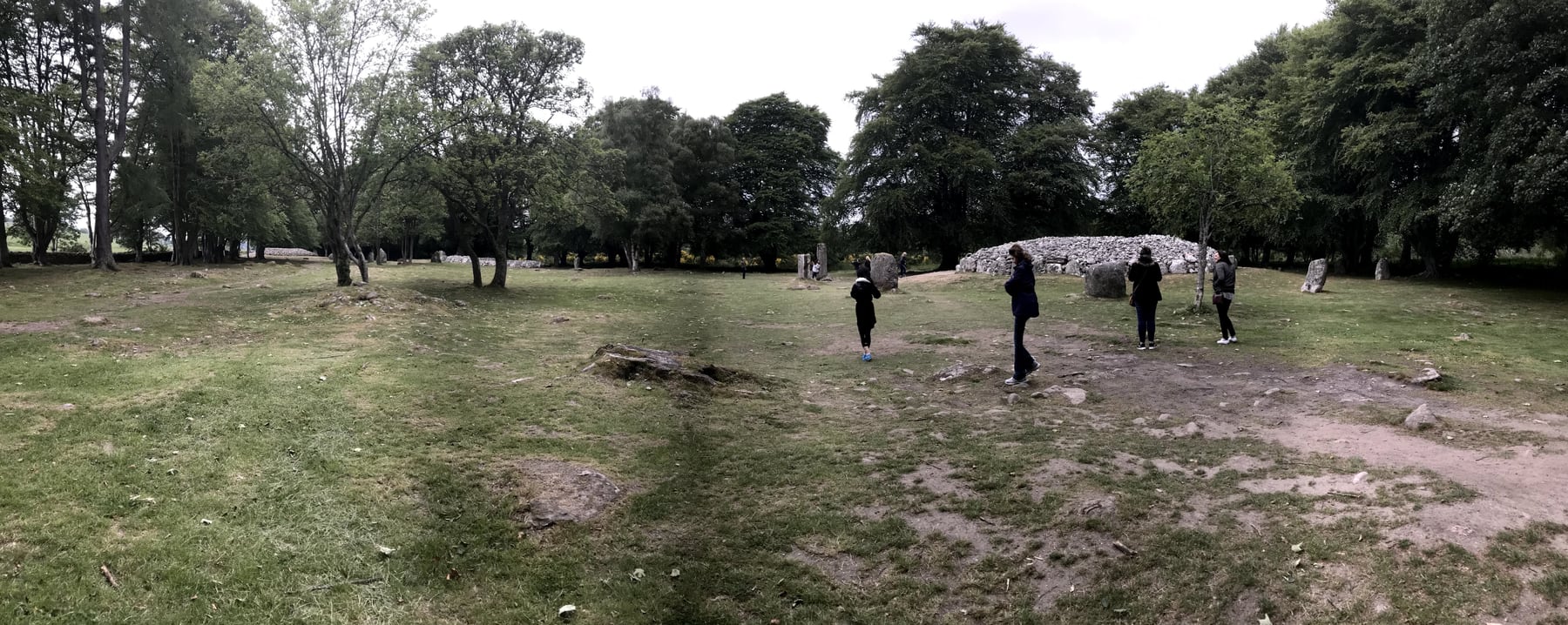
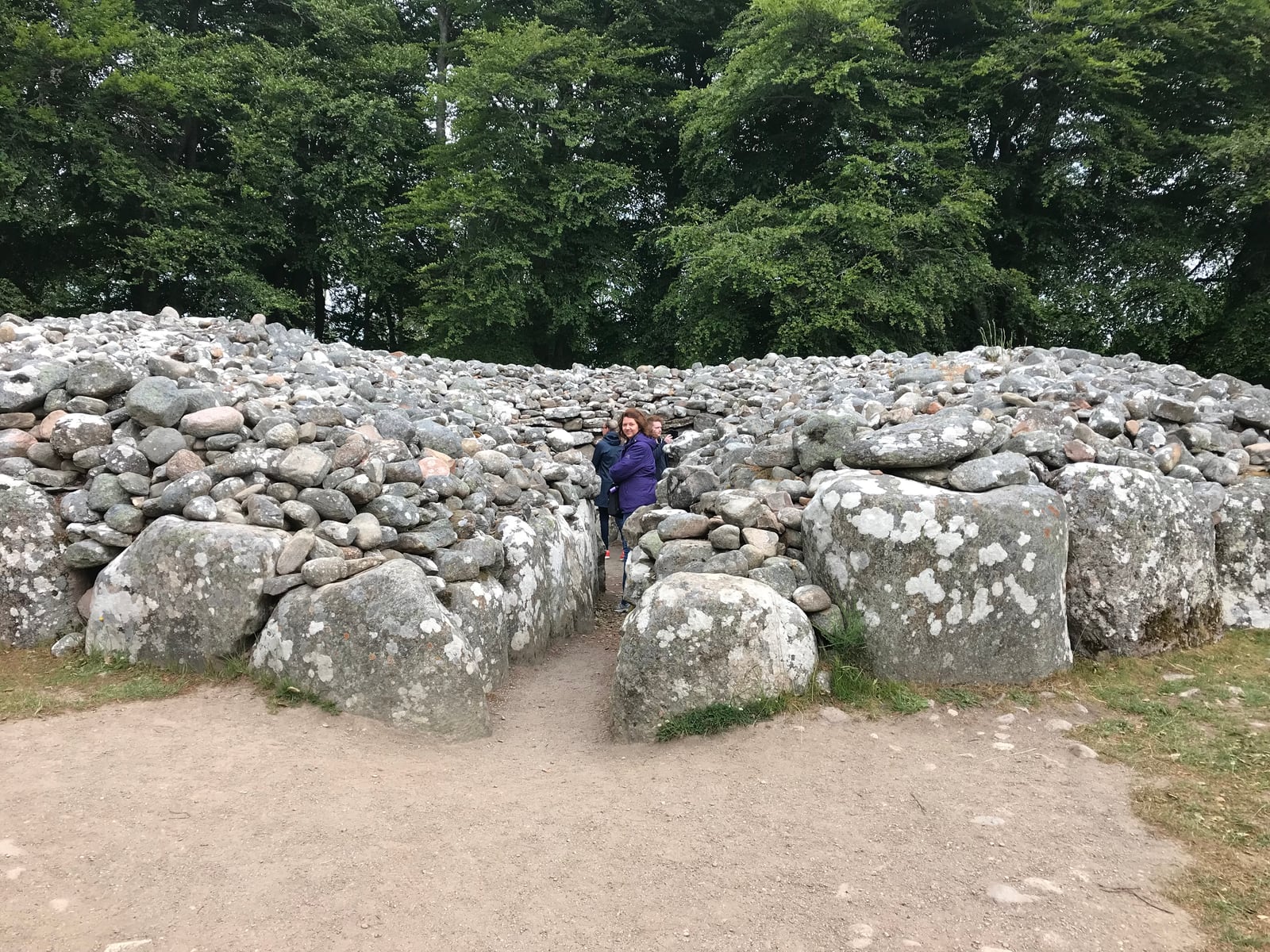
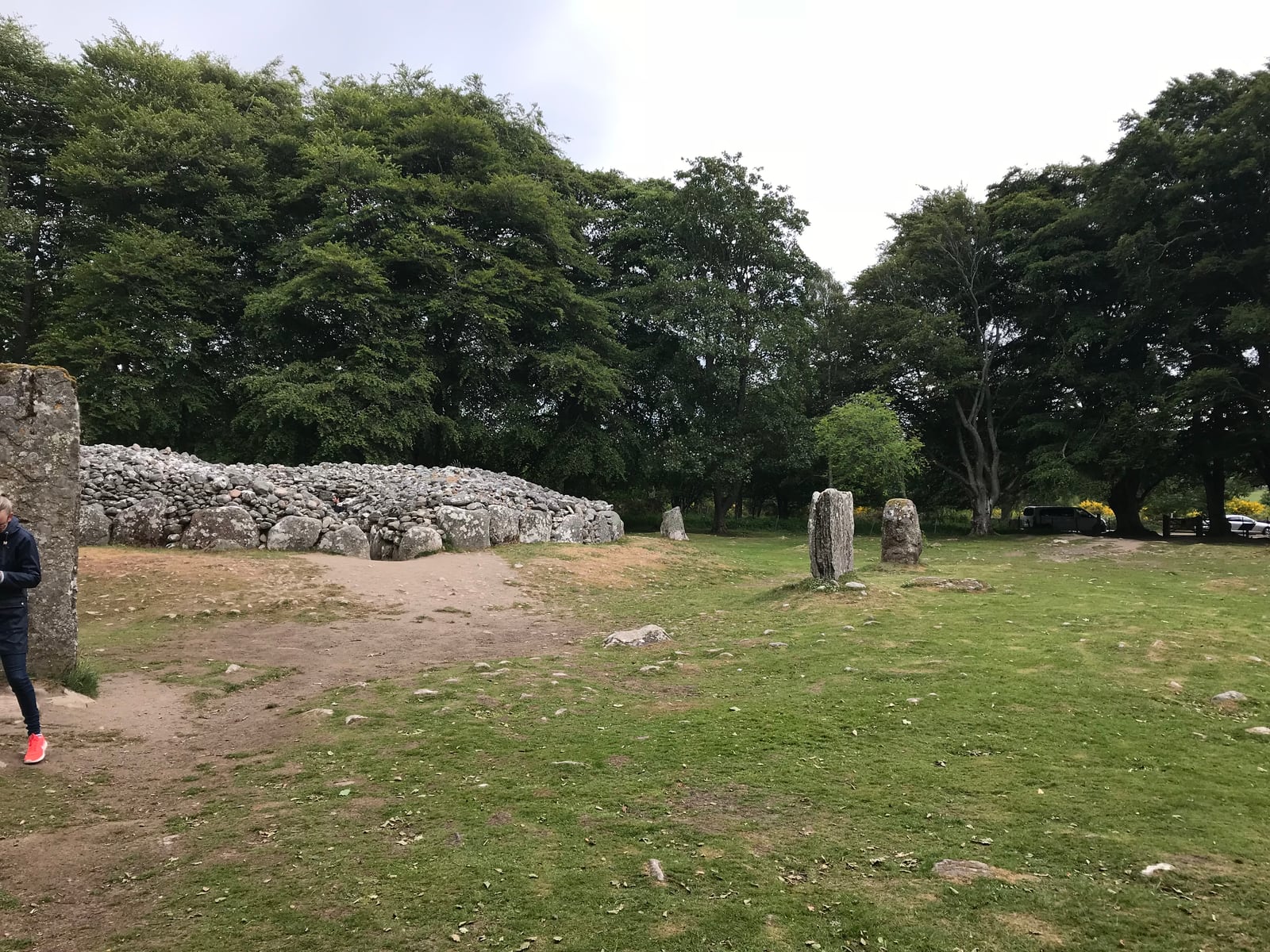
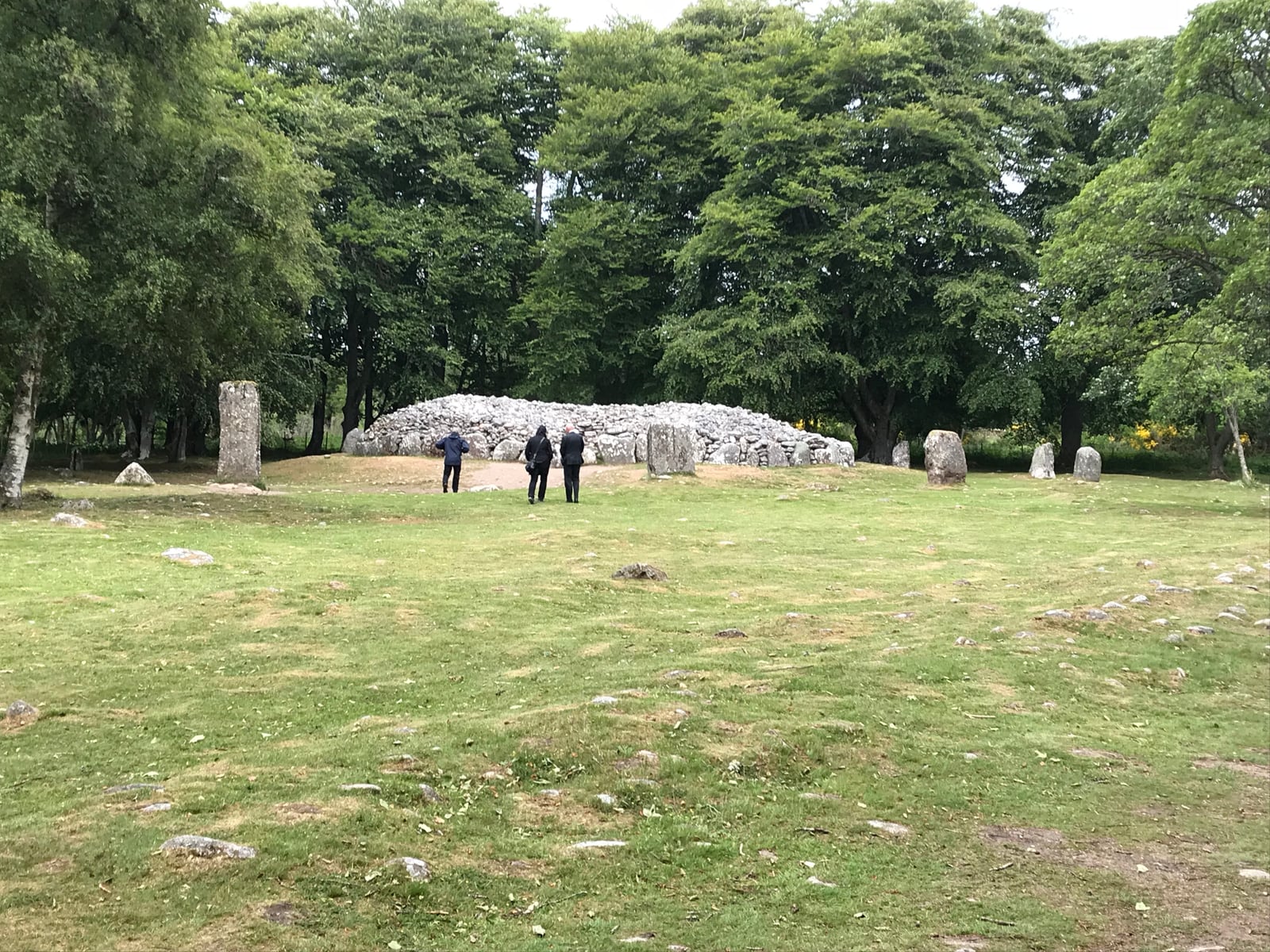
Clava Cairns is the name commonly used for a group of prehistoric burial monuments near Inverness. The best-known section, Balnuaran of Clava, contains circular passage graves, a ring cairn, kerb stones, and standing stones.
Historic Environment Scotland dates the site to about 4,000 years ago and describes it as an ancient cemetery built to house the dead. The monuments that survive today were once part of a larger sacred landscape used over many generations.
That history can be difficult to absorb because the site is open and peaceful rather than enclosed behind museum walls. You are looking at structures created in the Bronze Age, long before Scotland existed in anything resembling its modern form.
What amazed me most
The age of the site was harder to comprehend than its physical scale.
A castle may be several centuries old and still contain architectural details that feel familiar. Clava Cairns asks you to imagine people living 4,000 years ago, building with stone and organizing an important place around death, memory, seasons, and the surrounding landscape.
The cairns are not enormous, but they do not need to be. Walking around them, seeing the passage entrances, and looking across the standing stones made the distance between their world and ours feel both immense and surprisingly small.
People stood here. They carried stones here. They returned here. That realization was what made the site absolutely amazing to me.
The Outlander connection
Clava Cairns was not an Outlander filming location.
The stone circle at Craigh na Dun was created with prop stones at a different location near Kinloch Rannoch. Clava Cairns is instead said to have helped inspire the atmosphere and appearance associated with the fictional standing stones.
That distinction matters. Visitors should not arrive expecting to find the exact stone Claire touched or a recognizable television set. What they will find is something much older and more meaningful: real Bronze Age cairns and standing stones whose history does not depend on the series.
Outlander may encourage travelers to seek out standing stones in Scotland. At Clava Cairns, that curiosity becomes an opportunity to learn about the people who occupied this landscape thousands of years before the Jacobite story began.
Pairing Clava Cairns with Culloden Battlefield
Clava Cairns is signposted just east of Culloden Battlefield, making the two sites exceptionally easy to combine.
I recommend visiting Culloden first. The museum and battlefield require attention, and the experience can be emotionally heavy. Clava Cairns then changes the rhythm of the day. Its woodland setting and much older history create space to slow down without treating either site as an extension of the other.
Culloden belongs to the 18th century and the final battle of the Jacobite rising of 1745. Clava Cairns belongs to the Bronze Age. Their physical closeness should not blur the thousands of years separating them.
How much time should you allow?
Allow approximately 45 to 60 minutes for an unhurried first visit.
That gives you time to walk around the principal cairns, look through the passage entrances, read the interpretation, notice how the standing stones relate to the circular structures, and take photographs without turning the site into a quick Outlander stop.
Travelers who are particularly interested in archaeology or prehistoric Scotland may want longer. A rushed visit of 20 to 30 minutes is possible, but it leaves less room to understand what you are seeing.
Respecting the monuments
Clava Cairns is an archaeological site and an ancient cemetery, not a collection of rocks arranged for photographs.
Stay on established ground where possible, do not climb or sit on the cairns, and do not move, stack, or remove stones. Avoid leaning equipment against the monuments, and give other visitors space to experience the site quietly.
You can take compelling photographs without touching the structures. Wide views are especially useful because they show how the cairns, standing stones, trees, and open ground relate to one another.
Photography tips
Begin with a wide view before concentrating on individual stones. The site makes more sense when the circular cairns and surrounding standing stones can be seen together.
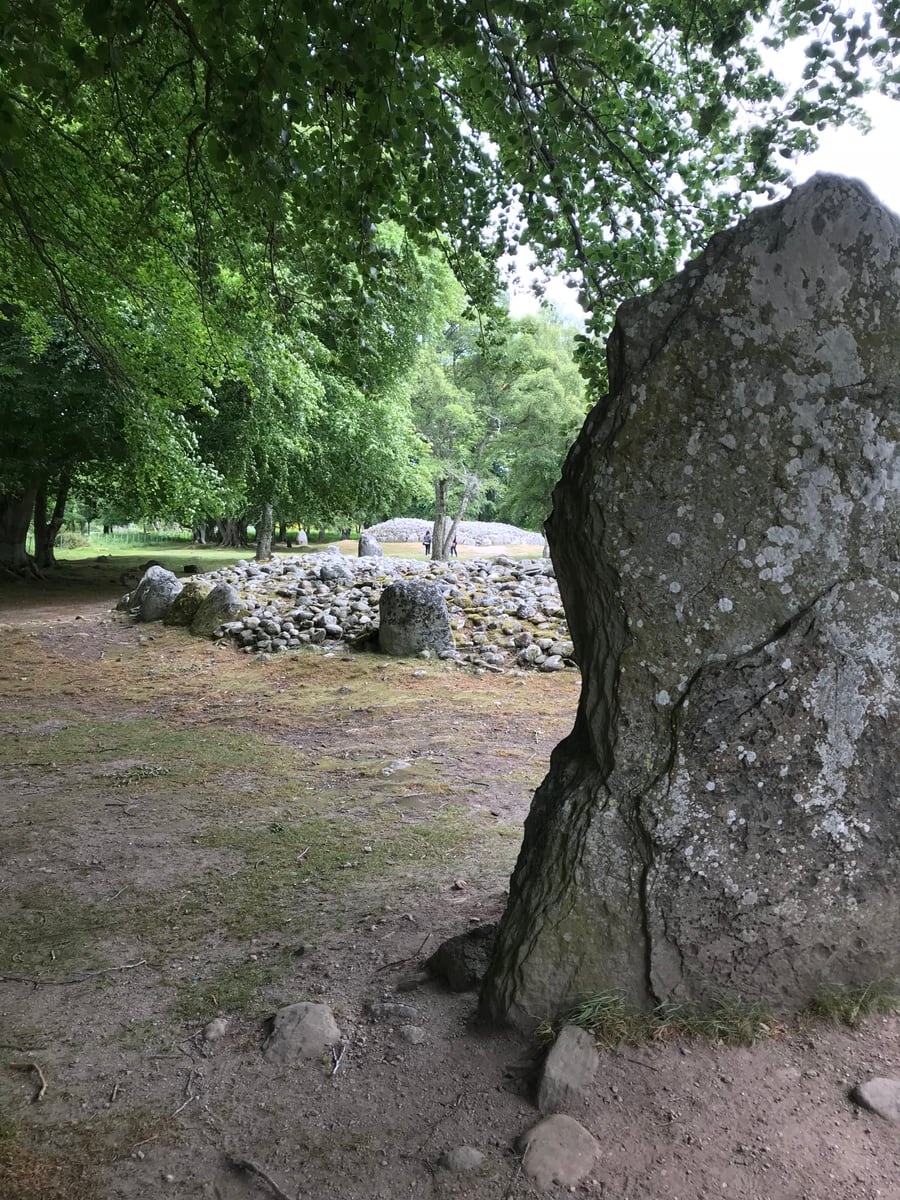
Use the mature trees as natural frames, and photograph along the passage entrances to show the depth of the stone construction. Overcast Highland weather can work well here because it softens harsh shadows and supports the site’s quiet atmosphere.
Be patient when other visitors are present. Waiting briefly for someone to move is better than stepping onto protected stones or crowding a narrow passage for an unobstructed photograph.
Practical visitor information
Clava Cairns is near Inverness and is signposted from the B9091, just east of Culloden Battlefield. Historic Environment Scotland currently lists the site as free to visit and open year-round.
Car and coach parking are available, but facilities at the cairns are limited. Use the restrooms and visitor facilities at another planned stop rather than assuming there will be a full visitor center here.
The ground is natural and may be uneven, wet, or muddy. Wear shoes appropriate for the weather and review current access information before traveling if anyone in your party has mobility concerns.
Is Clava Cairns worth visiting without Outlander?
Absolutely.
The Outlander association may introduce travelers to Clava Cairns, but it is not what makes the site important. The cairns preserve evidence of how Bronze Age people treated death, place, memory, and the changing seasons.
Come because you are curious about the fictional stones if that is what first catches your attention. Stay long enough to understand that the real story began thousands of years earlier.
Four thousand years, still present
What stayed with me was not the feeling that I had found Craigh na Dun.
It was the realization that people had stood in this landscape 4,000 years before us and created something that could still stop a modern visitor in her tracks.
Clava Cairns is easy to add to a Culloden day. It should not be treated as an afterthought. Give it enough time to become what it really is: one of the most remarkable surviving connections to prehistoric Scotland.