Personally Experienced · Last verified 2026-07-29
Explore Europe
Quick Take
A four-day first visit that leaves room for London to surprise you
- Our shared visits
- 2018 and 2022
- Best first-visit pace
- Four full sightseeing days
- Getting around
- The Tube, with neighborhood-based days
- Book first
- Westminster, theatre, the Tower, and Harry Potter Studio Tour
London is not a city I would try to finish in a weekend. I generally tell travelers to allow at least two or three full sightseeing days, plus their arrival and departure days. For a first visit, five calendar days—four nights with roughly 96 usable hours in the city—creates a much better balance. You can see the landmarks that brought you to London without turning every day into a race.
Brian and I visited London together in 2018 as part of a multi-country trip, then returned in 2022 with our daughter, Madison. Brian had also visited several times in the 1980s while living in Germany. Across those trips, London kept changing around us, but the best planning lesson stayed the same: group your days by neighborhood, use the Tube, and leave room for the city you discover between reservations.
This is not the exact order of either family trip. It is the four-day first-visit itinerary I would build from what we experienced, including the places we would gladly repeat and one important place we still have not reached.
Interactive map
Places in our London visits
Explore the London sights, theatres, museums, studios, and future-day options discussed in this four-day guide. Markers are approximate where several experiences share one area.
Loading interactive map…
Location 1 of 28
Hotel Riu Plaza London Westminster
Our former DoubleTree central-London hotel near Westminster and the Thames.
Map markers are approximate. Map data © OpenStreetMap contributors; tiles by OpenFreeMap.
Arrival Day: Protect Your Energy
In 2018, we flew to London from Edinburgh early in the morning, left our bags at the hotel, and went straight out to see the city. We had already adjusted to the time change, which made that possible. A traveler arriving fresh from an overnight flight from the United States should plan much more gently.
Use arrival day for hotel check-in, daylight, an easy walk, and an early dinner. I would not place Westminster Abbey, a West End show, or another expensive reservation where a delayed flight or jet lag could ruin it. If you feel better than expected, London will always give you something nearby to explore.
Choose a London Base Around What You Want to See
London hotels can be expensive, but location is one place where I believe you often get what you pay for. A central base can put food, theatre, the Thames, and major sights close to your door. Staying farther outside the city may lower the room rate, but you pay for part of that savings with extra travel time every morning and night.
The right neighborhood depends on the story you want your London trip to tell. A first visit focused on Westminster and the South Bank may look different from a theatre-heavy weekend, a museum-focused stay, a Harry Potter day, or a family trip that needs easier room layouts and less backtracking. Tube access, walkability, late-night return plans, accessibility, budget, and the kind of room that helps you rest all matter.
That is where I can be especially helpful as your personal travel advisor. I can start with the places and experiences that matter most to you, group them into a realistic itinerary, and help select accommodations that support that plan instead of forcing the entire trip to work around a hotel chosen in isolation.
Use the Tube Before You Use a Cab
Londoners call the subway the Tube, and it is far easier to use than it may look on the map. We found it straightforward, generally safe, and much more efficient than sitting in London traffic. Contactless payment or an Oyster card makes it easy to touch in and out, and daily fare caps can keep repeated trips reasonable. Each traveler needs a separate payment card or device, and the same one should be used throughout the day.
Use the ordinary precautions you would use in any large city: keep valuables secure, stay aware on crowded platforms, and know how you are getting back after a late show. We still used several black cabs and perhaps an Uber or two when we were tired, carrying something, or too far from a convenient station. They are useful tools; they simply would not be my default way to cross London.
Day 1: Westminster Abbey, Big Ben, and Parliament
Begin your first full day at Westminster Abbey. This is one London sight I would not miss, and advance admission is highly recommended. The Abbey has been the setting for royal coronations since 1066, and the Coronation Chair, royal tombs, Poets’ Corner, Scientists’ Corner, memorials, and layers of English history can easily hold your attention for several hours.
The Queen’s Diamond Jubilee Galleries are in the medieval triforium high above the Abbey floor. Space is limited, so they require a separate timed ticket and may sell out before general admission. Exhibits can change, which is another reason to check what will be available during your dates.
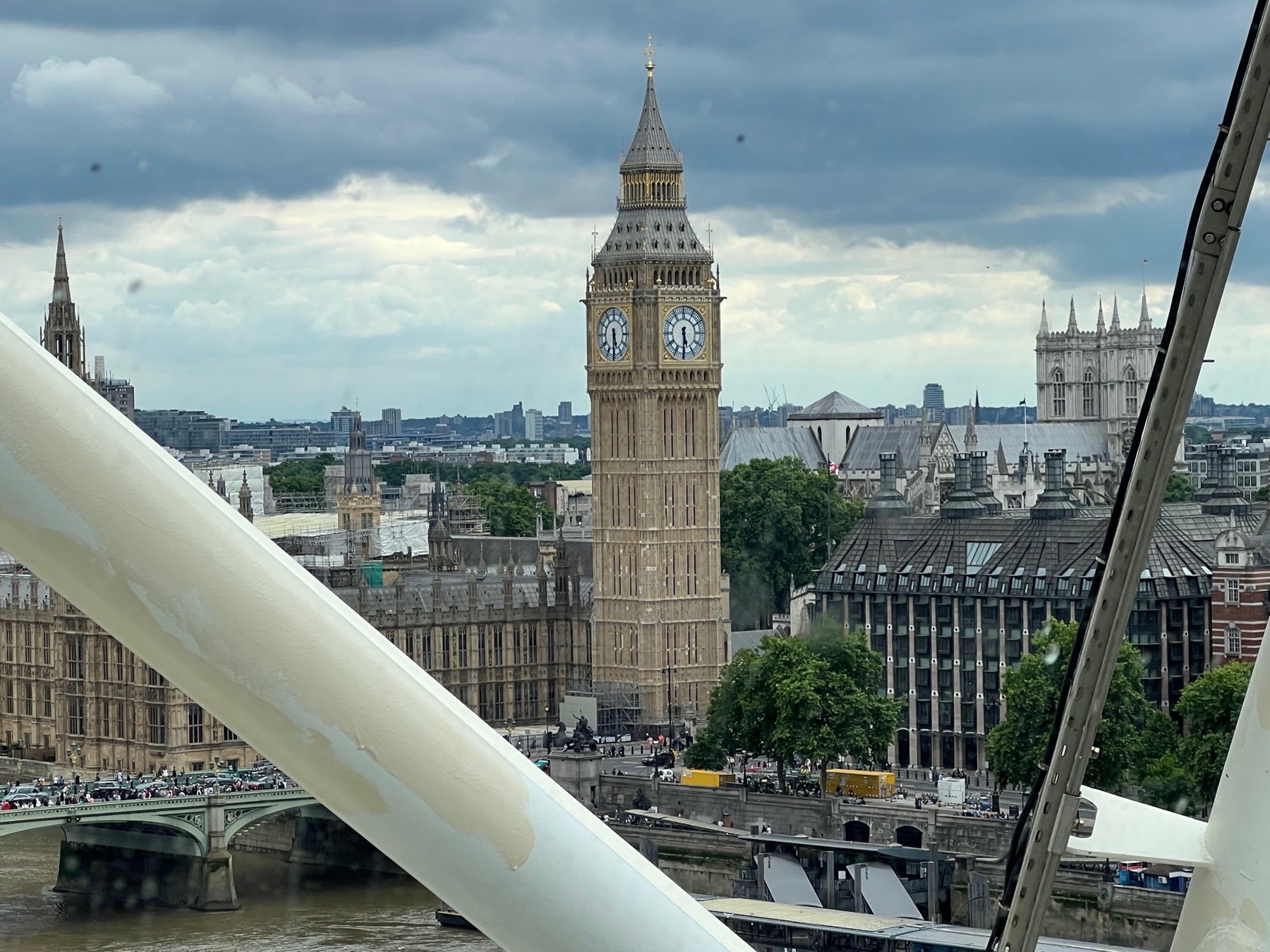
Afterward, walk around Parliament Square for views of the Palace of Westminster and the Elizabeth Tower—the tower that holds the bell called Big Ben. Westminster Bridge and the Thames are only steps away, making this an easy morning to continue on foot.
Day 1 Afternoon: See London From the Thames and the London Eye
Take a Thames sightseeing cruise early in the trip if you can. Many routes travel between Westminster and the Tower of London or Greenwich, passing landmarks and explaining the architecture along the river. The commentary helped us understand what we were looking at and gave us ideas for where we wanted to return on foot.
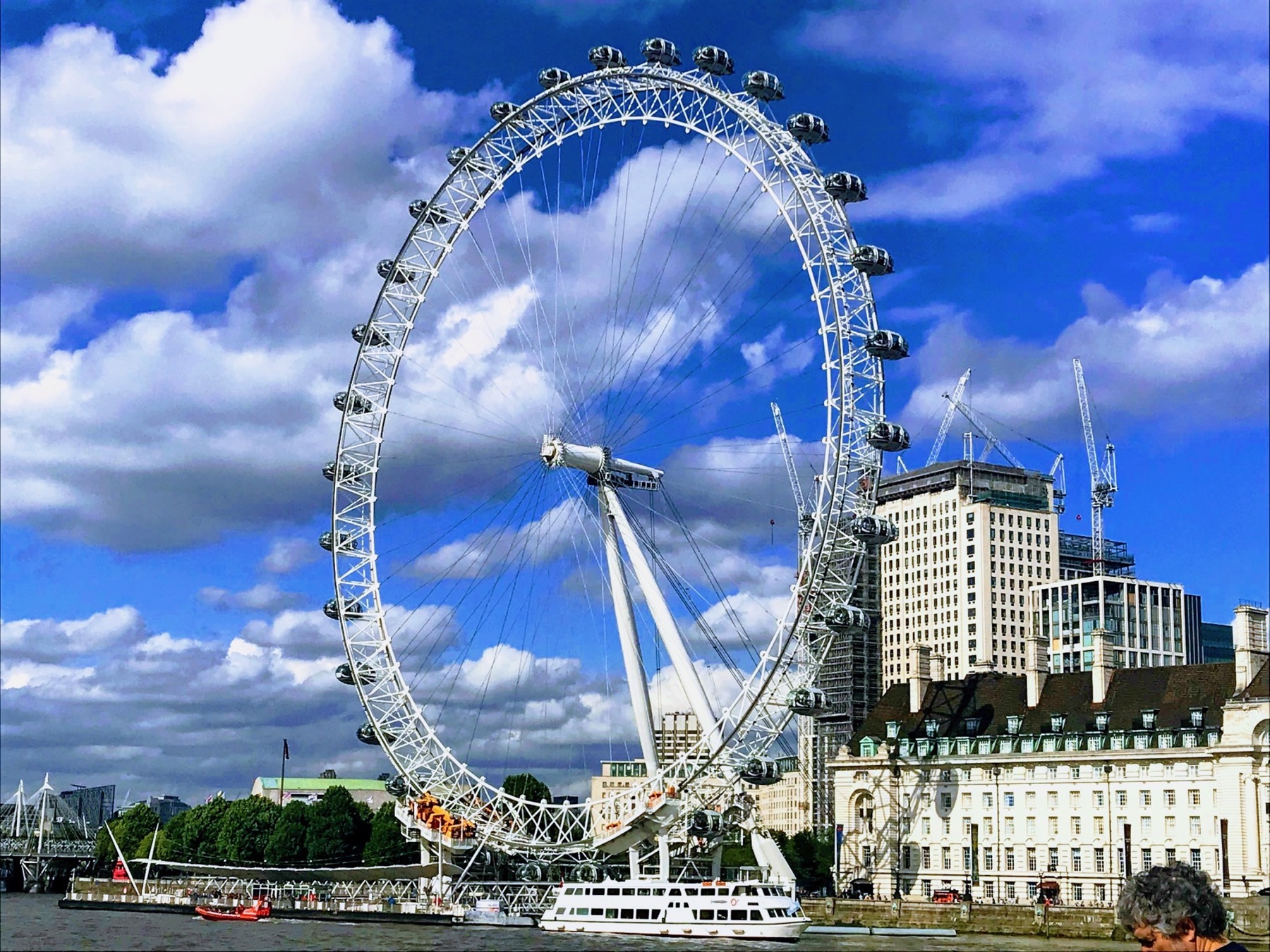
Then ride the London Eye. It opened to the public in 2000 and was originally intended as a temporary structure with planning permission for five years, but its popularity helped make it a permanent part of the skyline. The rotation is slow enough to appreciate the changing views rather than feeling like an amusement-park ride.
Our own wait was surprisingly short, but that is not something I would promise another traveler. Timed tickets are sensible during peak periods or when the rest of the day depends on a schedule. If the weather is flexible, choose the clearest part of the day for the best view.
Optional South Bank Stop: The London Dungeon
The London Dungeon sits near the London Eye and turns London’s darker history into an interactive theatrical attraction. Brian remembered the version he saw in the 1980s as more of a display about historical torture. By our 2022 visit, it had become a series of performed scenes, storytelling, special effects, and encounters involving figures such as Jack the Ripper, followed by a short ride.
We had fun, but this is intentionally macabre entertainment rather than a traditional museum. It is not for timid travelers or young children, and the ride is certainly not Disney-level. Check current age guidance and content warnings before adding it to a family itinerary.
Day 1 Evening: Make Time for a West End Show
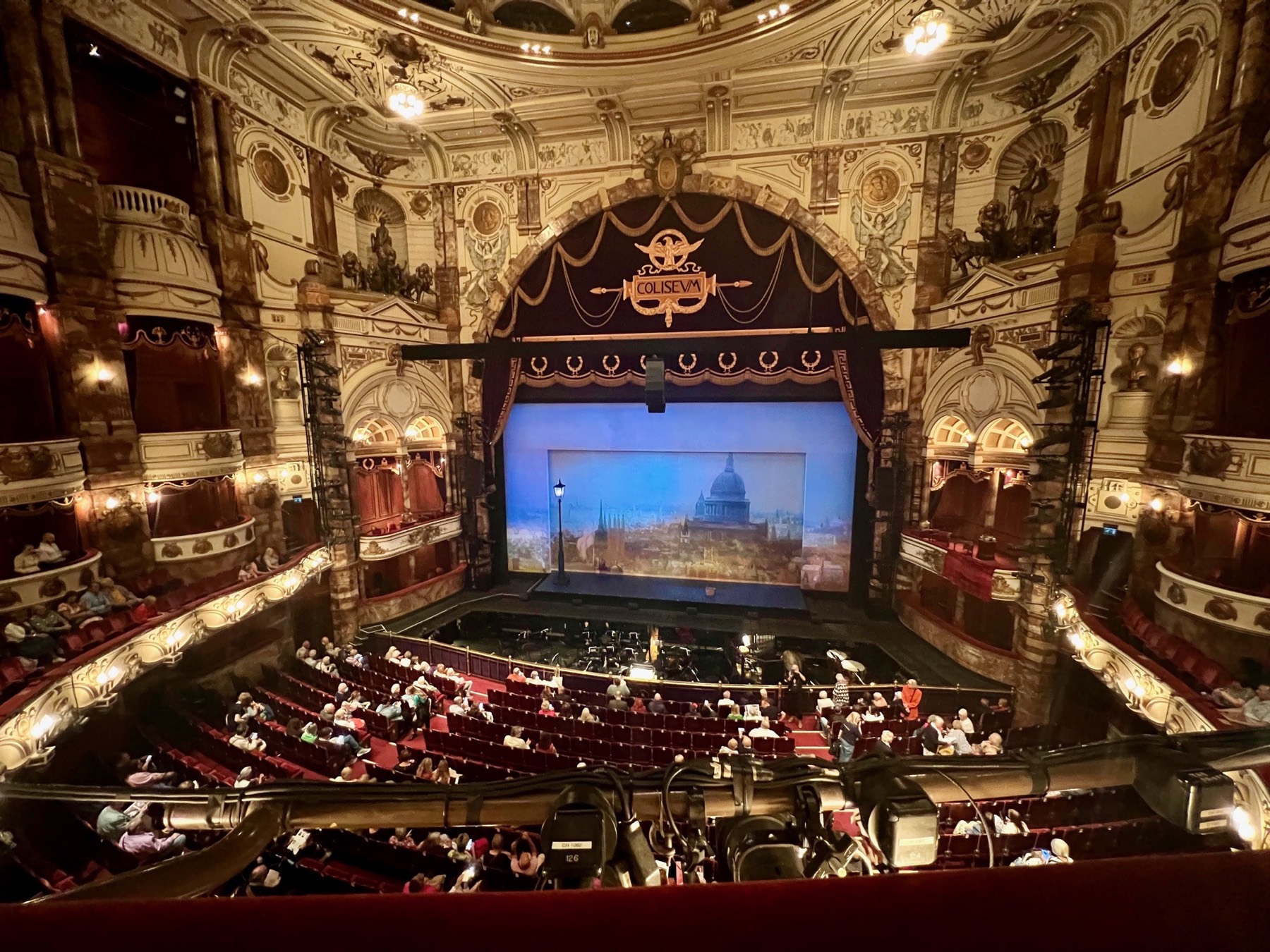
Anyone remotely interested in musical theatre should include a West End performance. In 2022, we saw My Fair Lady at the London Coliseum, and it remains one of the best live performances our family has ever experienced. The grand theatre made the evening feel special before the curtain even rose.
Brian had seen Les Misérables and Starlight Express in London during the 1980s. The specific productions and theatres change, but London usually offers an extraordinary range of musicals, plays, and limited engagements. For a particular show or date, buy tickets well in advance. Last-minute opportunities exist, but I would never build a once-in-a-lifetime trip around the hope that a popular performance will still have seats.
Day 2 Morning: Buckingham Palace and the Royal Parks
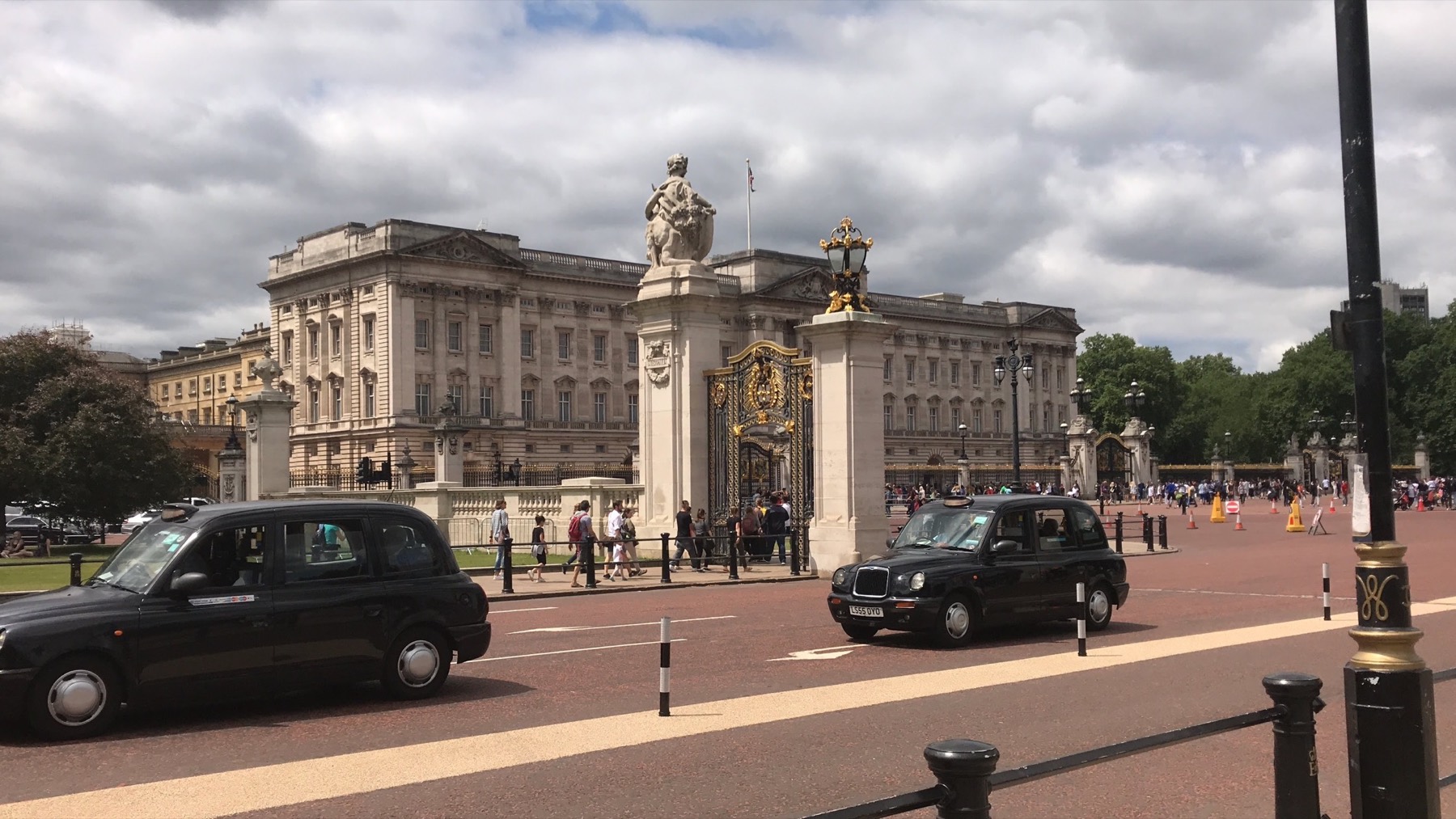
Start the second day with a leisurely walk through the royal heart of London. St James’s Park leads toward Buckingham Palace, while Green Park sits along the palace’s northern side. The lawns, ponds, flower beds, and long views make this a pleasant change of pace after a reservation-heavy first day.
We admired Buckingham Palace from outside and did not tour the interior. State Room openings are seasonal and other royal properties have their own schedules, so check your travel dates before promising yourself an inside visit. If the Changing of the Guard matters to you, verify the official schedule and arrive with realistic expectations about crowds and sight lines.
Day 2 Midday: Harrods, Then the British Museum
Continue toward Knightsbridge for Harrods. Calling it a department store does not quite capture the experience. It reminded us a little of Macy’s in scale, but with elaborate interiors, extensive food halls, luxury departments, and far more personality. You do not need to shop seriously to enjoy walking through it.
Then use the Tube to reach the British Museum. We spent roughly 90 minutes there, but a traveler with a strong interest in history could stay for several hours. The Rosetta Stone was a highlight, along with monumental Egyptian sculpture, mummies, Assyrian reliefs, Greek and Roman antiquities, and objects representing cultures across the world.
The museum is too large for a room-by-room approach on a short visit. Choose a few priority galleries, use the museum map, and leave before fatigue turns remarkable objects into one long blur. Also read the museum’s current explanations of provenance and repatriation debates; the collection’s history is part of understanding what you are seeing.
Day 2 Late Afternoon: King’s Cross and Platform 9¾
Harry Potter fans should stop at King’s Cross station for the Platform 9¾ photo display and shop. The station building is impressive even if you are not catching a train, and neighboring St Pancras is worth seeing for its architecture as well.
Expect a line for the trolley photograph at busy times. This is a fun city stop rather than the full Harry Potter experience, so allow enough time to enjoy it without letting it consume the afternoon.
Day 3 Morning: Shakespeare’s Globe and the Millennium Bridge
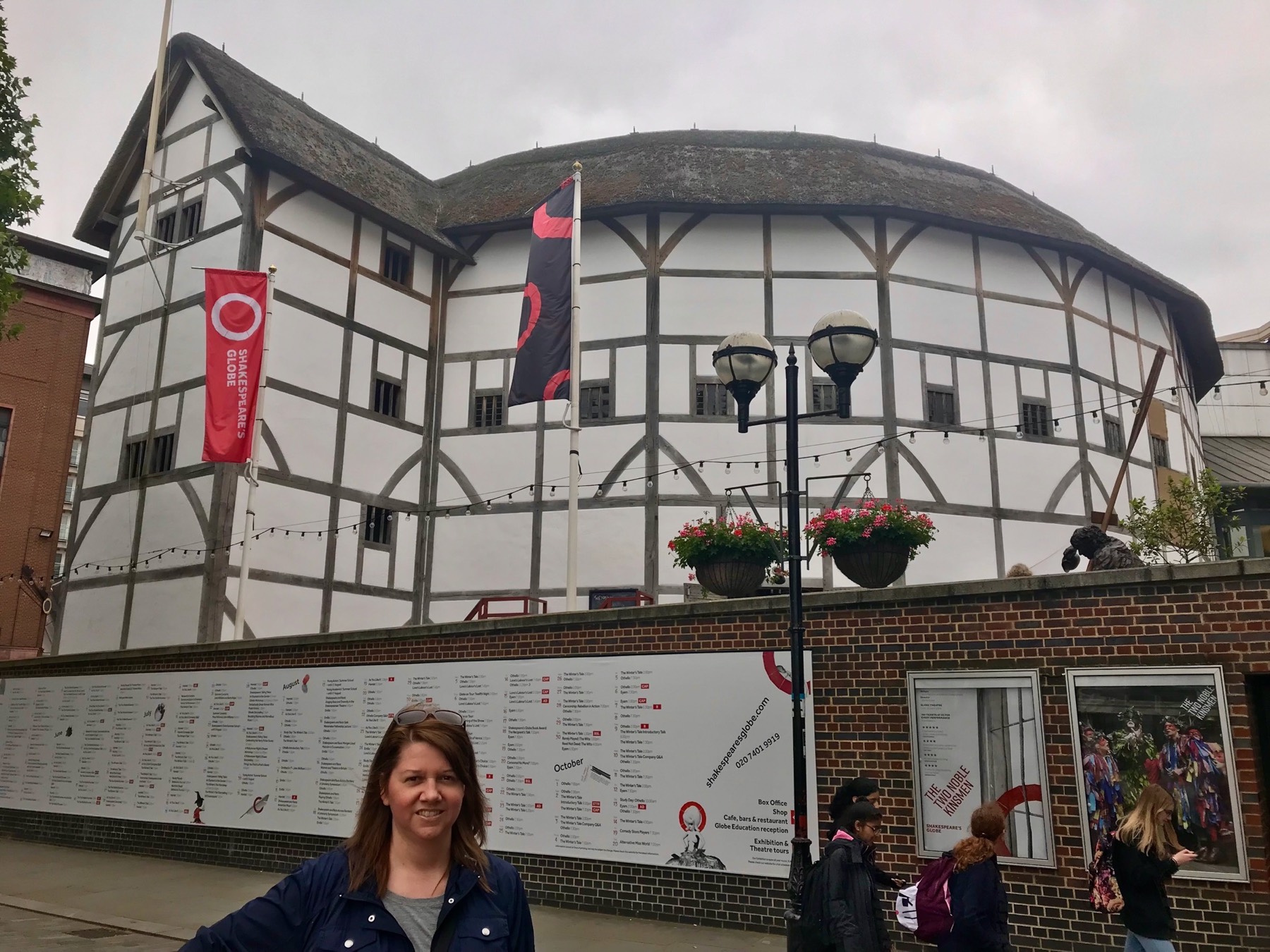
Begin on the South Bank at Shakespeare’s Globe. The theatre looks convincingly old, but it is a reconstruction inspired by the Globe of 1599 and stands near—not directly on—the original site. The current building officially opened in 1997, centuries after Shakespeare’s lifetime.
Our 2018 guided tour took us into the open-air auditorium and behind the scenes, making the building’s design and performance traditions much easier to understand. Live performances are a memorable option, but much of the theatre is open to the sky. Check the forecast, dress for the conditions, and understand the ticket you are buying.
From the Globe, walk across the Millennium Bridge toward St Paul’s Cathedral. Harry Potter viewers may recognize the bridge from Harry Potter and the Half-Blood Prince, in which a Death Eater attack destroys it through movie effects. The real bridge remains a fine pedestrian connection and a great place for river views.
Day 3 Afternoon: Give the Tower of London Enough Time
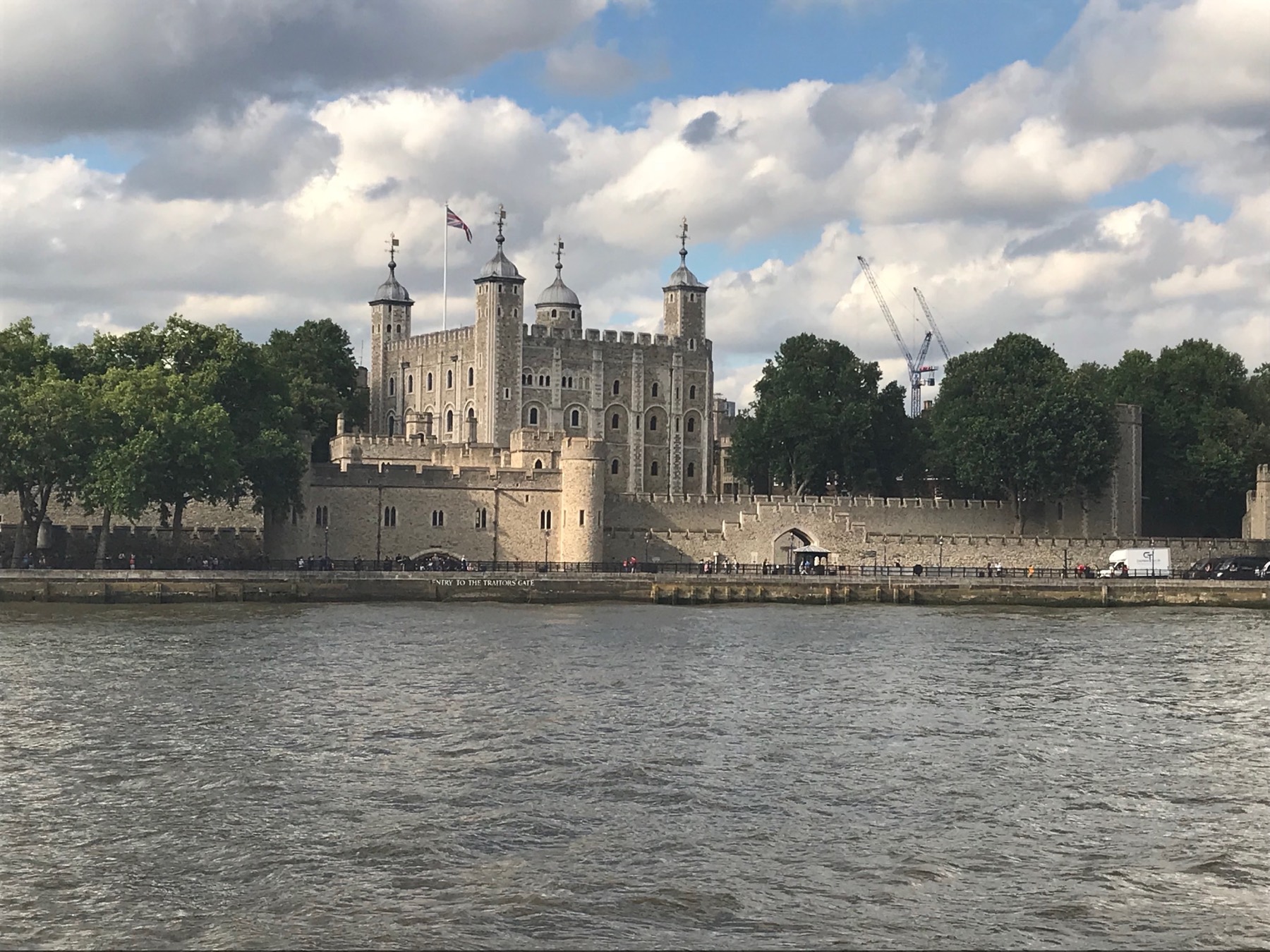
Continue east to the Tower of London and allow at least three hours. We spent almost two hours there and still felt there was more to see. The Crown Jewels are the headline attraction, but the White Tower, medieval palace, defensive walls, ravens, exhibitions, and stories of imprisonment and execution make this much more than a quick jewel-viewing stop.
The arms and armour displays were among Brian’s favorites, especially the elaborate suits of armour associated with English kings. We had just finished visiting a number of castles in Scotland, so we were somewhat castled-out and moved faster than another first-time visitor might.
A Yeoman Warder tour can add useful context, and arriving early may help with the most popular areas. Check the current schedule and last admission before choosing a late-afternoon entry.
The Armour Was More Than a Side Exhibit
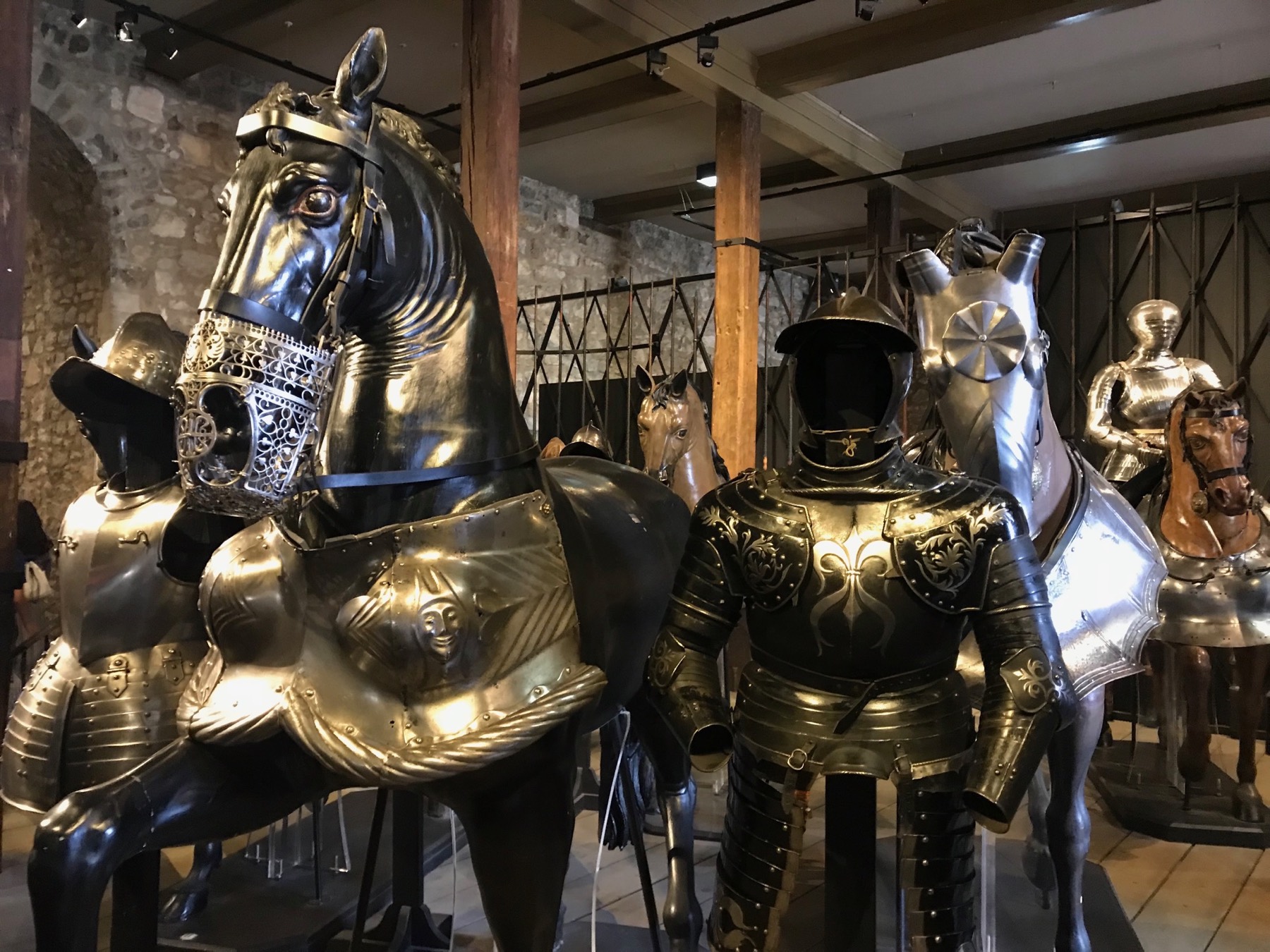
The White Tower’s displays put craftsmanship and royal image-making side by side. Decorated suits of armour were practical objects, but they also projected wealth, strength, and status. Look closely at the scale, articulated joints, engraving, and the way armour changed across centuries.
Even after a Scotland trip filled with castles, this part of the collection stood apart. Travelers who are interested in military history should protect extra time for it instead of rushing directly from the Crown Jewels to the exit.
Finish at Tower Bridge—Not London Bridge
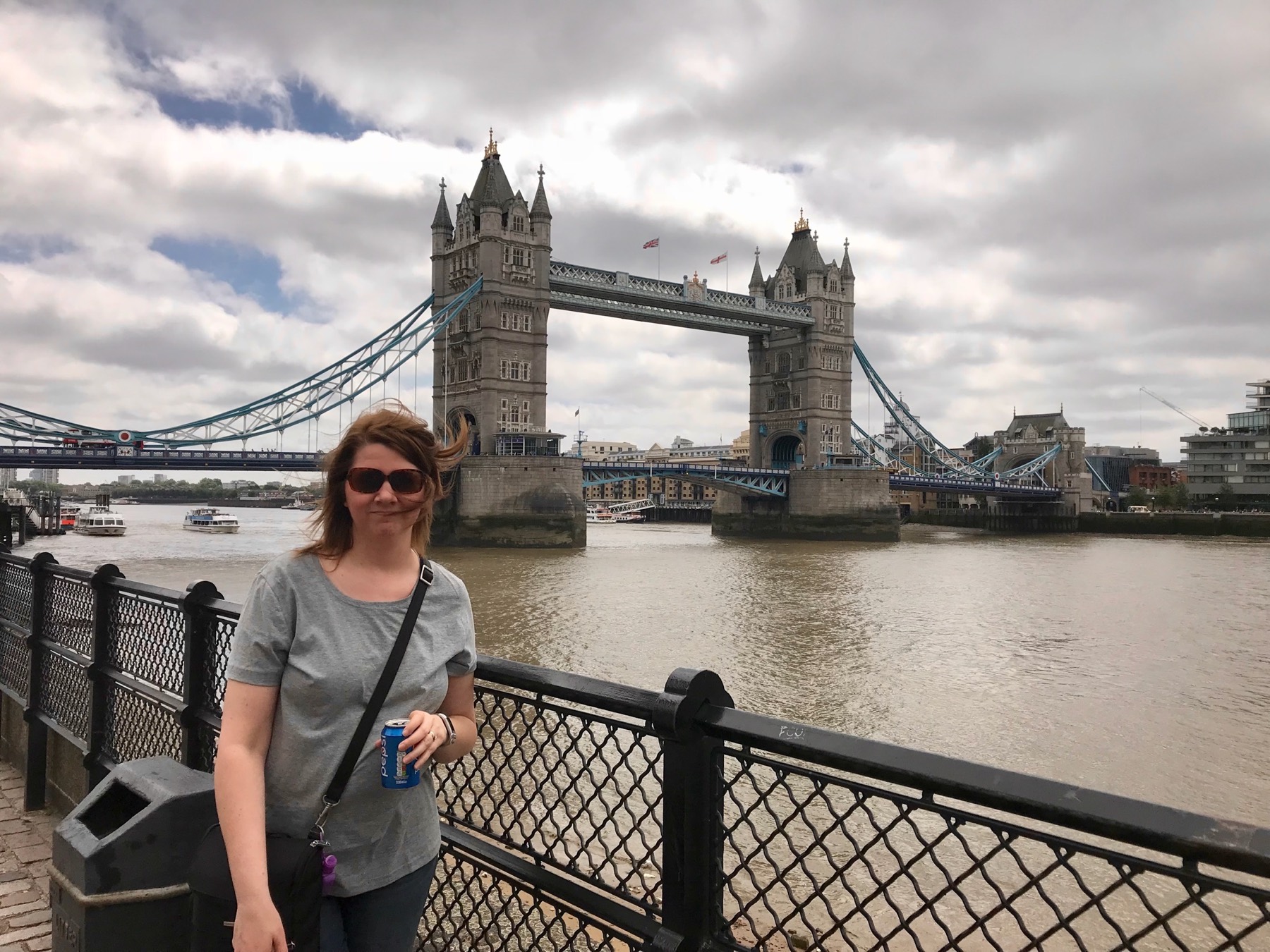
The ornate bascules and twin towers beside the Tower of London belong to Tower Bridge. Visitors often call it London Bridge, but London Bridge is the plainer crossing farther west. Walk across Tower Bridge for changing views of the Thames, the Tower, and the modern skyline.
If time and interest allow, the Tower Bridge Exhibition takes visitors into the upper walkways and historic engine rooms. Otherwise, the pedestrian crossing itself is an easy and memorable finish to the day.
Day 4: Warner Bros. Studio Tour London
For Harry Potter fans, the Warner Bros. Studio Tour London deserves most of a day. These are the Leavesden soundstages where the films were made, filled with original sets, costumes, props, creature effects, models, and production techniques. We spent hours inside and ate on the property without feeling that we had run out of things to see.
Allow at least five to six hours for transportation, the tour, food, and the return to central London—and more if you like to read every display or take many photographs. Pair it with only one flexible evening activity so the day never feels rushed.
Book the Studio Tour well in advance because admission is timed and popular dates sell out. Independent travelers take a direct train from London Euston to Watford Junction, not from St Pancras. The fastest trains can take about 20 minutes, followed by the dedicated shuttle bus to the Studio Tour. Transportation details and shuttle requirements can change, so confirm the official directions for your date.
Leave Time for the Details—and a Little Family Fun
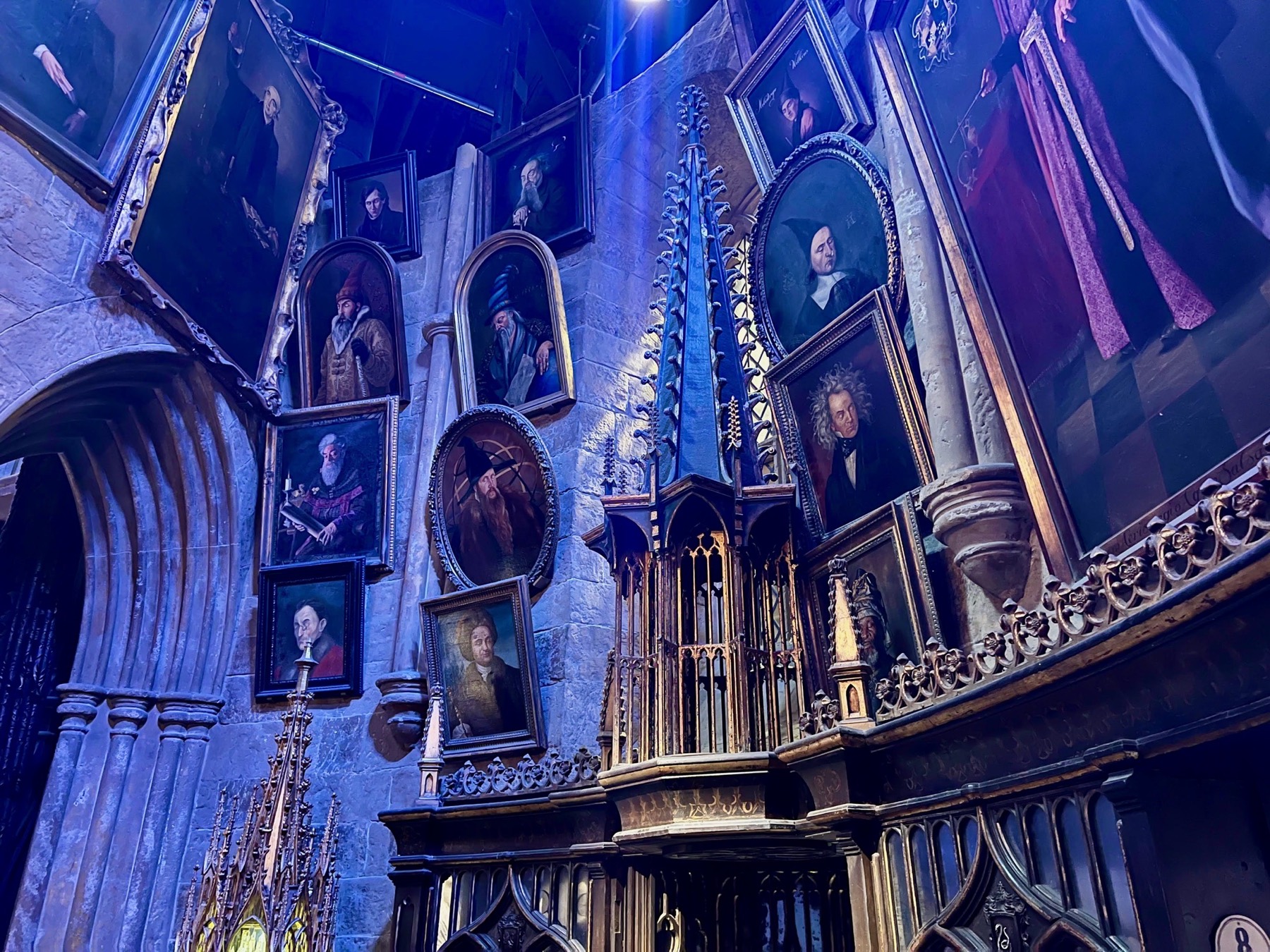
The scale of the Studio Tour is part of its appeal, but the smaller details make it memorable: painted portraits, handcrafted props, costume distressing, mechanical effects, wand boxes, shopfronts, and the enormous Hogwarts model used in filming.
Interactive photo opportunities break up the production history. We climbed into the Weasleys’ Ford Anglia and made our own dramatic faces, a reminder that this day does not need to be approached like a serious museum checklist.

What We Still Want to See: Greenwich
One place that never made the short list on either family trip was Greenwich. The Royal Observatory marks the historic Prime Meridian at longitude zero and explains the development of Greenwich Mean Time, navigation, and the measurement of longitude.
Greenwich deserves more than a rushed detour. A future visit could combine the observatory with the National Maritime Museum, Cutty Sark, Greenwich Park, and a Thames boat ride. If that history interests you more than Harry Potter, it could replace Day 4 in this itinerary.
Heathrow to Central London
The Heathrow Express runs nonstop between Heathrow Central and London Paddington in about 15 minutes, with Terminal 5 taking a few minutes longer. Trains normally depart frequently, and buying well in advance can substantially reduce the fare. It is particularly convenient when your hotel is near Paddington or has a simple onward Tube or taxi connection.
The Elizabeth line and Piccadilly line are also useful airport options and may bring you closer to your hotel with fewer changes, often at a lower price. Compare the complete door-to-door route rather than choosing solely by the fastest advertised train time. A 15-minute ride to Paddington is not a 15-minute journey to every London hotel.
For the return flight, leave generous time for the airport, the correct terminal, luggage, security, and any service disruption. The last morning of a five-day trip is a travel day, not a secret fifth sightseeing day.
What I Would Book Before the Trip
Reserve Westminster Abbey and the Queen’s Diamond Jubilee Galleries, the West End performance you care about most, the Tower of London, and Warner Bros. Studio Tour London before departure. A London Eye time slot and Thames cruise are also useful during busy seasons, although I would keep at least part of each day flexible.
Recheck official schedules shortly before traveling. Theatre casts change, royal sites close for ceremonies, museum galleries rotate, transportation has planned engineering work, and outdoor experiences depend on the weather.
Is 96 Hours the Right Amount of Time in London?
Four full sightseeing days are enough for a strong first visit, but not enough to see all of London. This plan includes Westminster, the South Bank, royal parks, a major museum, the Globe, the Tower, Tower Bridge, theatre, and Harry Potter without pretending that every worthy neighborhood or museum fits.
If you have only 72 hours, skip the day trip to the Studio Tour or choose between the British Museum and the Buckingham Palace–Harrods route. If you have five or six full days, add Greenwich, another museum, a market, St Paul’s Cathedral, or a slower neighborhood day.
My practical recommendation remains five calendar days: arrival day, three or four meaningful sightseeing days, and departure day. London rewards extra time, but 96 hours gives a first visit room to feel like a trip instead of a race.